Episode 918: Automated Blood Pressure Cuffs

Episode 918: Automated Blood Pressure Cuffs

Contributor: Aaron Lessen, MD

Educational Pearls:

How does an automated blood pressure cuff work?

  • Automated blood pressure cuffs work differently than taking a manual blood pressure.

  • While taking a manual blood pressure, one typically listens for Korotkoff sounds (turbulent flow) while slowly deflating the cuff.

  • An automatic blood pressure cuff only senses the pressure in the cuff itself and specifically pays attention to oscillations in the pressure caused by when the pressure of the cuff is between the systolic (heart squeezing) and diastolic (heart relaxed) pressures.

  • These oscillations are at a maximum when the pressure in the cuff matches the mean arterial pressure (MAP) and therefore the machines are most accurate at reporting the MAP.

  • The machines then use the MAP and other information about the oscillations to estimate the systolic and diastolic pressures, which are less accurate.

What should you do if you need more accurate systolic and diastolic blood pressures?

  • Take a manual blood pressure.

  • Get an arterial-line (a-line), which provides continuous data for the blood pressure at the end of a catheter.

What happens if the cuff is too big or too small for the patient?

  • If the cuff is too small it will overestimate the pressure.

  • If the cuff is too large it will underestimate the pressure.

What should you do if the cuff cycles a bunch of times before reporting a blood pressure?

  • It probably isn't very accurate so consider another method.

Bonus fact!

  • The MAP is not directly in the middle of the systolic and diastolic pressures but is weighted towards the diastolic pressure. The MAP can be calculated by adding two-thirds of the diastolic pressure to one third of the systolic pressure. For example if the BP is 120/90 the MAP is 100 mmHg.

References

  1. Benmira, A., Perez-Martin, A., Schuster, I., Aichoun, I., Coudray, S., Bereksi-Reguig, F., & Dauzat, M. (2016). From Korotkoff and Marey to automatic non-invasive oscillometric blood pressure measurement: does easiness come with reliability?. Expert review of medical devices, 13(2), 179–189. https://doi.org/10.1586/17434440.2016.1128821

  2. Liu, J., Li, Y., Li, J., Zheng, D., & Liu, C. (2022). Sources of automatic office blood pressure measurement error: a systematic review. Physiological measurement, 43(9), 10.1088/1361-6579/ac890e. https://doi.org/10.1088/1361-6579/ac890e

  3. Vilaplana J. M. (2006). Blood pressure measurement. Journal of renal care, 32(4), 210–213. https://doi.org/10.1111/j.1755-6686.2006.tb00025.x

Summarized by Jeffrey Olson, MS3 | Edited by Meg Joyce, MS1 & Jorge Chalit, OMS3

Donate: https://emergencymedicalminute.org/donate/

Avsnitt(1145)

Podcast #382: Shoulder Separations

Podcast #382: Shoulder Separations

Author: Ryan Circh, MD Educational Pearls: A "shoulder separation" is when the clavicle separates from the scapula - also referred to as an acromio-clavicular (AC) separation Diagnosis is clinic...

21 Sep 20183min
Podcast #381: MRI... Burns?

Podcast #381: MRI... Burns?

Author: Sam Killian, MD Educational Pearls: MRI machines can generate enough heat from the radiofrequency to cause thermal burns Patients with EKG stickers, medication patches, clothing impregna...

19 Sep 20183min
Podcast #380: Oxygen for the kill

Podcast #380: Oxygen for the kill

Author: Ryan Circh, MD Educational Pearls: Review of 25 randomized control trials encompassing 16,037 acutely ill hospitalized patients Patients given oxygen with saturations > 94% on room air wer...

17 Sep 20183min
Podcast #379: Patient Perspectives of the Flu

Podcast #379: Patient Perspectives of the Flu

Author: Sam Killian, MD Educational Pearls: Patients may have certain fears or expectations about the flu based on hearsay and other less reliable sources Taking extra time explaining the risks ...

14 Sep 20184min
Podcast #378: Is That a Brown Recluse Spider Bite?

Podcast #378: Is That a Brown Recluse Spider Bite?

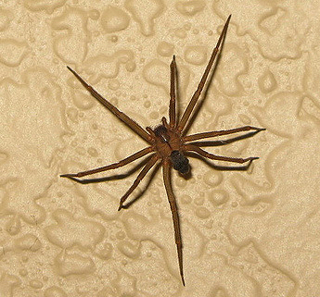
Author: Michael Hunt, MD Educational Pearls: Use the mnemonic NOT RECLUSE to rule out a brown recluse spider bite: Numerous bites (recluse spiders will bite once) Occurence (recluse bites betw...

12 Sep 20184min
Podcast #377: Endocarditis

Podcast #377: Endocarditis

Author: Nick Tsipis, MD Educational Pearls: Persistent fever or positive blood cultures should raise suspicion for endocarditis Patients with recent dental procedures, recent cardiac surgeries a...

10 Sep 20183min
Podcast #376: Alcohol Intoxication

Podcast #376: Alcohol Intoxication

Educational Pearls: Blood concentrations over 0.4 mg/dL is associated with respiratory depression and possible death in alcohol naive patients Alcohol overdose accounts to 2,200 deaths per year ...

8 Sep 20184min
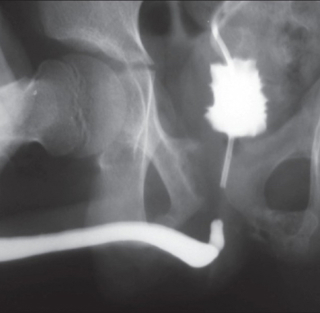
Podcast #375: Retrograde Urethrogram

Podcast #375: Retrograde Urethrogram

Author: Jared Scott, MD Educational Pearls: Blood at urethral meatus in trauma can be a sign of bladder/urethral injury Blind placement of a Foley catheter can make an undiagnosed urethral injur...

6 Sep 20185min

Populärt inom Vetenskap

p3-dystopia
dumma-manniskor
svd-nyhetsartiklar
allt-du-velat-veta
det-morka-psyket
kapitalet-en-podd-om-ekonomi
pojkmottagningen
sexet
rss-ufo-bortom-rimligt-tvivel
rss-vetenskapsradion-2
rss-vetenskapsradion
dumforklarat
halsorevolutionen
rss-broccolipodden-en-podcast-som-inte-handlar-om-broccoli
medicinvetarna
rss-experimentet
bildningspodden
vetenskapsradion
hacka-livet
intergalaktiskt