Episode 921: Pediatric Hypoglycemia

Episode 921: Pediatric Hypoglycemia

Contributor: Taylor Lynch, MD

Educational Pearls:

When it comes to hypoglycemia, the age dictates possible causes

  • Neonate:

    • Hormonal deficiency

      • Congenital Adrenal Hyperplasia (21-hydroxylase deficiency, 11β-hydroxylase deficiency)

      • Primary or Secondary Adrenal Insufficiency leading to cortisol deficiency

      • Hypopituitarism

    • Inborn errors of metabolism

    • Systemic infection (Under 30 days old should trigger a full infectious workup)

  • Toddler

    • Accidental ingestions

      • Sulfonylureas such as glipizide or glyburide

  • Older children

    • Addison's Disease (Hypocortisolism)

    • Accidential or intentional ingestions

    • Exogenous insulin

How is it diagnosed?

  • Child or infant

    • Glucose <60

  • Newborn

    • Glucose <45 and symptomatic or glucose <35 and asymptomatic

Treatment

  • Awake: oral glucose

  • Altered: IV glucose

  • Rule of 50's. The dose you give times the concentration should equal 50

    • Neonate to 2 months get 5 mg/kg of D10W (5*10=50)

    • 2 months to 8 years old get 2 mg/kg of D25W (2*25=50)

    • Over 8 gets 1 mg/kg of D50W (1*50=50)

    • Bonus fact: Rough estimate of weight for a child is 2*patients age plus 8

  • Recheck sugar every 15 minutes

  • If they stay hypoglycemic give another bolus and consider starting a drip at 1.5 maintenance dose of D10NS.

  • If you don't have an IV you can consider glucagon at 0.03 mg/kg IM, although you might be better off trying glucose gel buccally.

  • If standard therapy still fails you can give hydrocortisone

    • 25 mg IV for neonates and infants

    • 50 mg IV for toddlers and smaller school aged children

    • 100 mg for anyone older than that

How do you test for exogenous insulin?

  • Check a c-peptide which would be low if a patient is taking exogenous insulin

References

  1. Lang, T. F., & Hussain, K. (2014). Pediatric hypoglycemia. Advances in clinical chemistry, 63, 211–245. https://doi.org/10.1016/b978-0-12-800094-6.00006-6

  2. Lee, S. C., Baranowski, E. S., Sakremath, R., Saraff, V., & Mohamed, Z. (2023). Hypoglycaemia in adrenal insufficiency. Frontiers in endocrinology, 14, 1198519. https://doi.org/10.3389/fendo.2023.1198519

  3. Thompson-Branch, A., & Havranek, T. (2017). Neonatal Hypoglycemia. Pediatrics in review, 38(4), 147–157. https://doi.org/10.1542/pir.2016-0063

Summarized by Jeffrey Olson, MS3 | Edited by Meg Joyce, MS1 & Jorge Chalit, OMS3

Donate: https://emergencymedicalminute.org/donate/

Avsnitt(1145)

Podcast 633: Pathologic Femur Fractures

Podcast 633: Pathologic Femur Fractures

Contributor: Jared Scott, MD Educational Pearls: Pathologic bone fractures occur due to weakened bones from chronic disease and with less force when compared to non-pathologic fractures Can be due to...

19 Jan 20215min
Podcast 632: Neonatal Jaundice

Podcast 632: Neonatal Jaundice

Contributor: Jared Scott, MD Educational Pearls: Bilirubin is natural breakdown product of red blood cells but can be neurotoxic if levels become too high Fetal red blood cells are fragile and break ...

18 Jan 20216min
Pharmacy Phriday #7: Bactrim Adverse Events

Pharmacy Phriday #7: Bactrim Adverse Events

Contributor: Cheyenne Bean, PharmD Educational Pearls: Bactrim (TMP-SMX) is a sulfa antibiotic used for a number of infections but can have untoward effects. Hypoglycemia can be induced by the sulfa ...

15 Jan 20214min
Podcast 631: UK COVID-19 Mutation

Podcast 631: UK COVID-19 Mutation

Contributor: Gretchen Hinson, MD Educational Pearls: Viruses mutate frequently and a new variant of COVID has been found in the United Kingdom. Mutations typically occur due to transcription errors d...

13 Jan 20215min
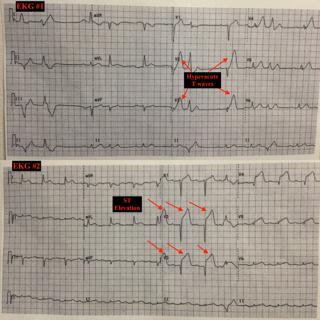
Podcast 630: Evolution of an STEMI

Podcast 630: Evolution of an STEMI

Contributor: Peter Bakes, MD Educational Pearls: Hyperacute T waves can occur immediately and typical last less than an hour Hyperacute T waves are typically broader than peaked T-waves, which are ...

12 Jan 20215min
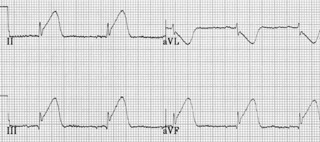
Podcast 629: Inferior STEMI

Podcast 629: Inferior STEMI

Contributor: Jared Scott, MD Educational Pearls: EKGs look at different angles, or vectors, of the heart's electrical conduction as it travels through the heart. Knowing how to read these vectors is ...

11 Jan 20214min

Podcast 628: ST Elevation

Podcast 628: ST Elevation

Contributor: Peter Bakes, MD Educational Pearls: STEMI criteria is not just 1mm elevation in contiguous leads 1.5 mm in V2-V3 for women 2.0 mm in V2-V3 for men 2.5 mm in V2-V3 for men under 40 In...

5 Jan 20215min

Podcast 627: Oxygen Like It's Hot

Podcast 627: Oxygen Like It's Hot

Contributor: Aaron Lessen, MD Educational Pearls: High flow nasal cannula (HFNC) has become more utilized with COVID pandemic Multiple studies have shown this method improves both oxygenation and ven...

4 Jan 20213min

Populärt inom Vetenskap

p3-dystopia
svd-nyhetsartiklar
pojkmottagningen
dumma-manniskor
allt-du-velat-veta
det-morka-psyket
rss-experimentet
rss-ufo-bortom-rimligt-tvivel
kapitalet-en-podd-om-ekonomi
paranormalt-med-caroline-giertz
medicinvetarna
rss-vetenskapsradion-2
rss-vetenskapsradion
halsorevolutionen
bildningspodden
dumforklarat
vetenskapsradion
4health-med-anna-sparre
sexet
rss-broccolipodden-en-podcast-som-inte-handlar-om-broccoli