S1, E2 The human face of the climate crisis: forced migration and protection challenges
Refugee Realities14 Juni 2021

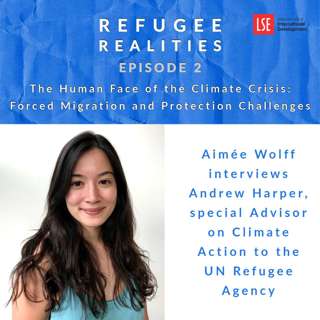
S1, E2 The human face of the climate crisis: forced migration and protection challenges

The UNHCR estimates that 90% of refugees are produced in countries that are the most vulnerable and the least prepared to adapt to the repercussions of climate change. In this episode, MSc student in Health and International Development Aimée Wolff interviews Andrew Harper, special Advisor on Climate Action to the UN Refugee Agency, who illuminates the increasing complexity behind the drivers of migration since the creation of the 1951 Refugee Convention and the implications of climate change on international protection.

The nature of forced migration and the drivers of migration have changed drastically since the end of World War Two. Today, climate change is considered the ‘biggest issue on the forced displacement agenda’, yet its consequences are felt disproportionally across the world. Since 2020, fragile states have been impacted by the so-called Triple C—Climate Change, Conflict and COVID-19—whereby each acts as a threat multiplier.

Despite more people being displaced because of disasters relative to conflict, there is no explicit mention of ‘climate refugees’ in the 1951 Refugee Convention. Andrew Harper addresses highly debated questions of whether the UNHCR’s mandate and the legal definition of who constitutes a refugee should be expanded by referring to developments in international protection. In particular, he highlights the applicability of international refugee law through the UNHCR’s legal considerations on climate- and disaster-induced cross-border displacement, and touches upon the role of regional legal instruments governing the protection of refugees, such as the Kampala Convention and the Cartagena Declaration.

What remains clear is the international obligation to provide protection to those who had to flee their homes at no fault of their own. Doing so in the context of climate change and human mobility requires humanitarian agencies to shift their workings from a reactive to a proactive approach, bearing in mind that the most vulnerable are those who are unable to flee.

Det här avsnittet är hämtat från ett öppet RSS-flöde och publiceras inte av Podme. Det kan innehålla reklam.

Avsnitt(24)

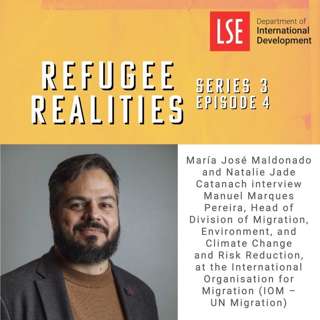
S3, E4: Climate-related Displacement and International Protection

S3, E4: Climate-related Displacement and International Protection

How can we best protect people displaced for environmental reasons? In this episode María José Maldonado and Natalie Jade Catanach interview Manuel Marques Pereira, Head of Division of Migration, Envi...

12 Juni 202322min
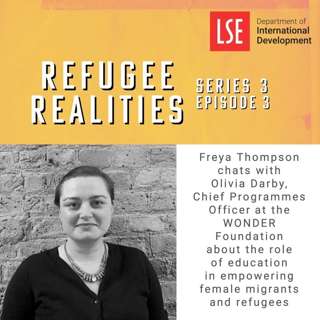
S3, E3: Empowering Migrant and Refugee Women to Thrive: The gendered experiences of forced migration

S3, E3: Empowering Migrant and Refugee Women to Thrive: The gendered experiences of forced migration

How are refugee experiences gendered, and what is the role of education in empowering female migrants and refugees? In this episode, Freya Thompson chats with Olivia Darby, Chief Programmes Officer at...

11 Juni 202329min
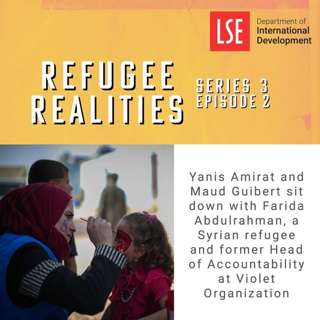
S3, E2: The Possibilities of Refugee-led Action: perspectives from Turkey

S3, E2: The Possibilities of Refugee-led Action: perspectives from Turkey

What role can refugees themselves play in responding to displacement, and how can we improve mechanisms that allow displaced communities to have an input into relief efforts? In this episode, Yanis Am...

11 Juni 202325min
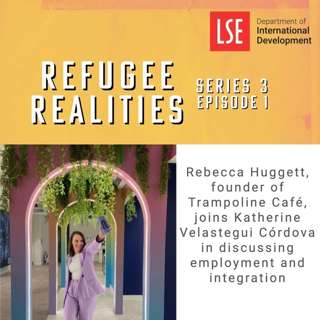
S3, E1: Trampoline, an inspiring London-based café supporting Refugees’ journeys

S3, E1: Trampoline, an inspiring London-based café supporting Refugees’ journeys

Accessing employment is a challenge facing many refugees wanting to integrate in a new country. Trampoline is a London-based café that aims to tackle this by providing refugees in the city with meanin...

11 Juni 202318min
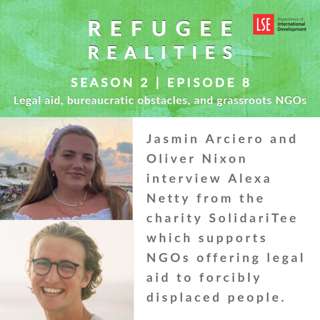
S2, E8: Legal aid, bureaucratic obstacles, and grassroots NGOs

S2, E8: Legal aid, bureaucratic obstacles, and grassroots NGOs

In this episode, Jasmin Arciero and Oliver Nixon  interview Alexa Netty, the trustee and chair of the steering committee of SolidariTee. SolidariTee is a charity that supports NGOs offering legal aid ...

17 Juni 202233min
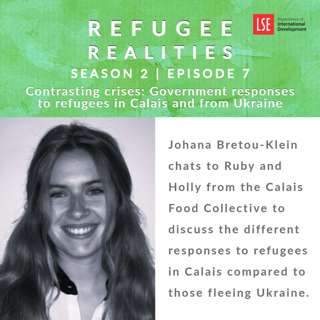
S2, E7: Contrasting crises: Government responses to refugees in Calais and from Ukraine

S2, E7: Contrasting crises: Government responses to refugees in Calais and from Ukraine

For years, thousands of forcibly displaced people have been left in limbo in Calais, France, where they suffer from a lack of care and police crackdowns. Recently, as the Russian War is devastating Uk...

17 Juni 202221min
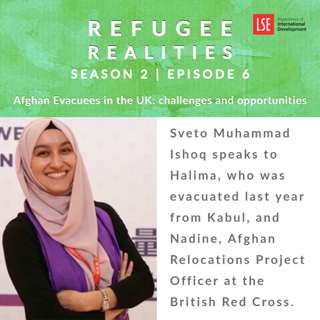
S2, E6: Afghan evacuees in the UK: Challenges and opportunities 

S2, E6: Afghan evacuees in the UK: Challenges and opportunities 

Following the Taliban’s takeover of Afghanistan in August 2021, tens of thousands of Afghans fled to foreign countries. The UK evacuated around 18,000 people, who are now placed in temporary housing. ...

16 Juni 202230min
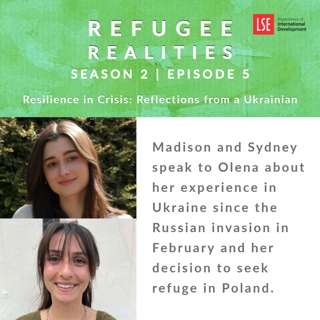
S2, E5 Resilience in crisis: Reflections from a Ukrainian

S2, E5 Resilience in crisis: Reflections from a Ukrainian

Little has captured our attention like the Russian invasion of Ukraine on February 24th of this year. Constituting Europe’s largest refugee crisis since World War II, the UN estimates that more than 1...

16 Juni 202235min

Populärt inom Politik & nyheter

svenska-fall
motiv
aftonbladet-krim
p3-krim
spar
aftonbladet-daily
flashback-forever
rss-sanning-konsekvens
politiken
rss-krimreportrarna
rss-vad-fan-hande
rss-flodet
rss-frandfors-horna
olyckan-inifran
rss-aftonbladet-krim
grans
rss-krimstad
kungligt
dagens-eko
rss-expressen-dok