The Emergence of Trotskyism in the United States: Part 2 of 3

The Emergence of Trotskyism in the United States: Part 2 of 3

Part 2 of 3. In the spring of 1942, James P. Cannon, the founder of American Trotskyism, gave a series of lectures in New York on the first decade of the movement. The challenges, the setbacks, the accomplishments and the lessons learned were recounted with Cannon’s trademark style that managed to be accessible while also maintaining the revolutionary militancy he was trying to carry on. The lectures would eventually become a book, The History of American Trotskyism, 1928-38: Report of a Participant. In a short editorial note, Joseph Hansen remarked “Historians of the future, writing the definitive history of American and world Trotskyism, will undoubtedly round out Cannon's history with additional material delved from original sources; but, while there is no pretension to exhaustive research or extensive documentation in this work, future historians utilizing it as source material will find that they must likewise depend heavily upon it as a guidepost.” This little remark has been proven correct by several later books on labor in the depression, but it now appears almost prophetic with the arrival of Bryan Palmer’s latest work, James P. Cannon and the Emergence of Trotskyism, 1928-38 (Brill, 2021). Published as part of the Historical Materialism book series, it starts off right where it’s sequel, James P. Cannon and the Origins of the Revolutionary Left, 1890-1928, left off, with Cannon and several other comrades expelled from the Communist Party. With hardly a penny to their name, but an urgent political mission, they set about forming an oppositional faction, one that could both challenge the political degeneration emanating from a Moscow that was succumbing to Stalinism while also working to revitalize an American labor movement that was rediscovering it’s own fighting spirit. Through Cannon and his comrades, Palmer is able to tell a story of class struggle that shows what even a small group can do when political militancy and clarity are brought to life, even in the face of obstacles that appear insurmountable. Clocking in at 1200 pages, the book is brimming with detail about both the day-to-day minutiae of class struggle in the period, but also spends a fair amount of time giving international and other historical context. Palmer’s capacity to wander through vast archives of material is matched by his storytelling abilities, turning a huge mass of information into a highly readable and compelling narrative. While reading it cover-to-cover will be richly rewarding for those who do, it will also be an excellent resource for those who read it’s chapters more selectively, whether looking to learn about the Minneapolis truckers strike of 1934, the Trotskyists entry into the Socialist Party or Trotsky’s trial in which he defended himself against accusations emanating from Moscow. It deserves to be on the shelf of anyone interested in labor history and radical politics, and anyone who feels the realm of political possibility to be dire. This book itself is not the revolution, but it will provide lessons and inspiration for those who are hoping to bring it about. As an entry in the Historical Materialism book series, the book was originally published in hardcover by Brill, with the paperback made available by Haymarket. Bryan D. Palmer is Professor Emeritus and former Canada Research Chair of Canadian Studies at Trent University. He is a Fellow of the Royal Canadian Society, former editor of Labour/Le Travail, and has published widely on the history of labour and the revolutionary left. His numerous books include Marxism and Historical Practice, Revolutionary Teamsters, Cultures of Darkness and Descent into Discourse. He is also the co-editor with Paul LeBlanc and Thomas Bias of the 3-volume document collection US Trotskyism, 1928-65. Learn more about your ad choices. Visit megaphone.fm/adchoices Support our show by becoming a premium member! https://newbooksnetwork.supportingcast.fm/critical-theory

Avsnitt(2229)

Emmanuel Ofuasia, "Ìwà: the Process-Relational Dimension to African Metaphysics" (Springer, 2024)

Emmanuel Ofuasia, "Ìwà: the Process-Relational Dimension to African Metaphysics" (Springer, 2024)

Correction: In the interview, the host mistakenly mentioned that Prof. Ofuasia is teaching the University of Pretoria. In reality, Prof Ofuasia is currently a decoloniality research associate at the U...

29 Mars 1h 31min

Thomas Hegghammer and Diego Gambetta eds., "Fight, Flight, Mimic: Identity Mimicry in Conflict" (Oxford UP, 2024)

Thomas Hegghammer and Diego Gambetta eds., "Fight, Flight, Mimic: Identity Mimicry in Conflict" (Oxford UP, 2024)

Time spent and words spent—what does each signal? Deceptive mimicry—the manipulation of individual or group identity—includes passing off as a different individual, as a member of a group to which on...

28 Mars 1h 5min

The Criminal Record Complex: Risk, Race, and the Struggle for Work in America

The Criminal Record Complex: Risk, Race, and the Struggle for Work in America

Most employers in the United States routinely conduct criminal background checks on job applicants, weeding out those with criminal convictions—and thus denying opportunities to those who need them m...

26 Mars 54min

Hsuan L Hsu, "Olfactory Worldmaking" (U Minnesota Press, 2026)

Hsuan L Hsu, "Olfactory Worldmaking" (U Minnesota Press, 2026)

Smell is a vital, if underappreciated, medium through which we inhabit and imagine the world. In Olfactory Worldmaking (University of Minnesota Press, 2026), Dr. Hsuan L. Hsu traces how olfactory expe...

24 Mars 26min
Prolepsis

Prolepsis

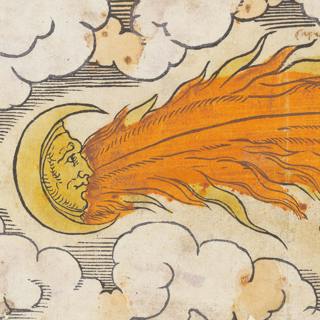
In this episode of High Theory, Gloria Fisk talks to Kim about Prolepsis. Defined by Gerard Genette in the 1970s, prolepsis is a flash forward, the opposite of analepsis, a flash back. Initially the p...

23 Mars 16min

David Bather Woods, "Arthur Schopenhauer: The Life and Thought of Philosophy's Greatest Pessimist" (U Chicago Press, 2025)

David Bather Woods, "Arthur Schopenhauer: The Life and Thought of Philosophy's Greatest Pessimist" (U Chicago Press, 2025)

Arthur Schopenhauer: The Life and Thought of Philosophy’s Greatest Pessimist by David Bather Woods An engaging biography of one of the most influential Western philosophers and a thought-provoking ex...

23 Mars 1h 16min

Philip C. Almond, "Noah and the Flood in Western Thought" (Cambridge UP, 2025)

Philip C. Almond, "Noah and the Flood in Western Thought" (Cambridge UP, 2025)

In a world beset by climatic emergencies, the continuing resonance of the flood story is perhaps easy to understand. Whether in the tortured alpha male intensity of Russell Crowe’s Noah, in Darren Aro...

21 Mars 50min

Becca Voelcker, "Land Cinema in an Age of Extraction" (U California Press, 2025)

Becca Voelcker, "Land Cinema in an Age of Extraction" (U California Press, 2025)

Land Cinema in an Age of Extraction considers nonfiction filmmakers and film collectives whose work advances an understanding of land as a locus of social and environmental responsibility. Diving into...

21 Mars 1h 10min

Populärt inom Vetenskap

dumma-manniskor
p3-dystopia
allt-du-velat-veta
svd-nyhetsartiklar
rss-vetenskapsradion
det-morka-psyket
kapitalet-en-podd-om-ekonomi
rss-ufo-bortom-rimligt-tvivel-2
rss-vetenskapsradion-2
medicinvetarna
dumforklarat
sexet
hacka-livet
paranormalt-med-caroline-giertz
barnpsykologerna
vetenskap-och-halsa
rss-tidslinjen-podcast
vetenskapsradion
doden-hjarnan-kemisten
bildningspodden