Many take Trump's words out of context: How this relates to toxic polarization

Many take Trump's words out of context: How this relates to toxic polarization

In a recent Fox News interview, Trump was asked whether he thought there would be chaos and violence if he won the election, and his response included mentioning that, if necessary, the National Guard or other military might be needed. Many framed this response as indicating that Trump would go after his political opponents and those who opposed him using the military, leaving out the context that the question asked was about election-related violence. I discuss what this incident can teach us about our toxic political divides. Topics discussed include: Republican-side grievances and how incidents like this relate; how conflict leads us to filter things in more pessimistic and negative ways; the self-reinforcing nature of toxic political polarization; the importance of trying to understand your opponents’ narratives; how understanding doesn’t require agreeing; Trump’s “bloodbath” language and similar highly negative reactions to that; the ease with which we can be biased without even realizing it, and more. Learn more about my polarization work at american-anger.com.

Learn more about the show and get transcripts at⁠ ⁠behavior-podcast.com⁠⁠.


Hosted by Simplecast, an AdsWizz company. See pcm.adswizz.com for information about our collection and use of personal data for advertising.

Det här avsnittet är hämtat från ett öppet RSS-flöde och publiceras inte av Podme. Det kan innehålla reklam.

Avsnitt(219)

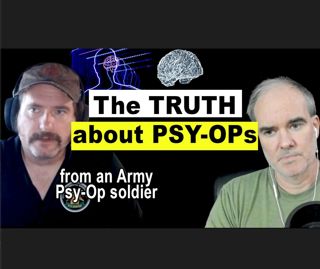
Army Psy-Op veteran talks influence, blowback, psy-op myths, and more

Army Psy-Op veteran talks influence, blowback, psy-op myths, and more

A talk with an Army Psychological Operations soldier about what military psy-op work really involves—and how different the reality is from many people's ideas about the nature of that work. We discuss...

28 Aug 1h 28min

Can computers spot lies better than humans?, with Bennett Kleinberg

Can computers spot lies better than humans?, with Bennett Kleinberg

Can machines spot a lie better than we can? I talk with psychology researcher Bennett Kleinberg, whose work brings together psychology, machine learning, natural-language processing, and deception det...

12 Aug 1h
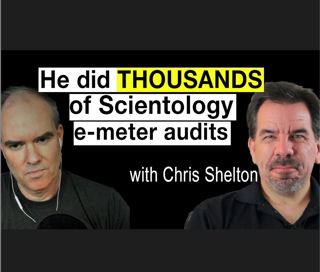
Inside a Scientology e-meter auditing session, with Chris Shelton

Inside a Scientology e-meter auditing session, with Chris Shelton

Former Scientologist Chris Shelton spent thousands of hours using the e-meter to "audit" fellow members of the Church—but what does the device actually measure, and why do Scientologists trust it as a...

2 Aug 1h 23min
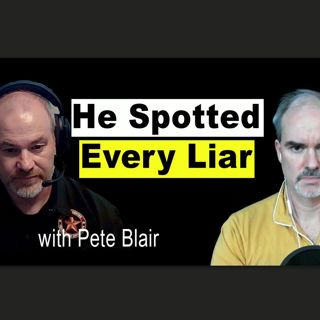
How Pete Blair scored 100% in a deception detection study

How Pete Blair scored 100% in a deception detection study

In a 2014 deception detection study, Pete Blair made 33 judgments—and got all 33 right. That paper was titled “Expertise in deception detection involves actively prompting diagnostic information rathe...

24 Juli 1h 3min
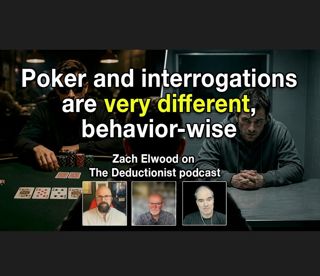
Behaviorally, poker and interrogations are very different

Behaviorally, poker and interrogations are very different

Zach Elwood, author of influential books on poker tells and host of the People Who Read People podcast, joins The Deductionist podcast for a wide-ranging conversation about what we can and can't learn...

10 Juli 49min
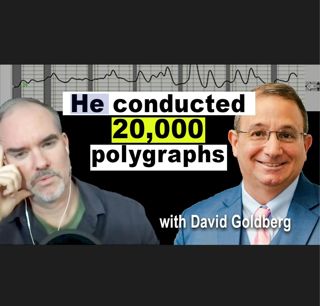
Understanding defenses of the polygraph, with David Goldberg

Understanding defenses of the polygraph, with David Goldberg

Polygraphs are a controversial tool in criminal investigations: critics argue they're too unreliable to trust, while proponents say that, even if they’re not perfect, they nonetheless can play a valua...

1 Juli 1h 19min
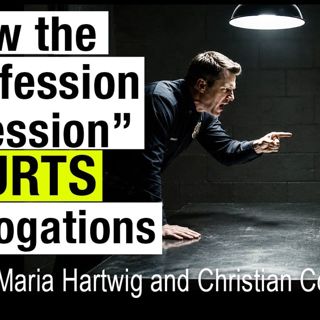
The push for science-based interrogation approaches, with Maria Hartwig and Christian Cory

The push for science-based interrogation approaches, with Maria Hartwig and Christian Cory

In real or fictional criminal interrogation scenes, you've probably seen the approach where police barge in and confront the suspect with the evidence, trying to get them to crack and give a confessio...

20 Juni 53min
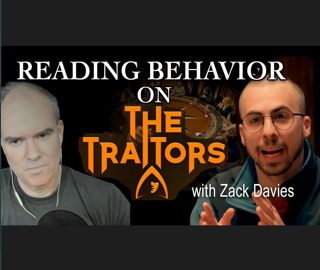
Reading behavior in The Traitors and other social deduction games, with Zack Davies (UK season 2)

Reading behavior in The Traitors and other social deduction games, with Zack Davies (UK season 2)

Zack Davies was a standout contestant on the popular reality TV show The Traitors (UK, season 2). The Traitors is what is called a social deduction game, similar to the games Werewolf and Mafia. In th...

13 Juni 1h
Populärt inom Politik & nyheter

aftonbladet-krim
svenska-fall
p3-krim
fordomspodden
rss-krimstad
aftonbladet-daily
flashback-forever
en-runda-till
rss-vad-fan-hande
rss-sanning-konsekvens
politiken
svd-ledarredaktionen
motiv
omni-podd
rss-krimreportrarna
rss-utopia-2
kungligt
rss-frandfors-horna
the-power-meeting-podcast
rss-flodet