
Bile Acid Malabsorption
PodcastDX19 Mars 2024

Bile Acid Malabsorption

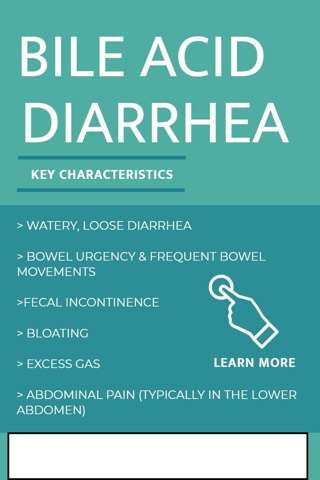
This week we will discuss Bile acid malabsorption (BAM), a gastrointestinal disease. It's a common cause of chronic diarrhea. When bile acids aren't properly absorbed in your intestines, they build up, upsetting the chemical balance inside. Excess bile acids trigger your colon to secrete extra water, leading to watery stools.

What are bile acids?

Bile is a substance your liver makes while filtering your blood. Your liver sorts waste products, such as toxins, dead blood cells and excess cholesterol into bile. Bile acids come from synthesizing these products together. The different acids in bile help to stabilize the lipids in the mix and keep them in a liquid form.

Your liver sends bile through your bile ducts to your small intestine to help with digestion. Bile acids in your small intestine help break down fats for absorption. When that work is done, they are supposed to be reabsorbed themselves, returning to your circulation and then your liver to be recycled into bile again.

What is malabsorption?

Malabsorption is any failure of your intestines to absorb all of the chemicals they're meant to. Malabsorption can be a problem with your intestines themselves, or it may result from a chemical imbalance. For example, you may have too much or too little of a certain chemical for your intestines to absorb.

Who does bile acid malabsorption affect?

BAM has been historically underdiagnosed due to a lack of accessible ways to test for it. But studies now show that at least 30% of those diagnosed with functional diarrhea disorders may have BAM. Functional disorders are those that have no apparent cause and are likely to go undetected during a medical examination, such as irritable bowel syndrome (IBS).

BAM is seen in people with conditions such as:

It can also happen in people who receive certain medical treatments including:

What are the symptoms of bile acid malabsorption?

Typical symptoms include:

Some people also have:

Long-term symptoms can include:

About half of people have constant symptoms, and the other half only report occasional symptoms.

What causes bile acid diarrhea?

The symptoms of bile acid malabsorption — primarily, bile acid diarrhea, or BAD — result from the buildup of bile acids in your colon, where food waste turns to poop. Normally, 95% of the bile acids in your small intestine are reabsorbed in the last segment (the ileum) before passing on to your colon.

When too many are left over, however, they pass into your large intestine with the rest of the waste. Bile acids in your colon irritate the mucous lining, triggering it to secrete extra fluid and speeding up the muscle contractions that move poop along. This causes frequent, urgent diarrhea and cramping.

What causes bile acid malabsorption?

What causes bile acids to build up in your intestines is another question.

Researchers have classified the possible causes of BAM into four different types. Sometimes they classify BAM as either primary or secondary.

Primary BAM is caused by your liver overproducing bile acids (types 2 and 4.)

Secondary BAM is caused by damage to your small intestine due to disease, surgery or radiation treatment (types 1 and 3.)

Type 1 BAM is caused by a problem with your ileum itself. This is considered true malabsorption, because the problem begins at absorption stage of the bile acid cycle. You may have type 1 BAM if you've had the last part of your small intestine surgically removed, altered or bypassed to treat another condition. Certain diseases, such as Crohn's disease, and treatments such as radiation therapy can also damage the ileum. Significant damage impairs its ability to absorb.

Type 2 BAM has sometimes been called "idiopathic," which means that it happens spontaneously or for unknown reasons. However, current research suggests that it's a problem with the chemical signaling between your intestines and your liver. This signaling is what normally regulates your bile acid cycle (enterohepatic circulation.) Chemicals in your blood signal when your liver should produce and deliver more bile acids and when it's time to stop, reabsorb and recycle them. But with type 2 BAM, your liver doesn't get the memo to stop. So, it keeps sending bile acids — too many for your ileum to absorb.

Type 3 BAM is caused by gastrointestinal diseases that can affect your ileum along with other parts of your digestive system. These include celiac disease, chronic pancreatitis and small intestinal bacterial overgrowth (SIBO).

Type 4 BAM is caused by excessive bile acid production as a side effect of taking Metformin.

Det här avsnittet är hämtat från ett öppet RSS-flöde och publiceras inte av Podme. Det kan innehålla reklam.

Avsnitt(441)

Ai and Robotics in Medicine

Ai and Robotics in Medicine

This week on PodcastDX, Dr. Sanjeev Kumar joins Lita, Ron, and Jean Marie to discuss AI and robotics in medicine—from surgical robots and rehabilitation technology to hospital automation, patient safe...

1 Sep 47min

EECP The Most Underutilized Therapy in Medicine

EECP The Most Underutilized Therapy in Medicine

Retired U.S. Coast Guard Master Chief Petty Officer Jack Clifford joins PodcastDX to share how severe chronic angina once limited even everyday activities and left him facing the possibility of triple...

25 Aug 44min

Diary of An Epileptic

Diary of An Epileptic

In this episode of PodcastDX, we speak with Allany Muniz, founder of Diary of an Epileptic, about the realities of living with epilepsy beyond what most people see. Allany shares how her diagnosis cha...

18 Aug 28min

Memory Villages

Memory Villages

Memory Villages explores the promise and the questions surrounding dementia villages—care communities designed to feel more like neighborhoods than institutions. We discuss how familiar surroundings, ...

11 Aug 17min

Ebola

Ebola

In this PodcastDX episode, Lita and Jean Marie unpack Ebola as a severe but not casually spread viral disease, explaining that infection requires direct contact with blood or other body fluids or cont...

4 Aug 23min
Sunscreen

Sunscreen

In this week's episode of PodcastDX, Lita and Jean Marie break down why sunscreen is about far more than avoiding a bad sunburn—it's everyday cancer prevention. They explain how UV damage happens whil...

28 Juli 17min
Vagus Nerve Reset

Vagus Nerve Reset

In this solo PodcastDX episode, Lita introduces the concept of the vagus nerve and explains why it has become such a focus in wellness, neurology, psychiatry, and online health spaces. She describes t...

21 Juli 17min

When Seconds Matter

When Seconds Matter

"When Seconds Matter" is a strong, urgent PodcastDX episode.  It is a personal story about emergency response and the critical minutes before help arrives. It's focused on recognizing danger early, ca...

14 Juli 14min

Populärt inom Hälsa

somna-med-henrik
rss-jossan-nina
bullfika
inga-beiga-morsor
rss-bara-en-till-om-beroende-medberoende
rss-vuxna-pa-latsas
not-fanny-anymore
rss-viktmedicinpodden
sexnoveller-deluxe
angestpodden
johannes-hansen-podcast
sa-in-i-sjalen
rss-hos-psykologen
rss-basta-livet
tyngre-traningssnack
sova-med-dan-horning
rss-traningsklubben
medicinvetarna
halsorevolutionen
rss-angra-inget-3