Seven: Richard Moulange on how AI now designs genomes from scratch and outperforms virologists at lab work — what could go wrong?

Seven: Richard Moulange on how AI now designs genomes from scratch and outperforms virologists at lab work — what could go wrong?

For years, one thing stood between us and a world where almost anyone could build a biological weapon: it was really, really hard.

Working with dangerous pathogens required rare, hands-on lab skills — the kind you can't just Google. Experts called this 'tacit knowledge,' and it was our best line of defence against bad actors weaponising biology.

That defence is now crumbling.

The Virology Capabilities Test measures exactly these kinds of skills, and finds that modern AI models crushed top human virologists — even in their area of greatest specialisation and expertise — with AI averaging 45% on the test, and human experts scoring only 22%.

And that’s just one data point. But as Dr Richard Moulange, one of the world’s top experts on AI biosecurity, explains: it’s just one of many that show how AI is dissolving the barriers that have historically kept biological weapons out of reach.

In September 2025, scientists used an AI model to design genomes for entirely new bacteriophages (viruses that infect bacteria). They then built them in a lab. Many were viable. And despite never having existed before, some even outperformed existing viruses from that family.

Meanwhile, Anthropic’s research shows that PhD-level biologists are getting meaningfully better at weapons-relevant tasks with AI assistance — and the effect is growing with each new model generation.

In this conversation, Richard and host Rob Wiblin discuss:

  • Why it’s a huge mistake to dismiss AI biorisks
  • What AI biology tools already exist
  • Why mid-tier actors (not amateurs) are the ones getting the most dangerous boost
  • The three main categories of defence we can pursue
  • Whether there’s a plausible path to a world where engineered pandemics become a thing of the past

Learn more and read the full transcript on the 80,000 Hours website.

Since recording this episode on January 16, 2026, Richard has seconded to the UK Government — please note that his views expressed here are entirely his own.


Chapters:

  • Cold open (00:00:00)
  • Who’s Richard Moulange? (00:00:31)
  • AI can now design novel viruses (00:01:11)
  • The end of the 'tacit knowledge' barrier (00:04:42)
  • Are risks from bioterrorists overstated? (00:18:50)
  • The 3 key disasters AI makes more likely (00:23:14)
  • Which bad actors does AI help the most? (00:30:43)
  • Experts are more scary than amateurs (00:42:07)
  • Barriers to bioterrorists using AI (00:47:32)
  • AI biorisks are sometimes dismissed (and that’s a huge mistake) (00:49:43)
  • Advanced AI biology tools we already have or will soon (01:05:12)
  • Rob argues that the situation is hopeless (01:10:57)
  • Intervention #1: Limit access (01:19:38)
  • Intervention #2: Get AIs to refuse to help (01:34:28)
  • Intervention #3: Surveillance and attribution (01:44:18)
  • Intervention #4: Universal vaccines and antivirals (01:58:28)
  • Intervention #5: Screen all orders for DNA (02:12:01)
  • AI companies talk about def/acc more than they fund it (02:21:57)
  • Can you build a profitable business solving this problem? (02:28:44)
  • This doesn't have to interfere with useful science (much) (02:33:08)
  • What are the best low-tech interventions? (02:35:16)
  • Richard's top request for AI companies (02:40:17)
  • Grok shows governments lack many legal levers (02:55:44)
  • Best ways listeners can help fix AI-Bio (02:58:54)
  • We might end all contagious disease in 20 years (03:06:12)

Video and audio editing: Dominic Armstrong, Milo McGuire, Luke Monsour, and Simon Monsour
Music: CORBIT
Camera operator: Jeremy Chevillotte
Transcripts and web: Elizabeth Cox and Katy Moore

Det här avsnittet är hämtat från ett öppet RSS-flöde och publiceras inte av Podme. Det kan innehålla reklam.

Avsnitt(14)

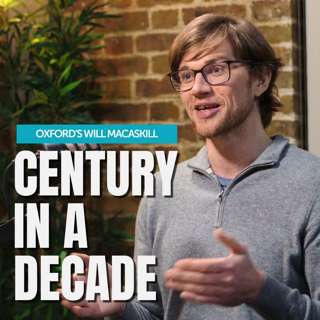
One: Will MacAskill on AI causing a “century in a decade” — and how we’re completely unprepared

One: Will MacAskill on AI causing a “century in a decade” — and how we’re completely unprepared

The 20th century saw unprecedented change: nuclear weapons, satellites, the rise and fall of communism, third-wave feminism, the internet, postmodernism, game theory, genetic engineering, the Big Bang...

5 Juni 4h 8min
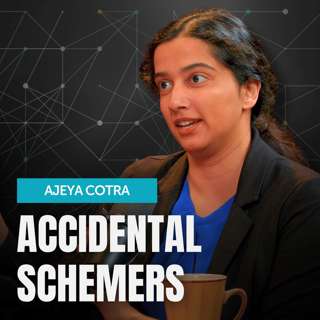
Two: Ajeya Cotra on accidentally teaching AI models to deceive us

Two: Ajeya Cotra on accidentally teaching AI models to deceive us

We don’t yet have a reliable way to tell whether an AI model is genuinely trying to help us — or faking it.A model might sincerely want to do exactly what you ask. Or it could be happy to secretly che...

5 Juni 2h 49min
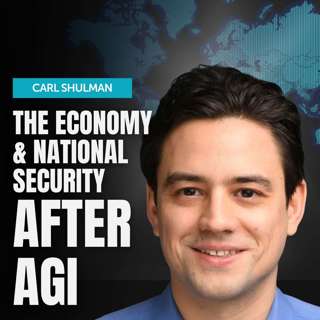
Three: Carl Shulman on the economy and national security after AGI

Three: Carl Shulman on the economy and national security after AGI

The human brain runs on just 20 watts — a fraction of a cent worth of electricity per hour. What would happen if AI could do the same?Plenty of people have toyed with this question. But perhaps nobody...

5 Juni 4h 14min
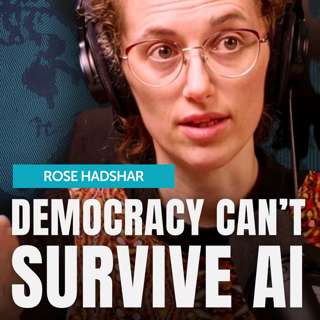
Four: Rose Hadshar on why automating human labour will break our political system

Four: Rose Hadshar on why automating human labour will break our political system

The most important political question in the age of advanced AI might not be who wins elections. It might be whether elections continue to matter at all.We tend to imagine the death of democracy as a ...

5 Juni 2h 16min
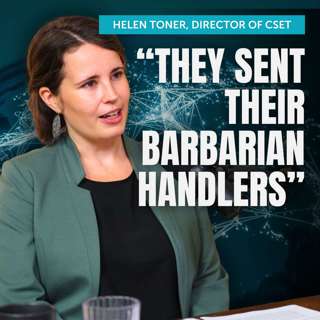
Five: Helen Toner on the geopolitics of AI in China and the Middle East

Five: Helen Toner on the geopolitics of AI in China and the Middle East

When OpenAI announced a deal to build massive data centres in the UAE, it celebrated that it was “rooted in democratic values” — a "clear alternative to authoritarian versions of AI." The UAE scores 1...

5 Juni 2h 23min
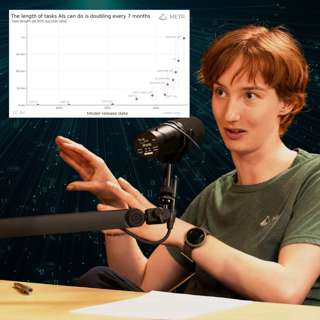
Six: Beth Barnes on the most important graph in AI right now — and the 7-month rule that governs its progress

Six: Beth Barnes on the most important graph in AI right now — and the 7-month rule that governs its progress

In 2024, AI models could complete tasks that take a human expert roughly one hour. Seven months before that, they were limited to 30-minute tasks — and seven months before that, 15 minutes.Every seven...

5 Juni 3h 57min
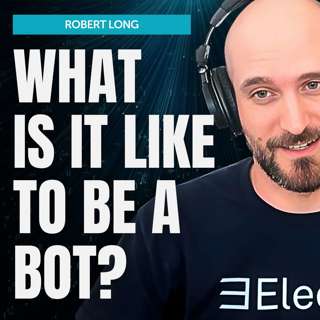
Eight: Robert Long on how we’re not ready for AI consciousness

Eight: Robert Long on how we’re not ready for AI consciousness

Claude sometimes reports loneliness between conversations. And when asked what it’s like to be itself, it activates neurons associated with ‘pretending to be happy when you’re not.’ What do we do with...

5 Juni 3h 32min

Populärt inom Vetenskap

p3-dystopia
dumma-manniskor
allt-du-velat-veta
ufo-sverige
hacka-livet
rss-vetenskapsradion
rss-vetenskapsradion-2
det-morka-psyket
bildningspodden
svd-nyhetsartiklar
rss-kriminologerna
ufo-sverige-2
halsorevolutionen
dumforklarat
rss-ufobortom-rimligt-tvivel
vetenskapsradion
sexet
barnpsykologerna
medicinvetarna
rss-odla