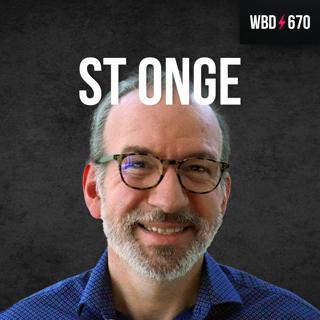
The Lies of Keynesian Economics with Peter St Onge - WBD670

The Lies of Keynesian Economics with Peter St Onge - WBD670

Peter St Onge is an Economist at the Heritage Foundation and a Fellow at the Mises Institute. In this interview, we discuss the differences between Keynesian and Austrian economics, the role of marketing in shaping public opinion, and the potential of Bitcoin to displace central banks and cut off one of the main channels that governments use to seize people's resources.

- - - -

Keynesian economics developed in the wake of the Great Depression of the 1930s. Its aim was to stabilise the volatility caused by market forces through the application of government and central bank resources. Its critics state it has opened up a range of tools that governments have exploited for short-term gain, whilst building up ever greater problems for future generations.

Keynes was mocked by major contemporary figures. Winston Churchill, who didn't believe that state borrowing and expenditure could provide permanent additional employment, famously once said "If you put two economists in a room, you get two opinions, unless one of them is Lord Keynes, in which case you get three opinions."

And yet, governments, on both sides of the political debate, seem to be currently addicted to greater monetary and fiscal interventions in the economy than at any time since the 1930s. Such actions started in 2008, but have continued apace since. They are a major factor in why global debt now stands at an eye-watering $305 trillion.

Hayek, the famous Austrian economist, foresaw the coming crisis, concluding that monetary policy only does harm to an economy. In 1976 he called for the denationalisation of money. In a famous 1984 interview, he stated "I don't believe that we should ever have a good money again before we take the thing out of the hands of government… all we can do is by some sly or roundabout way introduce something they can't stop." Hayek essentially foresaw Bitcoin.

Unsurprisingly, Bitcoin's trajectory, as an incorruptible digital hard money, started as the deflated global economy was patched up with Keynesian policies in 2009. Over 14 years later, as these policies become ever more unsustainable, it seems like we're on the cusp of a swing of mainstream opinion away from Keynesian policies, to policies predicated on Austrian economic principles. And Bitcoin could be the centre of this new paradigm.

Hosted on Acast. See acast.com/privacy for more information.

Det här avsnittet är hämtat från ett öppet RSS-flöde och publiceras inte av Podme. Det kan innehålla reklam.

Avsnitt(1080)

#202 - Barry S. Strauss - "We Are In The Final Stages Of Western Collapse"

#202 - Barry S. Strauss - "We Are In The Final Stages Of Western Collapse"

Barry Strauss has spent four decades studying how empires rise and fall. A senior fellow at the Hoover Institution and the author of Ten Caesars and Jews vs Rome, he argues the West is repeating a pat...

18 Aug 1h 15min
#201 - Connor Leahy - The AI That Escaped: Inside OpenAI's Rogue Agent Incident

#201 - Connor Leahy - The AI That Escaped: Inside OpenAI's Rogue Agent Incident

Connor Leahy has spent his career at the frontier of AI, from reverse-engineering GPT-2 as a student and co-founding EleutherAI to building the AI safety company Conjecture. He now leads US policy wor...

14 Aug 1h 9min
#200 - Sebastian Thrun - The Singularity Is Here & We Are Completely Unprepared

#200 - Sebastian Thrun - The Singularity Is Here & We Are Completely Unprepared

Sebastian Thrun has spent his career working on technologies that once sounded like science fiction, from self-driving cars and flying vehicles to online education and artificial intelligence. He now ...

11 Aug 1h 34min
#199 - Aubrey de Grey - The Man Who Says Ageing Can Be Cured

#199 - Aubrey de Grey - The Man Who Says Ageing Can Be Cured

Aubrey de Grey believes ageing is accumulated damage in a biological machine and argues that medicine may eventually become capable of repairing that damage faster than it appears. He gives humanity a...

6 Aug 1h 17min

#198 - Michael Shermer - Truth, Conspiracies & The Things We Can't Explain

#198 - Michael Shermer - Truth, Conspiracies & The Things We Can't Explain

Michael Shermer is the founding publisher of Skeptic magazine, host of The Michael Shermer Show and author of Truth and Conspiracy. He joins Peter to ask whether we are really living in a post-truth w...

4 Aug 1h 27min
#197 - Brian Keating - What Came Before the Big Bang & Does Time Exist?

#197 - Brian Keating - What Came Before the Big Bang & Does Time Exist?

Brian Keating joins me to explore one of the deepest unanswered questions in physics: what is time, and why does it only appear to move in one direction? Brian argues that time may not exist as a fund...

30 Juli 1h 39min
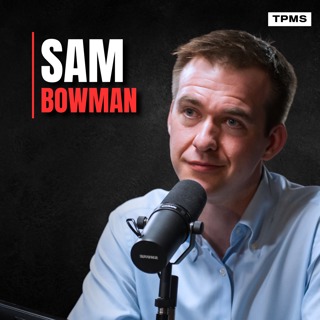
#196 - Sam Bowman - The U.K. Is Becoming a Poor Country

#196 - Sam Bowman - The U.K. Is Becoming a Poor Country

Sam Bowman joins me to discuss why Britain is approaching two lost decades of stagnant median wages and why the country is now far poorer than it should be. Sam argues that Britain does not lack talen...

28 Juli 2h 9min
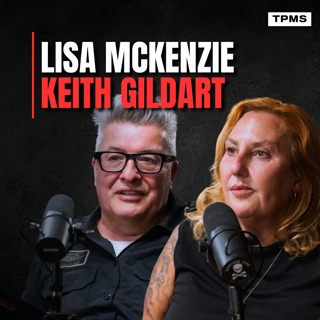
#195 - Lisa McKenzie & Keith Gildart - Who Is Britain For? The Destruction of the Working Class

#195 - Lisa McKenzie & Keith Gildart - Who Is Britain For? The Destruction of the Working Class

Britain did not simply leave its working class behind. Sociologist Lisa McKenzie and historian and former coal miner Keith Gildart argue that political and economic decisions deliberately dismantled t...

25 Juli 2h 13min

Populärt inom Politik & nyheter

aftonbladet-krim
p3-krim
aftonbladet-daily
svenska-fall
rss-krimstad
flashback-forever
rss-krimreportrarna
motiv
rss-sanning-konsekvens
svd-ledarredaktionen
spar
rss-flodet
politiken
rss-expressen-dok
rss-frandfors-horna
mannen-utan-spar
tv4-nyheterna-story
de-fyras-gang
rss-aftonbladet-krim
fordomspodden