Hidden in the Archives

Hidden in the Archives

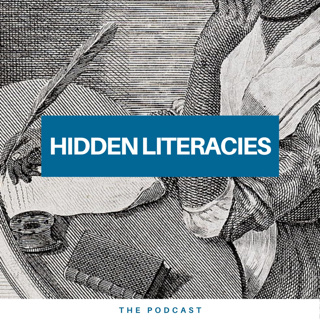
However texts that survive are created, used, and preserved, it is invariably the case that archiving serves other interests than those of the creators. A whole host of people render judgments on a text’s purpose, meaning, and value: the historical actors who kept some papers and discarded others, who gave what they kept to a library or historical society (or didn’t); the professional archivists who catalog it in certain ways and make it accessible in certain contexts; the researchers and readers who encounter texts via certain kinds of information—key words, finding aids—and see them through lenses of their own. Archives get reinvented over and over again by different generations of librarians and scholars. Along the way, knowledge can be lost or forgotten. Hidden Literacies emerges from our sense of responsibility to find anew what might have been left aside by a different generation, or by those looking for different kinds of materials. On this episode, we hear from two archivists at institutions contributing items to Hidden Literacies, Ilene Frank, Chief Curator at the Connecticut Historical Society and Christina Bleyer, Assistant Vice President for Libraries and Distinctive Collections. They discuss the roles archives play in preservation, whose stories archives allow us to tell and what digitizing items like those in our anthology can mean for people invested in exploring our shared past.

Transcript link: https://drive.google.com/file/d/1xLg2QsU4MyTrPXV_wx92eVQ7PMQhpNrV/view?usp=sharing

Explore Hidden Literacies at https://www.hiddenliteracies.org

Hidden Literacies brings together leading scholars of historical literacy to investigate the surprising, often neglected roles reading and writing have played in the lives of marginalized Americans—from indigenous and enslaved people to prisoners and young children. By presenting high-resolution images of archival texts and pairing them with expert commentary, Hidden Literacies aims to make these writers and texts—which too often lie below the radar of American literature curricula—more available and accessible to teachers and researchers.

Hidden Literacies is edited by Christopher Hager and Hilary Wyss.

Christopher Hager is Professor of English at Trinity College, where he teaches courses in American literature and American Studies.

Hilary E. Wyss is the Allan K. Smith and Gwendolyn Miles Smith Professor of English at Trinity College in Hartford, Connecticut, where she teaches courses in early American literature, American studies, and Native American studies.

Hidden Literacies was produced with the support of the following staff members of Trinity College Information Technology & Library Services:

Cait Kennedy, Research, Outreach, and Technology Librarian

Mary Mahoney, Digital Scholarship Coordinator

Joelle Thomas, Digital Learning & Discovery Librarian

Hidden Literacies: the Podcast was recorded, edited, and produced by Mary Mahoney.

Sound Credits:

“Crescents” by Ketsa (Free Music Archive)

Det här avsnittet är hämtat från ett öppet RSS-flöde och publiceras inte av Podme. Det kan innehålla reklam.

Avsnitt(14)

Trailer

Trailer

Hidden Literacies brings together leading scholars of historical literacy to investigate the surprising, often neglected roles reading and writing have played in the lives of marginalized Americans—fr...

1 Nov 20221min

Hidden Literacies: An Introduction 

Hidden Literacies: An Introduction 

Hidden Literacies is an archive of a sort that most people—even many students and teachers of American literature—have not seen. It includes texts created by people who weren’t formally educated or wh...

1 Nov 202224min

Interview with Katy Chiles on “Phillis Wheatley, Amanuensis – a letter from Susanna"

Interview with Katy Chiles on “Phillis Wheatley, Amanuensis – a letter from Susanna"

A letter from a prosperous Boston matron may not seem a surprising or noteworthy exercise of literacy -- until it appears, as scholar Katy Chiles proposes, that the handwriting of the letter likely be...

1 Nov 202219min

Interview with Matt Cohen on “Walt Whitman’s Baby Talk”

Interview with Matt Cohen on “Walt Whitman’s Baby Talk”

"In the spring of 1875, the poet Walt Whitman, then living in Camden, New Jersey, received an unusual piece of fan mail from the South..." With wry understatement, so begins Matt Cohen's commentary o...

1 Nov 202225min

Interview with Andrew Newman on “Permit Us to Speak Plainly”

Interview with Andrew Newman on “Permit Us to Speak Plainly”

Members of the Munsee community had been displaced to present-day Kansas by the 1840s, but they well recalled their northeastern homelands and knew what befell their ancestors more than two centuries ...

1 Nov 202215min

Interview with Karen Sanchez-Eppler on "Juvenile Journalism and Genocide"

Interview with Karen Sanchez-Eppler on "Juvenile Journalism and Genocide"

A group of boys in 1890s New Hampshire played at writing, editing, and publishing a manuscript magazine about an elaborate fictional world based on their own back yard. Their writing deftly mimicked ...

1 Nov 202224min

Interview with Caroline Wigginton on “Visions, Versions, and Deeds”

Interview with Caroline Wigginton on “Visions, Versions, and Deeds”

At first glance, the archives show her to be Mary Bosomworth, wife of an English colonist, bereft of a voice or any rights separate from his. But a careful reading reveals Coosaponakeesa, a Creek "la...

1 Nov 202211min

Populärt inom Historia

motiv
massmordarpodden
kod-katastrof
historiska-brott
p3-historia
historiepodden-se
olosta-mord
historianu-med-urban-lindstedt
rss-brottsligt
rss-massmordarpodden
rss-historien-om-2
krigshistoriepodden
konspirationsteorier
militarhistoriepodden
nu-blir-det-historia
bedragare
rss-folkets-historia
harrisons-dramatiska-historia
vetenskapsradion-historia