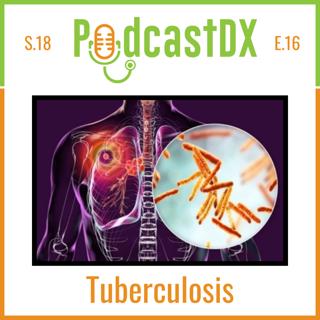

Tuberculosis Resurgence
PodcastDX4 Feb 2025

Tuberculosis Resurgence

This week's episode we will discuss the resurgence of TB/ Tuberculosis. TB is a treatable and curable disease. Active, drug-susceptible TB disease is treated with a standard 6-month course of 4 antimicrobial drugs that are provided with information and support to the patient by a health worker or trained volunteer. Without such support, treatment adherence is more difficult.

Since 2000, an estimated 66 million lives were saved through TB diagnosis and treatment. (credits: WHO)

  • A total of 1.5 million people died from TB in 2020 (including 214 000 people with HIV). Worldwide, TB is the 13th leading cause of death and the second leading infectious killer after COVID-19 (above HIV/AIDS).

  • In 2020, an estimated 10 million people fell ill with tuberculosis (TB) worldwide. 5.6 million men, 3.3 million women and 1.1 million children. TB is present in all countries and age groups. But TB is curable and preventable.

  • In 2020, 1.1 million children fell ill with TB globally. Child and adolescent TB is often overlooked by health providers and can be difficult to diagnose and treat.

  • In 2020, the 30 high TB burden countries accounted for 86% of new TB cases. Eight countries account for two thirds of the total, with India leading the count, followed by China, Indonesia, the Philippines, Pakistan, Nigeria, Bangladesh and South Africa.

  • Multidrug-resistant TB (MDR-TB) remains a public health crisis and a health security threat. Only about one in three people with drug resistant TB accessed treatment in 2020.

  • Globally, TB incidence is falling at about 2% per year and between 2015 and 2020 the cumulative reduction was 11%. This was over half way to the End TB Strategy milestone of 20% reduction between 2015 and 2020.

  • An estimated 66 million lives were saved through TB diagnosis and treatment between 2000 and 2020.

  • Globally, close to one in two TB-affected households face costs higher than 20% of their household income, according to latest national TB patient cost survey data. The world did not reach the milestone of 0% TB patients and their households facing catastrophic costs as a result of TB disease by 2020.

  • By 2022, US$ 13 billion is needed annually for TB prevention, diagnosis, treatment and care to achieve the global target agreed at the UN high level-meeting on TB in 2018.

  • Funding in low- and middle-income countries (LMICs) that account for 98% of reported TB cases falls far short of what is needed. Spending in 2020 amounted to US$ 5.3 billion less than half (41%) of the global target.

  • There was an 8.7% decline in spending between 2019 and 2020 (from US$ 5.8 billion to US$ 5.3 billion), with TB funding in 2020 back to the level of 2016.

  • Ending the TB epidemic by 2030 is among the health targets of the United Nations Sustainable Development Goals (SDGs).

Tuberculosis (TB) is caused by bacteria (Mycobacterium tuberculosis) that most often affect the lungs. Tuberculosis is curable and preventable.

TB is spread from person to person through the air. When people with lung TB cough, sneeze or spit, they propel the TB germs into the air. A person needs to inhale only a few of these germs to become infected.

About one-quarter of the world's population has a TB infection, which means people have been infected by TB bacteria but are not (yet) ill with the disease and cannot transmit it.

People infected with TB bacteria have a 5–10% lifetime risk of falling ill with TB. Those with compromised immune systems, such as people living with HIV, malnutrition or diabetes, or people who use tobacco, have a higher risk of falling ill.

When a person develops active TB disease, the symptoms (such as cough, fever, night sweats, or weight loss) may be mild for many months. This can lead to delays in seeking care, and results in transmission of the bacteria to others. People with active TB can infect 5–15 other people through close contact over the course of a year. Without proper treatment, 45% of HIV-negative people with TB on average and nearly all HIV-positive people with TB will die.

Who is most at risk?

Tuberculosis mostly affects adults in their most productive years. However, all age groups are at risk. Over 95% of cases and deaths are in developing countries.

People who are infected with HIV are 18 times more likely to develop active TB (see TB and HIV section below). The risk of active TB is also greater in persons suffering from other conditions that impair the immune system. People with undernutrition are 3 times more at risk. Globally in 2020, there were 1.9 million new TB cases that were attributable to undernutrition.

Alcohol use disorder and tobacco smoking increase the risk of TB disease by a factor of 3.3 and 1.6, respectively. In 2020, 0.74 million new TB cases worldwide were attributable to alcohol use disorder and 0.73 million were attributable to smoking.

Global impact of TB

TB occurs in every part of the world. In 2020, the largest number of new TB cases occurred in the WHO South-East Asian Region, with 43% of new cases, followed by the WHO African Region, with 25% of new cases and the WHO Western Pacific with 18%.

In 2020, 86% of new TB cases occurred in the 30 high TB burden countries. Eight countries accounted for two thirds of the new TB cases: India, China, Indonesia, the Philippines, Pakistan, Nigeria, Bangladesh and South Africa.

Symptoms and diagnosis

Common symptoms of active lung TB are cough with sputum and blood at times, chest pains, weakness, weight loss, fever and night sweats. WHO recommends the use of rapid molecular diagnostic tests as the initial diagnostic test in all persons with signs and symptoms of TB as they have high diagnostic accuracy and will lead to major improvements in the early detection of TB and drug-resistant TB. Rapid tests recommended by WHO are the Xpert MTB/RIF Ultra and Truenat assays.

Diagnosing multidrug-resistant and other resistant forms of TB (see Multidrug-resistant TB section below) as well as HIV-associated TB can be complex and expensive.

Tuberculosis is particularly difficult to diagnose in children.

Det här avsnittet är hämtat från ett öppet RSS-flöde och publiceras inte av Podme. Det kan innehålla reklam.

Avsnitt(440)

EECP The Most Underutilized Therapy in Medicine

EECP The Most Underutilized Therapy in Medicine

Retired U.S. Coast Guard Master Chief Petty Officer Jack Clifford joins PodcastDX to share how severe chronic angina once limited even everyday activities and left him facing the possibility of triple...

25 Aug 44min

Diary of An Epileptic

Diary of An Epileptic

In this episode of PodcastDX, we speak with Allany Muniz, founder of Diary of an Epileptic, about the realities of living with epilepsy beyond what most people see. Allany shares how her diagnosis cha...

18 Aug 28min

Memory Villages

Memory Villages

Memory Villages explores the promise and the questions surrounding dementia villages—care communities designed to feel more like neighborhoods than institutions. We discuss how familiar surroundings, ...

11 Aug 17min
Ebola

Ebola

In this PodcastDX episode, Lita and Jean Marie unpack Ebola as a severe but not casually spread viral disease, explaining that infection requires direct contact with blood or other body fluids or cont...

4 Aug 23min

Sunscreen

Sunscreen

In this week's episode of PodcastDX, Lita and Jean Marie break down why sunscreen is about far more than avoiding a bad sunburn—it's everyday cancer prevention. They explain how UV damage happens whil...

28 Juli 17min

Vagus Nerve Reset

Vagus Nerve Reset

In this solo PodcastDX episode, Lita introduces the concept of the vagus nerve and explains why it has become such a focus in wellness, neurology, psychiatry, and online health spaces. She describes t...

21 Juli 17min

When Seconds Matter

When Seconds Matter

"When Seconds Matter" is a strong, urgent PodcastDX episode.  It is a personal story about emergency response and the critical minutes before help arrives. It's focused on recognizing danger early, ca...

14 Juli 14min
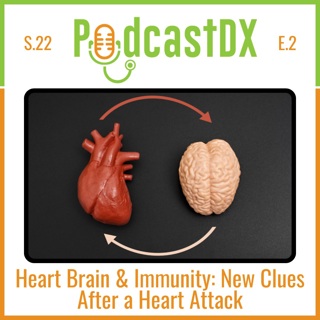
Heart, Brain & Immunity: New Clues After a Heart Attack

Heart, Brain & Immunity: New Clues After a Heart Attack

After a heart attack, the story doesn't end in the arteries. In this episode of PodcastDX, Lita and Jean Marie explore new science showing how the heart, brain, and immune system talk to each other du...

26 Maj 19min

Populärt inom Hälsa

somna-med-henrik
rss-jossan-nina
rss-bara-en-till-om-beroende-medberoende
bullfika
inga-beiga-morsor
rss-vuxna-pa-latsas
not-fanny-anymore
rss-viktmedicinpodden
angestpodden
sexnoveller-deluxe
johannes-hansen-podcast
rss-hos-psykologen
sa-in-i-sjalen
rss-basta-livet
sova-med-dan-horning
tyngre-traningssnack
halsoveckan-by-tyngre
rss-autismandan
rss-angra-inget-3
brottarbroder