
Reinventing the Chinese language

Reinventing the Chinese language

After defeat in the Second Opium War, Chinese intellectuals wracked their minds for how the Chinese nation can survive in the new industrialised world. It’s a topic that has been discussed on this podcast before – listeners may remember the episode with Bill Hayton, author of The Invention of China, where we discussed the reformers and revolutionaries like Liang Qichao and Kang Youwei. But for some reformers, the problem with China wasn’t just feudal politics or Confucian staleness, but its ancient language.

Spoken Chinese could be any of a vast number of regional dialects which were too often mutually unintelligible. Meanwhile, written Chinese was extremely complicated, not helping the rock bottom literacy rates of the common people (30 per cent for men and 2 per cent for women). Literary and official writing were also uniformly written in 'classical Chinese', a concise poetic form of the language which was not the way that people spoke (the vernacular). The difference can be thought of as the difference between Latin and English pre-Reformation. Of even more concern was the fact that Chinese wasn’t easily adaptable to the new communication technologies that were revolutionising the world at the time, like telegraphy and typewriters (above, a picture of a 1986 model of the Chinese typewriter). These western-invented methods were based on alphabetic languages – which Chinese simply isn't.

Earlier this year, I reviewed Kingdom of Characters, the new book from Jing Tsu, who is Professor of East Asian Languages and Literatures at Yale. Jing’s book is an excellent account of the efforts to simplify, modernise and adapt this ancient language from Chinese and westerners alike. She joins me on this episode to talk through all of the problems outlined briefly here, and how a series of reformers, politicians and linguists throughout the 20th century tried to resolve these problems – sometimes with solutions nothing short of extraordinary. Of her mission, Jing says: 'I wanted to put a western reader in the shoes of these adorable, curmudgeonly, hard to take but utterly human Chinese characters'.

We discuss the different upbringings we had – me in the People's Republic of China and Jing in the Republic of China (Taiwan) – and how that impacts our relationship to the traditional and simplified versions of the Chinese script and how important that script is to the Chinese national identity. We talk about the incredible and often positive influence westerners had on this language revolution (a narrative to do with that century of humiliation I didn't hear much about in a traditional Chinese upbringing). And explore whether Chinese could ever be the lingua franca that English is.

Become a Spectator subscriber today to access this podcast without adverts. Go to spectator.co.uk/adfree to find out more.


For more Spectator podcasts, go to spectator.co.uk/podcasts.


Contact us: podcast@spectator.co.uk

Hosted on Acast. See acast.com/privacy for more information.

Avsnitt(122)

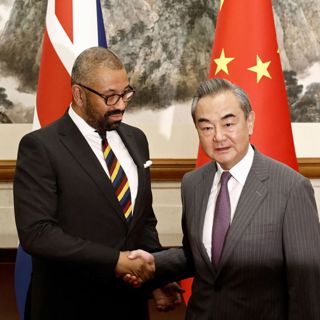
Does China care what Britain thinks?

Does China care what Britain thinks?

In 2010, David Cameron and George Osborne ushered in what they called ‘a golden era’ with China, the world’s rising superpower. They argued that Britain could be China’s best friend in the West. Thirt...

2 Okt 20231h 1min
What we know about Beijing's spies

What we know about Beijing's spies

Two years ago, Richard Moore, head of MI6, said that China was now the organisation’s ‘single greatest priority’.Parliamentarians and the British public have been starkly reminded of this by last week...

18 Sep 202331min
Is China still a Confucian country?

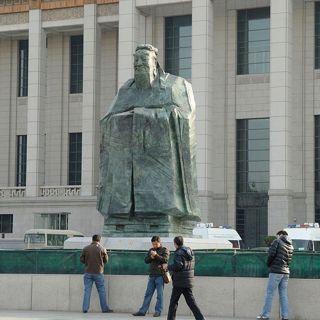
Is China still a Confucian country?

For thousands of years, Confucianism has run through the fabric of Chinese society, politics and culture. Decades of Communism has taken its toll on China, so can it still be considered a Confucian co...

4 Sep 202328min
What Beidaihe reveals about the changing nature of Communist leadership

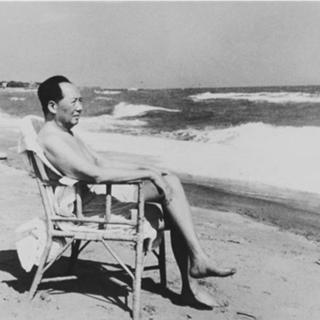
What Beidaihe reveals about the changing nature of Communist leadership

178 miles to the east of Beijing, there’s a beach resort called Beidaihe. The water is shallow and the sand is yellow and fine. Luxurious holiday villas dot the coastline. Starting from the 1950s, lea...

21 Aug 202325min

Does China need a new economic playbook?

Does China need a new economic playbook?

At the end of last year, some thought that the Chinese economic recovery after three years of zero Covid could happen just as fast as zero Covid itself ended being government policy. I admit, that inc...

7 Aug 202341min
Did some good come from the Qing’s dying century?

Did some good come from the Qing’s dying century?

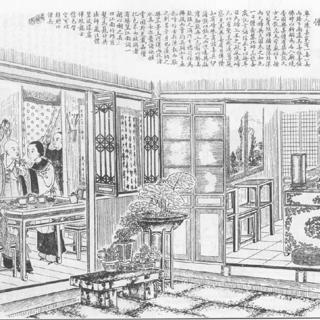
In the 1800s, Qing China’s final century, European powers were expanding eastwards. The industrialised West, with its gunboats and muskets, and the soft power of Christianity, pushed around the dynast...

24 Juli 202336min
Beijing and Prigozhin: what does China think of the Wagner uprising?

Beijing and Prigozhin: what does China think of the Wagner uprising?

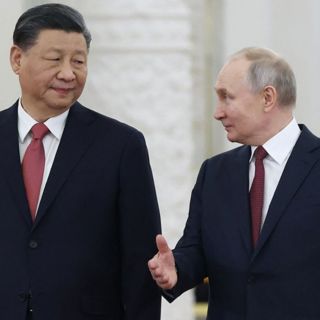
It’s now a week since the Wagner Group revolted against the Kremlin.Though the dramatic uprising was quelled within 24 hours and the group’s leader, Yevgeny Prigozhin, is now exiled to Belarus, the ep...

30 Juni 202336min
How divided is Europe on China?

How divided is Europe on China?

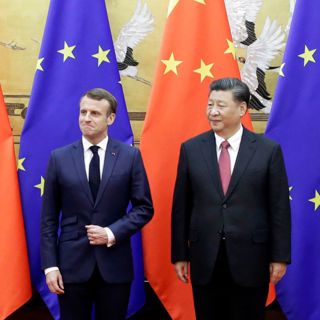
The word ‘West’ is often used as a shorthand to describe liberal democracies in Europe, and perhaps in Asia too, such that we’ll often talk about ‘the West’s attitude to China’, or the ‘West’s relatio...

19 Juni 202338min

Populärt inom Politik & nyheter

svenska-fall
p3-krim
rss-krimstad
fordomspodden
aftonbladet-krim
spar
flashback-forever
rss-sanning-konsekvens
rss-vad-fan-hande
aftonbladet-daily
rss-krimreportrarna
motiv
politiken
rss-aftonbladet-krim
rss-frandfors-horna
rss-klubbland-en-podd-mest-om-frolunda
krimmagasinet
rss-flodet
dagens-eko
olyckan-inifran