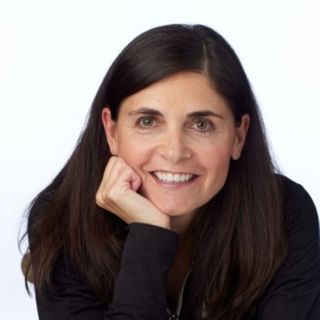
641:  The IPO Playbook & Creating Opportunity for Others | Steve Cakebread, CFO, Yext

641: The IPO Playbook & Creating Opportunity for Others | Steve Cakebread, CFO, Yext

“It’s not cheap to go public,” concedes CFO Steve Cakebread, echoing the oft-repeated refrain that founders and CFOs confront when considering the prospect of selling shares in their companies to the public.

Concessions aside, it will come as little surprise to Wall Street and private investors alike that Cakebread—a seasoned finance leader who has taken public such companies as Salesforce, Pandora, and his latest firm, Yext—has come not to bury IPOs, but to praise them.

And 2020 might be the year when founders and CEOs are prepared to listen.

Certainly, few of Cakebread’s CFO admirers are likely to question the finance leader’s keen sense of timing. In fact, more than a few will likely be making room on their bedside tables for Cakebread’s soon-to-be-released The IPO Playbook: An Insider’s Perspective on Taking Your Company Public and How to Do It Right (Silicon Valley Press, 2020).

“With all of the macroeconomic and pandemic issues going on, there have been as many—if not more—IPOs through August than there have ever been in the past couple of years,” says Cakebread, signaling an optimistic note for U.S.-listed publicly held companies, which have seen their numbers cut in half over the past two decades.

The coronavirus, it turns out, might in part be the antidote for Wall Street’s IPO blues. As COVID-19 spread, many companies made greater operational discipline and efficiency top-of-mind, which in turn led to the adoption of governance practices more commonly used by publicly held companies.

What’s more, they began doubling down on culture, a trend that has prompted IPO-minded founders to more thoughtfully expose the connective tissue between public ownership and social responsibility.

“Most founders want to create opportunity both for themselves and for the people around them, and this happens only when you go public,” explains Cakebread, who notes that the social responsibility aspects of going public were a big incentive for each of the companies that he took public, including Salesforce, where he and CEO Marc Benioff identified a number of benefits.

“Marc and I talked about it a lot before we took Salesforce public. The discipline of going public makes your organizational governance better. It makes companies more socially responsible, and this was a big item for him and for me. It grows careers and spins off other technology companies,” continues Cakebread, who joined Salesforce as employee #67, when the $17 billion company was eking out a quaint $20 million annually.

According to Cakebread, public firms operate with a certain rigor that privately held firms struggle to match—and VC-backed and private equity–owned firms can at times miss the big picture.

Notes Cakebread: “I actually find it tougher to work with VC boards because all they care about is the numbers. They don't care about the opportunity so much.”

To Cakebread, the IPO process is important because it allows CFOs to realize their role as visionary storytellers with the ability to articulate a narrative that educates others about where the business is headed and what opportunities are being pursued.

“You’re always going to have one number out of whack every quarter, but if the sell-side research people understand the underlying story, they can teach the longer vision to their investors and say, ‘This is an upsy-downsy quarter, but long-term, this business is intact,’” he observes.

Asked how diminished listings of U.S. public companies have likely impacted industry over time, Cakebread points to the dynamics of wealth creation.

“This has meant less access for most of us, and I think that this is helping to create this disparity between people who are very wealthy and people who aren't because they can’t get access to the market,” says Cakebread.

“This is a challenging topic for a lot of people, but I personally believe that access is important because wealth distribution happens when employees and other investors get to participate,” asserts Cakebread, who believes that a new generation of investors is quickly emerging.

“The retail investor is realizing that there’s opportunity and getting back into the stock market, and this next generation is starting to recognize the public market as a way to create wealth,” continues Cakebread, who cautions IPO-minded CFOs not to become too besotted by numbers.

Concludes Cakebread: “What I have found in my career is that science and numbers are important, but you need a little bit of art to make a really successful bottle of wine or a really successful company.”

CFOTL: For many CFOs - the IPO process is challenging in terms of communications.

Cakebread: That's a good part of it. I mean, you have to be able to one, love your business, have a passion around it, explain it to third parties that may not have a good idea of what you're doing. The IR function is really critical. The good news is, there's a number of very capable IR firms that can help you get through that early stage of communication. Not the least of which is your investment banker that can help you write the story of the S1, and then there's others that I've worked with my whole career and even after we've been public for five or 10 years, I still use those same IR people to bounce ideas off of, to look at my problems differently and how to communicate. Yes, if you want to be shy and introverted and don't want to talk to people, this is probably not a company that you want to take public, but you learn speaking skills, which is good for all of us, I think.

You learn how to approach and answer questions and explain your story. None of that is hard. It just takes a little bit of work, but shouldn't prevent you from going public because personally, it is kind of interesting. I actually find it tougher to work with VC boards because all they care about is the numbers. They don't care about the opportunity so much. What I found in my career is science and numbers is important, but there's a little bit of art that you need to make a really successful bottle of wine or a successful company. It can't all be driven by numbers and I've been around long enough. If you remember, General Motors at one time, was known as the organization that the bean counters ran the company. Well, that company went broke and they had to bring in people with a little bit more vision and a little bit more art to the car, not all numbers. I think that's a good opportunity to really help the company see itself, not only mathematically, but in a different vision, and talking to investors is a great way to hone your story in terms of how you might talk to a customer.

Det här avsnittet är hämtat från ett öppet RSS-flöde och publiceras inte av Podme. Det kan innehålla reklam.

Avsnitt(1201)

The Credibility Playbook: How CFOs Restore Belief

The Credibility Playbook: How CFOs Restore Belief

What does it take for a CFO to restore credibility?Every finance leader eventually encounters a defining moment when confidence has been shaken—whether by slowing growth, a financial crisis, or years ...

22 Juli 0s

1200: When Finance Owns the Future | Mark Khavkin, CFO, Rula

1200: When Finance Owns the Future | Mark Khavkin, CFO, Rula

Mark Khavkin often finds his best ideas somewhere near the Golden Gate Bridge.The Rula CFO tells us that he bikes from San Francisco across the bridge and into Marin County—not to compete, but to clea...

19 Juli 39min
1199: The CFO’s Biggest Challenge Isn’t AI—It’s Leading Through It | John Kinzer (Interim CFO), OneStream

1199: The CFO’s Biggest Challenge Isn’t AI—It’s Leading Through It | John Kinzer (Interim CFO), OneStream

John Kinzer still remembers sitting in a closed meeting at MCI, presenting revenue results, when something unexpected caught his attention. It wasn’t the numbers he was reporting—it was the questions ...

15 Juli 41min

1198: Building Long-Term Value Starts With Better Capital Allocation | Shane Hostetter, CFO, Chemours

1198: Building Long-Term Value Starts With Better Capital Allocation | Shane Hostetter, CFO, Chemours

When Shane Hostetter arrived at Chemours in 2024, he stepped into a company facing liquidity challenges while also pursuing important long-term growth opportunities. His goal was not to replace decade...

12 Juli 48min
Inside the CFO Mindset Before the Deal

Inside the CFO Mindset Before the Deal

Three accomplished CFOs. Three candid conversations. One revealing look at how finance leaders think about acquisitions before the headlines ever appear.In this special CFO Thought Leader edition, we ...

8 Juli 30min
1197: The CFO Who Learned Finance by Owning Sales | Sinohe Terrero, CFO, Envoy

1197: The CFO Who Learned Finance by Owning Sales | Sinohe Terrero, CFO, Envoy

Sinohe Terrero still remembers the timing. He joined Envoy in January, only to see the workplace transformed just two months later as offices around the world shut down because of COVID. The company h...

5 Juli 45min
Inside the IPO: Three CFOs, Three Perspectives

Inside the IPO: Three CFOs, Three Perspectives

Taking a Company Public: What CFOs KnowWhat does it really take to prepare a company for life as a public company?In this special CFO Thought Leader compilation, we revisit three conversations with fi...

1 Juli 59min
1196: Your Next Finance Hire Should Think Like a Founder | Martino Cadoni, CFO, DeepL

1196: Your Next Finance Hire Should Think Like a Founder | Martino Cadoni, CFO, DeepL

When Martino Cadoni joined DeepL, he arrived with an unusual perspective—he already knew the company’s product firsthand. Earlier in his career at Klarna, he had helped introduce DeepL as a translatio...

28 Juni 52min

Populärt inom Business & ekonomi

framgangspodden
badfluence
dynastin
varvet
uppgang-och-fall
avanzapodden
rss-borsens-finest
svd-tech-brief
fill-or-kill
rss-inga-dumma-fragor-om-pengar
tabberaset
rikatillsammans-om-privatekonomi-rikedom-i-livet
bathina-en-podcast
rss-kort-lang-analyspodden-fran-di
rss-dagen-med-di
rss-hos-psykologen
ekonomiekot-extra
rss-veckans-trade
rss-dominoeffekten
borslunch-2