#055: Therapeutic decisions regarding pregnancy and lactation. Interview with Prof. Celia Oreja-Guevara

#055: Therapeutic decisions regarding pregnancy and lactation. Interview with Prof. Celia Oreja-Guevara

For women with MS desiring motherhood, controlled MS and informed choices in pregnancy and lactation ensure a fulfilling journey, with modern therapies supporting both mother and child's health.

You can find the questions and asnwers to read on my blog: https://ms-perspektive.com/55-celia-oreja-guevara

Prof. Celia Oreja-Guevara advises women with multiple sclerosis and the desire to have children once a week at the University Hospital San Carlos in Madrid. It is best if the MS has been under control for two years. Then the chances of having a relaxed pregnancy are very good.

As women with MS are on average somewhat older at birth, artificial insemination plays a role. The recommendation is to choose the slightly more expensive in-vitro option, as it has a higher chance of success and couples can save time and disappointment.

In general, it has been shown that motherhood hardly affects the long-term course of the disease and that nothing stands in the way of this important part of life's happiness for many people. Modern, effective therapies control even highly active courses very well.

Those who wish to breastfeed can do so. Nevertheless, health should always come first and if it becomes difficult or very time-consuming, whether for therapeutic or other reasons, you can fall back on substitute milk without a guilty conscience. It is better to prevent relapses and possible long-term effects than to breastfeed at all costs. Dive deeper into the various topics around pregnancy, lactation and immunotherapy for women with MS.

Table of Contents Introduction – Who is Prof. Celia Oreja-Guevara?​

I am Celia Oreja-Guevara, Vice Chair of Neurology and Head of Multiple Sclerosis Center at the University Hospital San Carlos, Madrid, in Spain.

I am Professor of Neurology at the University Complutense, Madrid.
After gaining my medical degree from the University of Madrid, I completed my PhD thesis in Neuroimmunology at the Max Planck Institute of Neurobiology in Munich, Germany.

I then completed a residency in the Department of Neurology at the University of Bochum, Germany, followed by a one-year fellowship in neuroimaging at the University Hospital San Raffaele in Milan, Italy. Since then, I have held several posts, including Senior Neurologist at the University of Dusseldorf, Germany, Head of Neurology at Hospital de Fuenlabrada, and Chair of the Multiple Sclerosis Center at University Hospital La Paz, both in Madrid, Spain. I am the Co-Chair of the Scientific Panel on Multiple Sclerosis for the European Academy of Neurology.

My main areas of research interest are clinical and neuroimaging correlations in MS, family planning, the use of optical coherence tomography in symptomatic therapy, neuromyelitis optica (NMO), and the evaluation of new drugs for the treatment of MS and NMO.

My hobbies are technology, buy gadgets, repair computer, visit technological exhibitions…

On the other hand, I like travel everywhere and to watch comedy and love films.

Is there anything else you would like to share with the listeners?

For patients with Multiple Sclerosis, becoming pregnant is absolutely possible with the right preparations. Therefore, engaging in thorough family planning is crucial to manage both the disease and the pregnancy effectively, safeguarding the health of both the mother and the baby.

How and where can interested people follow your research activities? ---

Many thanks for the positive insight views into the topic of pregnancy and lactation with MS.

See you soon and try to make the best out of your life,
Nele

For more information and positive thoughts, subscribe to my newsletter for free.

Click here for an overview of all podcast episodes published so far.

Det här avsnittet är hämtat från ett öppet RSS-flöde och publiceras inte av Podme. Det kan innehålla reklam.

Avsnitt(192)

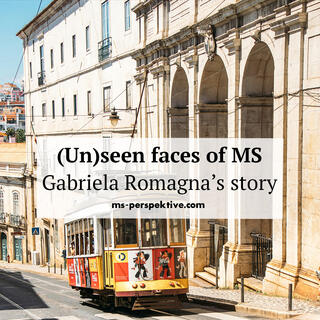
#190: Living with multiple sclerosis. Gabriela's story and the "(un)seen faces of MS" Art Project

#190: Living with multiple sclerosis. Gabriela's story and the "(un)seen faces of MS" Art Project

https://ms-perspektive.de/en/190-unseen-faces-of-ms/Living with multiple sclerosis often means experiencing symptoms that others cannot see. Austrian artist Gabriela Romagna shares her journey to an M...

4 Nov 32min
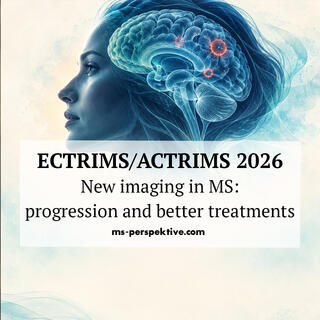
#189: New imaging in MS: understanding progression and finding better treatments | ECTRIMS 2026

#189: New imaging in MS: understanding progression and finding better treatments | ECTRIMS 2026

How could new imaging in MS help us understand progression and develop better treatments? In this episode, I explore key insights from Daniel Reich's MSToronto2026 lecture and related research. Learn ...

28 Okt 15min
#188: Jan Van Amstel on EMSP's Four-Year Presidency and the Future of MS Advocacy in Europe

#188: Jan Van Amstel on EMSP's Four-Year Presidency and the Future of MS Advocacy in Europe

"Get rid of MS as soon as possible and make ourselves superfluous." — Jan van Amstel What can a stronger European voice achieve for people living with MS? In episode #188, EMSP President Jan van Amste...

21 Okt 31min
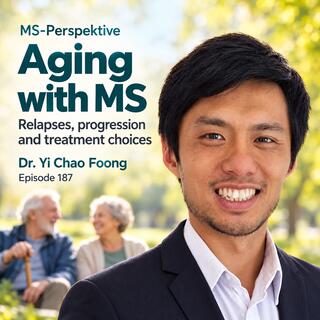
#187: Aging in multiple sclerosis: relapses, progression and treatment choices with Dr. Yi Chao Foong

#187: Aging in multiple sclerosis: relapses, progression and treatment choices with Dr. Yi Chao Foong

Aging in multiple sclerosis brings new questions about relapses, gradual progression and treatment choices. In episode 187, Dr. Yi Chao Foong, an MS neurologist and researcher in Tasmania, explains wh...

14 Okt 29min
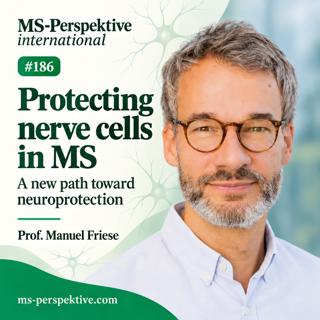
#186: Protecting nerve cells in multiple sclerosis: A new path toward neuroprotection with Prof. Manuel Friese

#186: Protecting nerve cells in multiple sclerosis: A new path toward neuroprotection with Prof. Manuel Friese

Why can multiple sclerosis progress even when relapses are well controlled? In episode 186, I speak with Prof. Manuel Friese about the next challenge in MS research: protecting nerve cells from damage...

7 Okt 43min
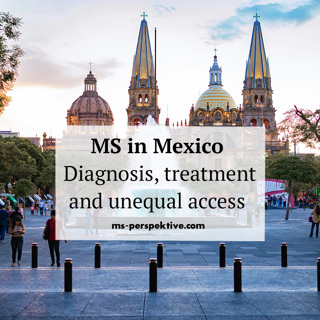
#185: Living with MS in Mexico – who gets diagnosed, who gets treated, and who gets left behind?

#185: Living with MS in Mexico – who gets diagnosed, who gets treated, and who gets left behind?

An MS diagnosis can depend on where you live, whether you can reach a neurologist and how quickly you can get an MRI. In this episode, Nele speaks with neurologist and neuroimmunologist Dr. Enrique Go...

30 Sep 36min

#184: MS treatment across the disease course – treat early, think long-term, don't give up too soon with Prof. Klaus Schmierer

#184: MS treatment across the disease course – treat early, think long-term, don't give up too soon with Prof. Klaus Schmierer

Read the full blog post and interview here: https://ms-perspektive.de/en/184-klaus-schmierer/ How early should MS treatment start, how strongly should we treat, and is there ever a point when it becom...

23 Sep 41min

#183: Silent progression in MS. Can we really detect it early?

#183: Silent progression in MS. Can we really detect it early?

Can we detect gradual MS progression before it becomes obvious? In this episode, I look at what current research can — and cannot — tell us about subtle worsening without an obvious relapse. The key d...

16 Sep 34min

Populärt inom Utbildning

husmodern-med-amanda-schulman
historiepodden-se
det-skaver
rosceremoni
rss-bara-en-till-om-beroende-medberoende
nu-blir-det-historia
harrisons-dramatiska-historia
rss-viktmedicinpodden
not-fanny-anymore
roda-vita-rosen
rss-dr-bjorklund
i-vantan-pa-katastrofen
allt-du-velat-veta
sektledare
sa-in-i-sjalen
rss-basta-livet
johannes-hansen-podcast
rss-traningsklubben
sektpodden
rss-max-tant-med-max-villman