University Professors and Authors Doug Fisher and Nancy Frey on "Developing and Delivering High Quality Distance Learning for Students."

University Professors and Authors Doug Fisher and Nancy Frey on "Developing and Delivering High Quality Distance Learning for Students."

Welcome back to the Neuroscience Meets Social and Emotional Learning podcast, episode #77 with Doug Fisher and Nancy Frey, who are both professors at San Diego State University in Educational Leadership where they focus on policies and practices in literacy and school leadership. Watch the interview on YouTube here.

For those who are new here, my name is Andrea Samadi, I’m a former educator who created this podcast to bring the most current neuroscience and educational research, matched with social and emotional skills, with interviews from experts who have risen to the top of their field with specific strategies or ideas that you can implement immediately, to take your results to the next level. My vision is to bring the experts to you, share their books, resources and ideas to help you to implement their proven strategies, whether you are a teacher working in the classroom or online, a student, or parent working in the corporate space.

Welcome Doug and Nancy, it’s wonderful to meet you after enjoying your books for the past few days.

Doug and Nancy are also both teacher leaders at Health Sciences High & Middle College, an award-winning open-enrollment public school in the City Heights neighborhood of San Diego that they co-founded in 2007. For over 2 decades, they have dedicated their work to the knowledge and skills teachers and school leaders need to help students attain their goals. Their shared interests include instructional design, curriculum development, and professional learning. Doug and Nancy have co-authored numerous articles and books on literacy, and leadership that I’ve included links to in the show notes, including: This is Balanced Literacy,[i] The Teacher Clarity Playbook, PLC+,[ii] All Learning is Social & Emotional[iii], The Teacher Credibility and Collective Efficacy Playbook,[iv] and most recently The Distance Learning Playbook[v] with co-author John Hattie[vi].

    I couldn’t start this podcast, without acknowledging John Hattie’s Visible Learning Research[vii] and the fact that he is the co-author of your Distance Learning Playbook. I 100% agree with the write-up I saw in your book that says “The pandemic teaching of mid 2020 was not distance learning but rather crisis teaching.” But starting now, teachers have the opportunity to prepare for distance learning with purpose and intent.”[viii] I’d love to learn how the idea of The Distance Learning Playbook came about and why it was important for you to include John Hattie as your co-author. (Discuss the playbook style of PD book and about John’s Visible Learning research). My next question for you ties into our last podcast, episode #76 with Michael Horn on “Using a Positive Lens to Explore Change and the Future of Education”[ix] where he spoke about the importance of embracing technology as an important component of our future, and the article you wrote for SmartBrief.com on “4 Steps for Powerful Distance Learning Experiences”[x] ties right into this topic. This morning I had both my girls go “back to school” online and I was grateful that I felt a bit more prepared for this after getting ready for this interview and reading that article. Could you outline these 4 steps as many schools and families are like me, in the beginning stages of going back to school, with distance learning being the platform to launch the school year, before students transition to in person learning? Because this podcast focuses on social emotional learning, I’d love to dig a little deeper into the concept of the all-important teacher-student relationship. I know that building relationships is one of John Hattie’s teaching effects from one of our earlier episodes, #7 with Assistant Superintendent Greg Wolcott, who wrote his book Significant 72 based on the importance of student-teacher relationships.[xi] What type of impact do those relationships have on student learning and how do teachers build those relationships from a distance? Tying in closely with the teacher-student relationship is a concept you call Teacher Credibility. In fact, one of your other playbooks is titled Teacher Credibility and Collective Efficacy.[xii] However, in the distance learning playbook, you focus on how to build that credibility at a distance. Can teachers really do that when they’re not in the same room with their students? I noticed Module 1 of your Distance Learning book is titled “Take Care of Yourself” referring to teachers/educators taking care of themselves first. I really appreciate that you put this as Module 1. Can you tell me about why self-care is at the front and center in your playbook and tie in the fact that All Learning is Social and Emotional and that as parents, and educators, the need to take care of ourselves before we reach out and help our children or students?[xiii] I know you’re both big proponents of Teacher Clarity and how that clarity has the potential to accelerate student learning. You’ve identified 3 questions that contribute to teacher clarity. Can you briefly cover those and how they apply to distance learning? Lastly, and tying back to social emotional learning, in your playbook you discuss the socioemotional links to feedback. Tell us about the importance of a classroom climate (be it physical or virtual) where errors are celebrated and expected and how that plays into feedback. What are your final thoughts to tie everything in together on the future of education?

Thank you so much for taking the time to share your work and powerful vision for education. If someone wants to learn more about you, is the best way https://www.fisherandfrey.com/ and they can find you both on twitter Nancy is @NancyFrey and Douglas is @DFisherSDSU

Also, Corwin Press is also offering a 30% discount plus free shipping through the end of August on all books and I will have the link for your Distance Learning Playbook[xiv] in the show notes.

REFERENCES:

[i] https://us.corwin.com/en-us/nam/this-is-balanced-literacy-grades-k-6/book266872

[ii] https://us.corwin.com/en-us/nam/plc/book266974

[iii] All Learning is Social and Emotional http://www.ascd.org/Publications/Books/Overview/All-Learning-Is-Social-and-Emotional.aspx

[iv] https://us.corwin.com/en-us/nam/the-teacher-credibility-and-collective-efficacy-playbook-grades-k-12/book271561

[v] 30% off all books at Corwin Press though the month of August 2020 https://us.corwin.com/en-us/nam/thedistancelearningplaybook

[vi] John Hattie https://visible-learning.org/

[vii] John Hattie https://visible-learning.org/

[viii] The Distance Learning Playbook https://us.corwin.com/en-us/nam/thedistancelearningplaybook

[ix]Neuroscience Meets Social and Emotional Learning Podcast Episode #76 with Michael Horn on “Using a Positive Lens to Explore Change and the Future of Education” https://andreasamadi.podbean.com/e/speaker-and-writer-michael-b-horn-on-using-a-positive-lens-to-explore-change-and-the-future-of-education/

[x] “4 Steps for Powerful Distance Learning Experiences.” For Smartbrief by Douglas Fisher and Nancy Frey, July 16, 2020. https://smartbrief.com/original/2020/07/4-steps-powerful-distance-learning-experiences

[xi] Neuroscience Meets SEL Podcast EPISODE #7 with Greg Wolcott https://www.achieveit360.com/assistant-superintendent-greg-wolcott-on-building-relationships-in-todays-classrooms/

[xii]Teacher Credibility and Collective Efficacy https://us.corwin.com/en-us/nam/the-teacher-credibility-and-collective-efficacy-playbook-grades-k-12/book271561

[xiii] All Learning is Social and Emotional http://www.ascd.org/Publications/Books/Overview/All-Learning-Is-Social-and-Emotional.aspx

[xiv] 30% off all books at Corwin Press though the month of August 2020 https://us.corwin.com/en-us/nam/thedistancelearningplaybook

Det här avsnittet är hämtat från ett öppet RSS-flöde och publiceras inte av Podme. Det kan innehålla reklam.

Avsnitt(406)

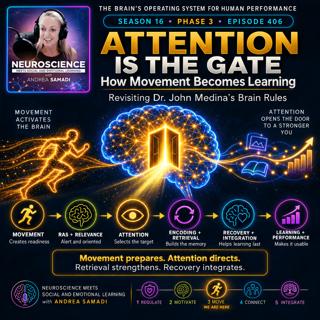
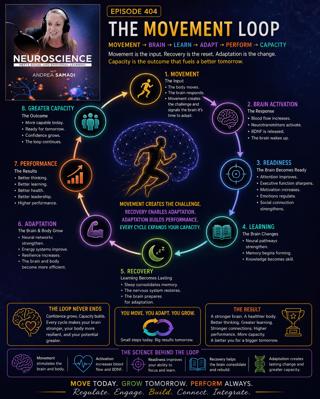
How Movement Builds the Brain, the Body & Human Performance (Phase 3 Introduction)

How Movement Builds the Brain, the Body & Human Performance (Phase 3 Introduction)

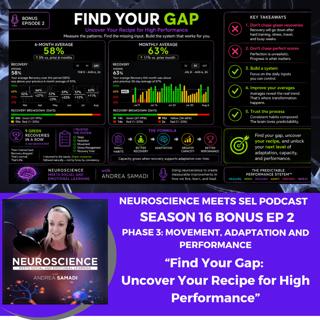
Season 16, Episode 402 explores the Brain's Operating System for Human Performance, focusing on Phase 3: movement, adaptation, and performance. Andrea Samadi explains how movement triggers neurochemic...

12 Juli 25min

Trust as the Foundation with Greg Hill: How Great Leaders Create the Conditions for Learning, Growth and Performance

Trust as the Foundation with Greg Hill: How Great Leaders Create the Conditions for Learning, Growth and Performance

In episode 401 Andrea Samadi welcomes Greg Hill to explore why trust is the essential foundation for learning, growth, and high performance. They discuss how trust creates psychological safety, encour...

27 Juni 37min

Episode 400: Sales Leadership Under Pressure with Majid Samadi: 7 Lessons Learned from 7 Years of Neuroscience

Episode 400: Sales Leadership Under Pressure with Majid Samadi: 7 Lessons Learned from 7 Years of Neuroscience

In this milestone episode (400), Andrea Samadi celebrates seven years of the Neuroscience Meets SEL Podcast with her husband Majid Samadi. They reflect on the journey of translating neuroscience into ...

20 Juni 47min

Phase 2 Review: The Motivation Loop: How to Keep Effort Worthwhile

Phase 2 Review: The Motivation Loop: How to Keep Effort Worthwhile

Episode 399 reviews Phase 2 of Season 15 and introduces the Motivation Loop — the sequence of meaning, belief, attention, action, reward, and recovery that drives sustained effort. The episode explain...

14 Juni 28min

Fun, Fear, Focus: Closing the Motivation Loop with Friederike Fabritius

Fun, Fear, Focus: Closing the Motivation Loop with Friederike Fabritius

Episode 398 revisits neuroscientist Friederike Fabritius (from November 2022) to explain how three ingredients — fun (dopamine), fear (productive challenge), and focus — create the neurochemical condi...

9 Juni 23min

Move to Learn: How Movement Activates the Brain and Fuels Motivation (with Dr. Chuck Hillman and Paul Zientarski)

Move to Learn: How Movement Activates the Brain and Fuels Motivation (with Dr. Chuck Hillman and Paul Zientarski)

Season 15, Episode 397 revisits research and real-world practice showing movement is more than fitness: it activates the brain, boosts attention, enhances learning, and sustains motivation. Dr. Chuck ...

31 Maj 35min

Dopamine, Motivation and Why the Brain Repeats Behavior with Dr. Anna Lembke

Dopamine, Motivation and Why the Brain Repeats Behavior with Dr. Anna Lembke

Host Andrea Samadi welcomes Dr. Anna Lembke to explain how pleasure and pain share the same neural circuitry and how dopamine governs motivation. The episode explores why overconsumption of easy rewar...

24 Maj 23min

Theory of Mind: The Missing Link Between Attention, Reward, and Motivation with John Medina

Theory of Mind: The Missing Link Between Attention, Reward, and Motivation with John Medina

Episode 395 explores how theory of mind — our ability to understand others' intentions — drives attention, emotional relevance, and reward, shaping motivation and behavior. Dr. John Medina explains wh...

17 Maj 37min

Populärt inom Utbildning

historiepodden-se
det-skaver
rss-bara-en-till-om-missbruk-medberoende-2
nu-blir-det-historia
harrisons-dramatiska-historia
not-fanny-anymore
roda-vita-rosen
allt-du-velat-veta
johannes-hansen-podcast
rss-viktmedicinpodden
sektledare
i-vantan-pa-katastrofen
rikatillsammans-om-privatekonomi-rikedom-i-livet
sex-pa-riktigt-med-marika-smith
sa-in-i-sjalen
rss-basta-livet
rss-traningsklubben
rss-ar-det-rimligt
rss-dr-bjorklund
rss-sjalsligt-avkladd