Professor of Cognitive Neuroscience Michael S.C. Thomas on ”Educational Neuroscience: The Basics”

Professor of Cognitive Neuroscience Michael S.C. Thomas on ”Educational Neuroscience: The Basics”

WHAT IS THE POTENTIAL OF EDUCATIONAL NEUROSCIENCE?

British Physician, Ben Goldacre, 2013 says “I think there is a huge prize waiting to be claimed by teachers. By collecting better evidence about what works best and establishing a culture where this evidence is used as a matter of routine, we can improve outcomes for children, and increase professional independence.”

Watch this interview on YouTube here https://youtu.be/Uh1BZOTGZQc

On today’s Episode #269 we will cover

✔ Professor Michael S.C. Thomas' new book Educational Neuroscience: The Basics

✔ Where is educational neuroscience NOW? Where it began, and where it's going.

✔ How this book can help students improve how they learn.

✔ How this look at Educational Neuroscience can help us to become better teachers.

✔ The difference between evidence-based and neuroscience-based.

✔ Where we should ALL begin. What IS the BASICS of Neuroscience?

✔ What makes something forgettable and another thing memorable?

✔ Ways to make learning easier.

Welcome back to The Neuroscience Meets Social and Emotional Learning Podcast where we bridge the gap between theory and practice, with strategies, tools and ideas we can all use immediately, applied to the most current brain research to heighten productivity in our schools, sports environments and modern workplaces. I’m Andrea Samadi and launched this podcast almost 4 years ago, to share how important an understanding of our brain is for our everyday life and results. This season (Season 9) we will be focused on Neuroscience: Going Back to the Basics for the next few months, as we welcome some phenomenal pioneers in the field of Neuroscience, paving a pathway for all of us to navigate our lives with more understanding with our brain in mind. My goal with this next season (that will run until the end of June) is that going back to the basics will help us to strengthen our understanding of the brain, and our mind, to our results, and provide us with a springboard to propel us forward in 2023, with this solid backbone of science.

Today’s guest and EPISODE #269, I’ve been wanting to have on this podcast since I came across his work in the field of educational neuroscience around the time we interviewed Dr. Daniel Ansari, back in June 2021 for EPISODE #138.[i] I saw their Annual Research Review: (called) Educational Neuroscience progress from April 2019, written by Michael S.C. Thomas, Daniel Ansari and Victoria C.P. Rowland that provided a thorough overview of the origins of educational neuroscience, outlining where it began, the challenges it faces as a “translational field” and addressed it’s major criticisms. I immediately wrote down Michael S.C. Thomas’ name, along with his email address, to reach out to him to learn more of his perspective in this field. Since I was interviewing Dr. Daniel Ansari, it brought something to light for me that the people who write these research reports that we find on Pubmed.gov, are working hard somewhere, and not completely out of reach if you really want to find them, and ask them some questions about their work. When I finally emailed him, I was thrilled to hear he had a NEW book Educational Neuroscience: The Basics[ii] and am grateful to have this opportunity to speak with him about this new book.

Before we meet our next guest, Michael S.C. Thomas, let me orient you to his work.

Michael S. C. Thomas is a Professor of Cognitive Neuroscience at Birkbeck University of London. Since 2010, he has been Director of the Centre for Educational Neuroscience, a cross-institutional research centre which aims to further translational research between neuroscience and education, and establish new transdisciplinary accounts in the learning sciences. In 2003, Michael established the Developmental Neurocognition Laboratory within Birkbeck’s world-leading Centre for Brain and Cognitive Development. The focus of his laboratory is to use multi-disciplinary methods to understand the brain, including behavioural, brain imaging, computational, and genetic methods. In 2006, the lab was the co-recipient of the Queen’s Anniversary Prize for Higher Education, for the project “Neuropsychological work with the very young: understanding brain function and cognitive development”. Michael is a Chartered Psychologist, Fellow of the British Psychological Society, Fellow of the Association for Psychological Science, Senior Fellow of the Higher Education Academy, and board member of the International Mind Brain and Education Society.

Let’s meet Professor of Cognitive Neuroscience, Michael S. C. Thomas, from Birkbeck University of London and see what we can learn about Educational Neuroscience: The Basics.

Welcome Michael, thank you for sticking with me as we made this interview happen. I’ve been wanting to speak with you for so many years that I was trying to change Wednesday yesterday to Thursday to speed up time because I know how important this new book is, and am so very grateful for this chance to learn more about this topic directly from you. Thank you for being here today.

INTRO: How did you find your way towards studying the brain as it relates to our educational system and establish the Developmental Neurocognition Laboratory within Birkbeck’s Centre for Brain and Cognitive Development?

If I look at Unlocke.org[iii] is this where your research is based?

Moving towards your NEW book, Educational Neuroscience: The Basics that is the reason we are here today, what can you tell us about writing this new book with Cathy Rogers, who moved to this field of neuroscience after years of producing science television shows. I can only imagine how her background in television and film contributed to this book.

Q1: When I first came across your work, it was when I was interviewing Dr. Daniel Ansari, and I found the Annual Research Review[iv] you wrote with him and Victoria Knowland. I don’t often sit and read through Pubmed in my spare time, but I was working on a paper for a Neuroscience Certification that required me to know how to navigate through the research, and after reading your report, this was the first time I was ever aware of criticisms in this field (this was before I learned about the Reading Wars[v]). Then I read Dr. Ansari’s review Bridges over troubled waters[vi] and I wonder if you could bring our listeners up to speed of where this field began, where it is now (you say “it’s barely out of the gates” and where do you see it going?

Q2: This brings us back to your new book with Cathy Rogers, Educational Neuroscience: The Basics that is an introduction to this interdisciplinary field. British physician Ben Goldacre said that there’s “a huge prize waiting to be claimed by teachers” with this book.

What are your goals with this book, Educational Neuroscience: The Basics, and how do you see it improving outcomes for students, like Ben Goldacre mentioned, while “increasing professional independence” for our next generation of teachers?

Q3: I’ve seen some graphics made over the years that show how Neuroeducation consists of the Pedagogy of Education and Learning, Neuroscience, with the brain and its functioning, and Psychology, combining the mind and behavior. (The 3 circles interconnecting) with Neuroeducation in the middle. With your research between neuroscience and education, and your background in psychology, how would you draw this diagram? What disciplines would you say make up Educational Neuroscience?

Q3B: I loved seeing a book that really does go back to the basics. This is fundamental for all of us, whether we work in the classroom with our students, in sports environments, or in the corporate workplace. I saw some of your testimonials at the start of the book say that “this book is essential reading for anyone who wants to learn how the brain works to enable learning” and after reading Chapter 1, I wonder “why do we need educational neuroscience, how can it help us to understand how we learn, and help us to become better teachers?

Andrea thinks that Michael has answered this question, with the idea that we want our students to use movement, manage their emotions, and social interactions, so these don’t get in the way of learning, thinking and cognition.

Q4: Can we go next to the research. This question would benefit those who create programs for schools, or for those who are selling programs to schools, or even for those who work in schools to understand this difference. I’ve spent countless hours (from a program creator point of view) trying to figure this out for certain funding buckets. What is the distinction between “evidence-based” and “neuroscience-based and does one provide a more guaranteed outcome for student success?”

Q5: When I read of the survey you mentioned of the teachers of Wellcome Trust (Simmonds, 2014) that found a high level of interest in neuroscience and 60% of teachers said they “knew little” about how the brain works, and

82% said they wanted to learn more, it reminded me of why we launched this podcast to help bring together all the leaders in the field like you said to address this “unmet appetite for neuroscience knowledge.” But then when asked about their current use it was noted there were many tools, and products that claimed to boost a student’s brain level, without the evidence. I know that CASEL has a program rating system for social and emotional learning programs, but what do you is there a rating systems for neuroscience or evidence- based programs?

Q6: I love that you quoted David A. Sousa (Hart, 1999, Sousa, 2011) in Chapter 1 with his quote that “teachers are the only people whose specific job is to change the connections between neurons in their students’ brains.” He’s been on our podcast twice, most recently EP197[vii] with his 6th edition of How the Brain Learns was our third most listened to episode of 2022. I’ve got to say that when I was first handed his books back in 2014, and asked to add neuroscience to the character and leadership programs I had created for the school market, I took one look at the images of the brain, or even how our memory works, and I felt overwhelmed, and almost didn’t go in this direction. What would you say to someone who looks at the word neuroscience, and feels the same level of intimidation that I felt in the beginning. Where should someone begin? What are the BASICS of Neuroscience?

    Plasticity Learning and Altering Neuron Connections Memories/Forgetting

Q7: What makes something unforgettable while other things we struggle to remember?

Q8: To sum this all up, In chapter 5, Thinking is Hard, and different types of memories perform different types of functions, or working with memory for specific things or events. Then you cover “We feel, therefore we learn.” (Immordino-Yang & Damasio). What should we all take away to help us to all understand Neuroscience: The Basics and make learning easier?

If thinking is hard, why is learning harder? What makes learning easier?

Michael, I want to thank you very much for taking the time to come on the podcast (all the way from the UK) and for sharing your new book Neuroscience: The Basics with us. For people who want to purchase the book, is the best place https://www.routledge.com/Educational-Neuroscience-The-Basics/Rogers-Thomas/p/book/9781032028552#

CONTACT MICHAEL S.C. THOMAS

Email m.thomas@bbk.ac.uk

Research Unlocke.org

BUY Educational Neuroscience: The Basics

Educational Neuroscience: The Basics by Cathy Rogers and Michael S.C. Thomas Published November 15, 2022 https://www.routledge.com/Educational-Neuroscience-The-Basics/Rogers-Thomas/p/book/9781032028552#

Amazon https://www.amazon.com/Educational-Neuroscience-Basics-Cathy-Rogers/dp/1032028556

Professor Michael Thomas at Birkbeck University of London https://www.bbk.ac.uk/our-staff/profile/8006159/michael-thomas#overview

Center for Educational Neuroscience http://www.educationalneuroscience.org.uk/

YouTube https://www.youtube.com/channel/UCMlW1aThiDY5TB8uxS3DU0w

Stay tuned for Michael’s NEXT book How the Brian Works.

FOLLOW ANDREA SAMADI:

YouTube Channel: https://www.youtube.com/c/AndreaSamadi

Website https://www.achieveit360.com/

LinkedIn: https://www.linkedin.com/in/samadi/

Facebook: https://www.facebook.com/Achieveit360com

Neuroscience Meets SEL Facebook Group https://www.facebook.com/groups/2975814899101697

Twitter: https://twitter.com/andreasamadi

Instagram: https://www.instagram.com/andreasamadi/

Thank you!

REFERENCES:

[i] https://andreasamadi.podbean.com/e/professor-and-canada-research-chair-in-developmental-cognitive-neuroscience-and-learning-on-the-future-of-educational-neuroscience/

[ii] Educational Neuroscience: The Basics by Cathy Rogers and Michael S.C. Thomas Published November 15, 2022 https://www.routledge.com/Educational-Neuroscience-The-Basics/Rogers-Thomas/p/book/9781032028552#

[iii] https://www.unlocke.org/team.php

[iv] Annual Research Review: Educational neuroscience: progress and prospects by Michael S.C. Thomas, Daniel Ansari and Victoria C.P. Knowland (April 2019) https://www.ncbi.nlm.nih.gov/pmc/articles/PMC6487963/

[v] The Reading Wars by Nicholas Lemann https://www.theatlantic.com/magazine/archive/1997/11/the-reading-wars/376990/

[vi] Bridges over troubled waters: education and cognitive neuroscience by Daniel Ansari, Donna Coch March 10, 2006 https://pubmed.ncbi.nlm.nih.gov/16530462/

[vii] Neuroscience Meets Social and Emotional Learning Podcast EPISODE #197 with David A Sousa on “What’s NEW with the 6th Edition of How Your Brain Learns” https://andreasamadi.podbean.com/e/returning-guest-dr-david-a-sousa-on-what-s-new-with-the-6th-edition-of-how-the-brain-learns/

Det här avsnittet är hämtat från ett öppet RSS-flöde och publiceras inte av Podme. Det kan innehålla reklam.

Avsnitt(407)

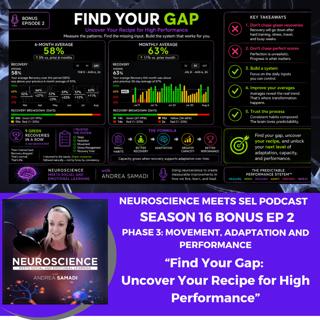
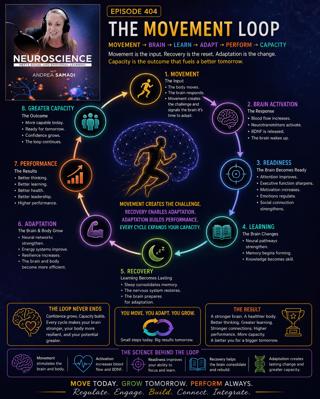
The Movement Loop: How Movement Activates the Brain for Learning, Adaptation & Performance

The Movement Loop: How Movement Activates the Brain for Learning, Adaptation & Performance

Welcome back to Season 16 of the Neuroscience Meets Social and Emotional Learning Podcast. I'm Andrea Samadi, and this is where we bridge neuroscience, social and emotional learning, and human perform...

19 Juli 34min

How Movement Builds the Brain, the Body & Human Performance (Phase 3 Introduction)

How Movement Builds the Brain, the Body & Human Performance (Phase 3 Introduction)

Season 16, Episode 402 explores the Brain's Operating System for Human Performance, focusing on Phase 3: movement, adaptation, and performance. Andrea Samadi explains how movement triggers neurochemic...

12 Juli 25min

Trust as the Foundation with Greg Hill: How Great Leaders Create the Conditions for Learning, Growth and Performance

Trust as the Foundation with Greg Hill: How Great Leaders Create the Conditions for Learning, Growth and Performance

In episode 401 Andrea Samadi welcomes Greg Hill to explore why trust is the essential foundation for learning, growth, and high performance. They discuss how trust creates psychological safety, encour...

27 Juni 37min

Episode 400: Sales Leadership Under Pressure with Majid Samadi: 7 Lessons Learned from 7 Years of Neuroscience

Episode 400: Sales Leadership Under Pressure with Majid Samadi: 7 Lessons Learned from 7 Years of Neuroscience

In this milestone episode (400), Andrea Samadi celebrates seven years of the Neuroscience Meets SEL Podcast with her husband Majid Samadi. They reflect on the journey of translating neuroscience into ...

20 Juni 47min

Phase 2 Review: The Motivation Loop: How to Keep Effort Worthwhile

Phase 2 Review: The Motivation Loop: How to Keep Effort Worthwhile

Episode 399 reviews Phase 2 of Season 15 and introduces the Motivation Loop — the sequence of meaning, belief, attention, action, reward, and recovery that drives sustained effort. The episode explain...

14 Juni 28min

Fun, Fear, Focus: Closing the Motivation Loop with Friederike Fabritius

Fun, Fear, Focus: Closing the Motivation Loop with Friederike Fabritius

Episode 398 revisits neuroscientist Friederike Fabritius (from November 2022) to explain how three ingredients — fun (dopamine), fear (productive challenge), and focus — create the neurochemical condi...

9 Juni 23min

Move to Learn: How Movement Activates the Brain and Fuels Motivation (with Dr. Chuck Hillman and Paul Zientarski)

Move to Learn: How Movement Activates the Brain and Fuels Motivation (with Dr. Chuck Hillman and Paul Zientarski)

Season 15, Episode 397 revisits research and real-world practice showing movement is more than fitness: it activates the brain, boosts attention, enhances learning, and sustains motivation. Dr. Chuck ...

31 Maj 35min

Dopamine, Motivation and Why the Brain Repeats Behavior with Dr. Anna Lembke

Dopamine, Motivation and Why the Brain Repeats Behavior with Dr. Anna Lembke

Host Andrea Samadi welcomes Dr. Anna Lembke to explain how pleasure and pain share the same neural circuitry and how dopamine governs motivation. The episode explores why overconsumption of easy rewar...

24 Maj 23min

Populärt inom Utbildning

historiepodden-se
det-skaver
rss-bara-en-till-om-missbruk-medberoende-2
not-fanny-anymore
nu-blir-det-historia
harrisons-dramatiska-historia
rss-viktmedicinpodden
allt-du-velat-veta
johannes-hansen-podcast
rss-basta-livet
rikatillsammans-om-privatekonomi-rikedom-i-livet
sex-pa-riktigt-med-marika-smith
i-vantan-pa-katastrofen
sa-in-i-sjalen
rss-traningsklubben
rss-max-tant-med-max-villman
sektledare
henry-laser-wikipedia
rss-sjalsligt-avkladd
rss-rummet-podcast