

#216 – Ian Dunt on why governments in Britain and elsewhere can't get anything done – and how to fix it

#216 – Ian Dunt on why governments in Britain and elsewhere can't get anything done – and how to fix it

When you have a system where ministers almost never understand their portfolios, civil servants change jobs every few months, and MPs don't grasp parliamentary procedure even after decades in office — is the problem the people, or the structure they work in?

Today's guest, political journalist Ian Dunt, studies the systemic reasons governments succeed and fail.

And in his book How Westminster Works ...and Why It Doesn't, he argues that Britain's government dysfunction and multi-decade failure to solve its key problems stems primarily from bad incentives and bad processes.

Even brilliant, well-intentioned people are set up to fail by a long list of institutional absurdities that Ian runs through — from the constant churn of ministers and civil servants that means no one understands what they’re working on, to the “pathological national sentimentality” that keeps 10 Downing Street (a 17th century townhouse) as the beating heart of British government.

While some of these are unique British failings, we see similar dynamics in other governments and large corporations around the world.

But Ian also lays out how some countries have found structural solutions that help ensure decisions are made by the right people, with the information they need, and that success is rewarded.

Links to learn more, video, highlights, and full transcript.

Chapters:

  • Cold open (00:00:00)
  • How Ian got obsessed with Britain's endless failings (00:01:05)
  • Should we blame individuals or incentives? (00:03:24)
  • The UK left its allies to be murdered in Afghanistan (to save cats and dogs) (00:09:02)
  • The UK is governed from a tiny cramped house (00:17:54)
  • “It's the stupidest conceivable system for how to run a country” (00:23:30)
  • The problems that never get solved in the UK (00:28:14)
  • Why UK ministers have no expertise in the areas they govern (00:31:32)
  • Why MPs are chosen to have no idea about legislation (00:44:08)
  • Is any country doing things better? (00:46:14)
  • Is rushing inevitable or artificial? (00:57:20)
  • How unelected septuagenarians are the heroes of UK governance (01:01:02)
  • How Thatcher unintentionally made one part of parliament work (01:10:48)
  • Maybe secrecy is the best disinfectant for incompetence (01:14:17)
  • The House of Commons may as well be in a coma (01:22:34)
  • Why it's in the PM's interest to ban electronic voting (01:33:13)
  • MPs are deliberately kept ignorant of parliamentary procedure (01:35:53)
  • “Whole areas of law have fallen almost completely into the vortex” (01:40:37)
  • What's the seed of all this going wrong? (01:44:00)
  • Why won't the Commons challenge the executive when it can? (01:53:10)
  • Better ways to choose MPs (01:58:33)
  • Citizens’ juries (02:07:16)
  • Do more independent-minded legislatures actually lead to better outcomes? (02:10:42)
  • "There’s no time for this bourgeois constitutional reform bulls***" (02:16:50)
  • How to keep expert civil servants (02:22:35)
  • Improving legislation like you’d improve Netflix dramas (02:34:34)
  • MPs waste much of their time helping constituents with random complaints (02:39:59)
  • Party culture prevents independent thinking (02:43:52)
  • Would a written constitution help or hurt? (02:48:37)
  • Can we give the PM room to appoint ministers based on expertise and competence? (02:51:51)
  • Would proportional representation help? (02:56:20)
  • Proportional representation encourages collaboration but does have weaknesses (02:58:51)
  • Alternative electoral systems (03:07:44)


This episode was originally recorded on January 30, 2025.

Video editing: Simon Monsour
Audio engineering: Ben Cordell, Milo McGuire, Simon Monsour, and Dominic Armstrong
Music: Ben Cordell
Camera operator: Jeremy Chevillotte
Transcriptions and web: Katy Moore

Avsnitt(326)

#21 - Holden Karnofsky on times philanthropy transformed the world & Open Phil’s plan to do the same

#21 - Holden Karnofsky on times philanthropy transformed the world & Open Phil’s plan to do the same

The Green Revolution averted mass famine during the 20th century. The contraceptive pill gave women unprecedented freedom in planning their own lives. Both are widely recognised as scientific breakthr...

27 Feb 20182h 35min

#20 - Bruce Friedrich on inventing outstanding meat substitutes to end speciesism & factory farming

#20 - Bruce Friedrich on inventing outstanding meat substitutes to end speciesism & factory farming

Before the US Civil War, it was easier for the North to morally oppose slavery. Why? Because unlike the South they weren’t profiting much from its existence. The fight for abolition was partly won bec...

19 Feb 20181h 18min
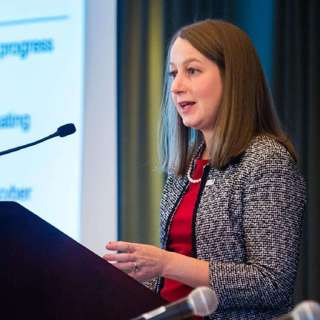
#19 - Samantha Pitts-Kiefer on working next to the White House trying to prevent nuclear war

#19 - Samantha Pitts-Kiefer on working next to the White House trying to prevent nuclear war

Rogue elements within a state’s security forces enrich dozens of kilograms of uranium. It’s then assembled into a crude nuclear bomb. The bomb is transported on a civilian aircraft to Washington D.C, ...

14 Feb 20181h 4min

#18 - Ofir Reich on using data science to end poverty & the spurious action-inaction distinction

#18 - Ofir Reich on using data science to end poverty & the spurious action-inaction distinction

Ofir Reich started out doing math in the military, before spending 8 years in tech startups - but then made a sharp turn to become a data scientist focussed on helping the global poor. At UC Berkeley...

31 Jan 20181h 18min

#17 - Will MacAskill on moral uncertainty, utilitarianism & how to avoid being a moral monster

#17 - Will MacAskill on moral uncertainty, utilitarianism & how to avoid being a moral monster

Immanuel Kant is a profoundly influential figure in modern philosophy, and was one of the earliest proponents for universal democracy and international cooperation. He also thought that women have no ...

19 Jan 20181h 52min

#16 - Michelle Hutchinson on global priorities research & shaping the ideas of intellectuals

#16 - Michelle Hutchinson on global priorities research & shaping the ideas of intellectuals

In the 40s and 50s neoliberalism was a fringe movement within economics. But by the 80s it had become a dominant school of thought in public policy, and achieved major policy changes across the Englis...

22 Dec 201755min

#15 - Phil Tetlock on how chimps beat Berkeley undergrads and when it’s wise to defer to the wise

#15 - Phil Tetlock on how chimps beat Berkeley undergrads and when it’s wise to defer to the wise

Prof Philip Tetlock is a social science legend. Over forty years he has researched whose predictions we can trust, whose we can’t and why - and developed methods that allow all of us to be better at p...

20 Nov 20171h 24min
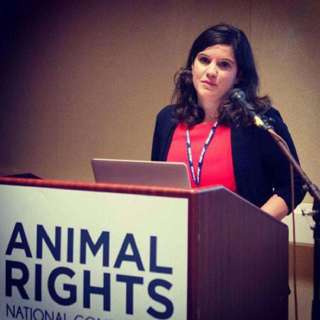
#14 - Sharon Nunez & Jose Valle on going undercover to expose animal abuse

#14 - Sharon Nunez & Jose Valle on going undercover to expose animal abuse

What if you knew that ducks were being killed with pitchforks? Rabbits dumped alive into containers? Or pigs being strangled with forklifts? Would you be willing to go undercover to expose the crime? ...

13 Nov 20171h 25min

Populärt inom Utbildning

rss-bara-en-till-om-missbruk-medberoende-2
historiepodden-se
det-skaver
alska-oss
harrisons-dramatiska-historia
nu-blir-det-historia
not-fanny-anymore
rss-foraldramotet-bring-lagercrantz
roda-vita-rosen
johannes-hansen-podcast
rss-viktmedicinpodden
sektledare
sa-in-i-sjalen
i-vantan-pa-katastrofen
rss-max-tant-med-max-villman
rss-sjalsligt-avkladd
rib-podcast
rikatillsammans-om-privatekonomi-rikedom-i-livet
allt-du-velat-veta
rss-relationsrevolutionen