Why FOMO Keeps You Drinking More Than You Want To

Why FOMO Keeps You Drinking More Than You Want To

Buy Breaking the Bottle Legacy: How to Change Your Drinking Habits and Create A Peaceful Relationship with Alcohol on Amazon.

US Kindle

US Paperback

UK Kindle

UK Paperback

Join my private FB group Alcohol Minimalists here: https://www.facebook.com/groups/changeyouralcoholhabit

Has this podcast helped you? How about leaving a review: Itunes

Follow me on Instagram: @AlcoholMinimalist

You can grab two free chapters of my upcoming book here!

Have you grabbed your free e-book, "Alcohol Truths: How Much is Safe?" Get it here.

Low risk drinking guidelines from the NIAAA:

Healthy men under 65:

No more than 4 drinks in one day and no more than 14 drinks per week.

Healthy women (all ages) and healthy men 65 and older: No more than 3 drinks in one day and no more than 7 drinks per week.

One drink is defined as 12 ounces of beer, 5 ounces of wine, or 1.5 ounces of 80-proof liquor. So remember that a mixed drink or full glass of wine are probably more than one drink.

Abstinence from alcohol Abstinence from alcohol is the best choice for people who take medication(s) that interact with alcohol, have health conditions that could be exacerbated by alcohol (e.g. liver disease), are pregnant or may become pregnant or have had a problem with alcohol or another substance in the past.

Benefits of “low-risk” drinking Following these guidelines reduces the risk of health problems such as cancer, liver disease, reduced immunity, ulcers, sleep problems, complications of existing conditions, and more. It also reduces the risk of depression, social problems, and difficulties at school or work.

This week on the podcast I'm talking about FOMO and why it keeps us drinking more than we want to.

When I use the acronym FOMO what do you think of?

Do you think of comparing yourself to others? Definitely this is the genesis of FOMO and even though it’s become a trendy, Meme-producing word these days it’s actually nothing new.

I actually explain it in my book, here’s what I said: “ The fear about what other people think is actually rooted in another survival instinct in our primitive brains. Our primitive brains evolved to associate our emotions with necessary actions for the survival of our species. Generally speaking this means avoiding pain and seeking pleasure. For our archaic ancestors, the Neanderthals, being a member of the tribe was literally a matter of life or death and as humans evolved we have become more socially connected.

"Mammals are more socially connected than reptiles, primates

more than other mammals, and humans more than other

primates. What this suggests is that becoming more socially

connected is essential to our survival. In a sense, evolution has

made bets at each step that the best way to make us more

successful is to make us more social."

Here’s the thing...we’re no longer living in a primitive world right, so living in a tribe isn’t necessary for day-to-day life over death. But that doesn’t mean being connected to people isn’t still important and necessary for humans...Unfortunately we’ve swung like a pendulum in the other direction with FOMO.

Our obsession and non-stop consumption of social media has created an unrealistic scale.

To Combat FOMO you need to think in complete thoughts, rather than incomplete thoughts. Challenge yourself to tell the WHOLE truth instead of continuing to talk yourself into incomplete truths that feel good for a moment.

FOMO is fueled by a perspective of scarcity. You come into a situation choosing to think that what you have right now isn’t enough. You associate loss with not getting more. You convince yourself that it isn’t enough to enjoy a night out with your friends. You need drinks, you need alcohol to make it better.

When you don’t redirect your thinking and you don’t challenge your FOMO thoughts...it leads to feelings that aren’t going to help you take the actions that will create the results you want in your life. You will keep doing what you’re doing and not changing because your thoughts are fueling the feelings of desire as well as the feeling of anticipated deprivation of not drinking.

★ Support this podcast ★

Det här avsnittet är hämtat från ett öppet RSS-flöde och publiceras inte av Podme. Det kan innehålla reklam.

Avsnitt(375)

Alcohol Awareness Month: How Curious Elixirs Is Redefining What Drinking Less Can Look Like with J.W. Wiseman

Alcohol Awareness Month: How Curious Elixirs Is Redefining What Drinking Less Can Look Like with J.W. Wiseman

In this episode of the Alcohol Minimalist Podcast, Molly talks with J.W. Wiseman, founder of Curious Elixirs, about the rise of craft non-alcoholic cocktails and why they matter so much for people who...

20 Apr 40min
Revisiting-Think Thursday: How Mindset Impact's the Body's Biology

Revisiting-Think Thursday: How Mindset Impact's the Body's Biology

In this Think Thursday episode, Molly revisits a timely conversation on mindset, neuroscience, and the biology of belief. Drawing on the work of Stanford health psychologist Dr. Alia Crum, she explore...

16 Apr 18min
Alcohol Awareness Month: 8 Facts Everyone Should Know About Alcohol

Alcohol Awareness Month: 8 Facts Everyone Should Know About Alcohol

In this episode of the Alcohol Minimalist Podcast, Molly shares 8 evidence-based facts everyone should know about alcohol. From cancer risk and “safe” drinking limits to binge drinking, sleep, toleran...

13 Apr 19min
Think Thursday: Paradox-The Power of "Both/And"

Think Thursday: Paradox-The Power of "Both/And"

In this Think Thursday episode, Molly explores Brené Brown’s ideas on paradox and why emotional resilience is less about certainty and more about our capacity to hold two truths at once. When we stop ...

9 Apr 16min
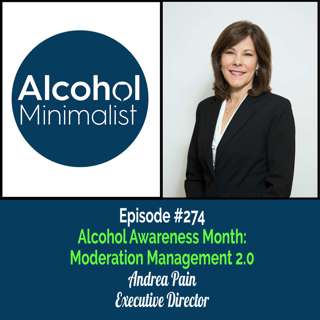
Alcohol Awareness Month:  Moderation Management 2.0 with Andrea Pain, Executive Director

Alcohol Awareness Month: Moderation Management 2.0 with Andrea Pain, Executive Director

In this episode of The Alcohol Minimalist Podcast, Molly talks with Andrea Pain, Executive Director of Moderation Management, about alcohol support options for people who want to drink less, explore m...

6 Apr 41min
Revisiting: Think Thursday-The Neuroscience of New Habit Formation

Revisiting: Think Thursday-The Neuroscience of New Habit Formation

In this revisited Think Thursday episode, Molly explains why March may be a better time than January to build lasting habits. If your New Year’s goals have faded, this conversation offers a science-ba...

2 Apr 18min
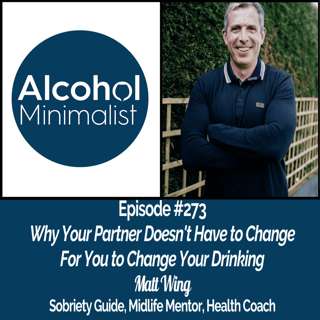
Why Your Partner Doesn't Have to Change for You to Change Your Drinking with Matt Wing

Why Your Partner Doesn't Have to Change for You to Change Your Drinking with Matt Wing

What happens when you want to drink less—but your partner doesn’t?In this episode, Molly talks with midlife sobriety coach Matt Wing about how to change your relationship with alcohol, even when your ...

30 Mars 40min
Think Thursday: The Zeigarnik Effect: Why Your Brain Won’t Let Things Go

Think Thursday: The Zeigarnik Effect: Why Your Brain Won’t Let Things Go

Episode SummaryWhy does your brain keep bringing things back up—especially when you’re trying to relax?In this Think Thursday episode, Molly expands on the Zeigarnik Effect, a psychological principle ...

26 Mars 9min

Populärt inom Utbildning

det-skaver
rss-bara-en-till-om-missbruk-medberoende-2
historiepodden-se
allt-du-velat-veta
nu-blir-det-historia
not-fanny-anymore
johannes-hansen-podcast
rss-viktmedicinpodden
harrisons-dramatiska-historia
sektledare
i-vantan-pa-katastrofen
rss-dr-bjorklund
roda-vita-rosen
rss-real-talk-with-jesper-stahl
sa-in-i-sjalen
rss-relationsrevolutionen
rss-max-tant-med-max-villman
rikatillsammans-om-privatekonomi-rikedom-i-livet
rss-basta-livet
rss-sjalsligt-avkladd