Professor Magda Osman on Psychological Harm

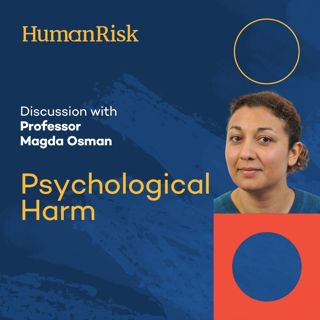
Professor Magda Osman on Psychological Harm

What is psychological harm, and can we really regulate it? Should an AI-companion app be allowed to dump the person who is using it?

📝 Episode Summary
On this episode, I’m joined once again by Professor Magda Osman, someone who’s been on the show several times before, who always has something compelling to say.

This time, we're talking about psychological harm, a term you’ve probably heard, but which remains vague, slippery, and surprisingly unhelpful when it comes to actually protecting people.

Together, we explore what psychological harm really means, why defining it matters, and why regulating it, especially in digital contexts, is so tricky.

We draw comparisons to physical harm, ask whether some emotional distress might be necessary, and consider what kinds of harm are moral rather than measurable.

The conversation touches on loneliness, AI companions, consent, and even chainsaws!

👤 Guest Biography
Magda is a Principal Research Associate at the Judge Business School, University of Cambridge, and holds a Professorial position at Leeds Business School, University of Leeds, where she supports policy impact.

She describes herself as a psychologist by training, with specific interests in decision-making under risk and uncertainty, folk beliefs in the unconscious, and behavioural change effectiveness.

Magda works at the intersection of behavioural science, regulation, and public policy, offering practical insights that challenge assumptions and bring clarity to complex issues.

⏱️ AI-Generated Timestamped Summary
[00:00:00] Introduction and framing of psychological harm

[00:02:00] The conceptual problems with defining psychological harm

[00:05:00] Psychological harm and the precautionary principle in digital regulation

[00:08:00] Social context, platform functions, and why generalisations don’t work

[00:12:00] The idea of rites of passage and unavoidable suffering

[00:15:00] AI companion apps and emotional dependency

[00:17:00] Exploitation, data harvesting, and moral transparency


[00:22:00] Frustration as normal vs. actual psychological damage

[00:26:00] The danger of regulating the trivial and the need for precision

[00:29:00] Why causal links are necessary for meaningful intervention

[00:33:00] Legal obligations and holding tech companies to account

[00:38:00] What users actually care about: privacy, data, trust

[00:42:00] Society’s negotiation of what counts as tolerable harm

[00:45:00] Why this isn’t an unprecedented problem — and how we’ve faced it before

[00:50:00] The risk of bad definitions leading to bad regulation

[00:54:00] Two contrasting examples of online services and their impacts

[00:57:00] What kind of regulation might we actually need?

[00:59:00] The case for rethinking how regulation itself is structured

[01:01:00] Where to find Magda’s work and final reflections

🔗 Links
Magda's LinkedIn profile: https://www.linkedin.com/in/magda-osman-11165138/

Her website: https://www.magdaosman.com/

Magda’s previous appearances on the show exploring:

Behavioural Interventions that fail:
https://www.humanriskpodcast.com/dr-magda-osman-on-behavioural/


Unconscious Bias: what is it, and can we train people not to show it?
https://www.humanriskpodcast.com/dr-magda-osman-on-unconscious/

Compliance, Coercion & Competence
https://www.humanriskpodcast.com/professor-magda-osman-on-compliance-coercion-competence/

Misinformation
https://www.humanriskpodcast.com/professor-magda-osman-on-misinformation/

Risk Prioritisation
https://www.humanriskpodcast.com/professor-magda-osman-on-risk-prioritisation/

Det här avsnittet är hämtat från ett öppet RSS-flöde och publiceras inte av Podme. Det kan innehålla reklam.

Avsnitt(368)

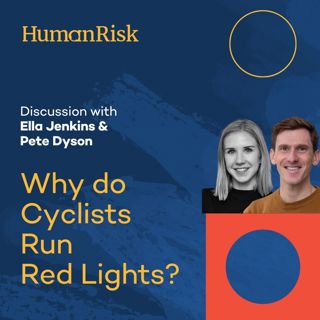
Ella Jenkins & Pete Dyson on Why Do Cyclists Run Red Lights?

Ella Jenkins & Pete Dyson on Why Do Cyclists Run Red Lights?

Why do cyclists in London run red lights? It's against the law, and yet, if you've cycled, driven or just observed London's cyclists, you'll know that many of them don't stop when there's a red light....

31 Aug 202554min
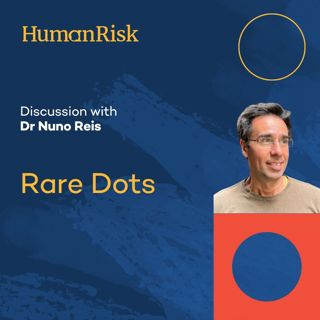
Dr Nuno Reis on Rare Dots

Dr Nuno Reis on Rare Dots

What if the ideas that linger in the back of your mind — the ones you can’t quite explain — are the ones you most need to pay attention to?Episode SummaryIn this episode, I explore that question with ...

24 Aug 20251h 7min
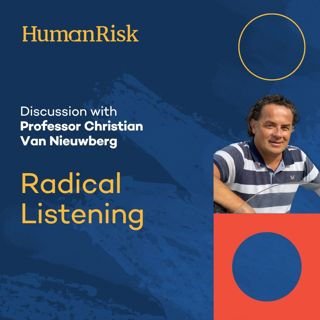
Professor Christian van Nieuwberg on Radical Listening

Professor Christian van Nieuwberg on Radical Listening

Is listening a hidden superpower we’ve overlooked?  You've heard of Active Listening, but what is Radical Listening and why does it matter?Episode SummaryOn this episode, I’m joined by Professor Chris...

17 Aug 20251h 9min
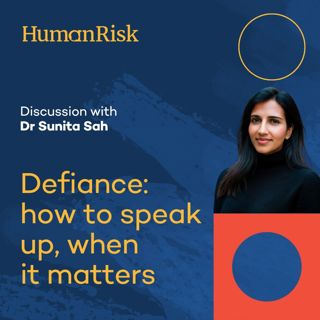
Dr Sunita Sah on Defiance - how to speak up when it matters

Dr Sunita Sah on Defiance - how to speak up when it matters

Why do we follow orders or go along with things that feel wrong? Why might defiance be better than compliance? And how can we go about becoming more defiant?Episode SummaryI’ve always been fascinated ...

9 Aug 20251h 2min
Dr Libby Maman on Measuring and (Re-)building Trust

Dr Libby Maman on Measuring and (Re-)building Trust

What happens when citizens lose faith in the institutions that serve them? And how can we rebuild that trust?Episode SummaryOn this episode, I'm speaking to someone who cares passionately about this s...

2 Aug 20251h
Iain Morrison on When The Show Mustn't Go On

Iain Morrison on When The Show Mustn't Go On

We’ve all heard the phrase ‘the show must go on’.  But when shouldn’t the show go on?  To help me answer that, I’m speaking to someone who has spent 35 years managing some of Australia’s most iconic l...

26 Juli 20251h 5min
Zsike Peter on Thinkbait

Zsike Peter on Thinkbait

What if the real risk of AI isn’t job loss but brain atrophy?Episode SummaryIf you've spent any time on social media recently, you'll be familiar with the flood of low-quality AI-generated sludge. And...

19 Juli 20251h 9min
Dr Kiran Bhatti & Professor Thomas Roulet on Wellbeing Intelligence

Dr Kiran Bhatti & Professor Thomas Roulet on Wellbeing Intelligence

What if we treated mental health like a capability instead of a crisis? On this episode, I'm talking to a business school professor and a counselling psychologist about their new book that looks at pr...

12 Juli 20251h 2min

Populärt inom Vetenskap

allt-du-velat-veta
dumma-manniskor
p3-dystopia
ufo-sverige
rss-ufobortom-rimligt-tvivel
kapitalet-en-podd-om-ekonomi
svd-nyhetsartiklar
hacka-livet
paranormalt-med-caroline-giertz
ufo-sverige-2
rss-spraket
sexet
rss-vetenskapsradion
medicinvetarna
det-morka-psyket
rss-vetenskapsradion-2
dumforklarat
rss-dennis-world
rss-tidslinjen-podcast
rss-tidsmaskinen