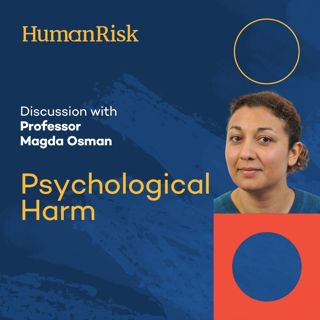
Professor Magda Osman on Psychological Harm

Professor Magda Osman on Psychological Harm

What is psychological harm, and can we really regulate it? Should an AI-companion app be allowed to dump the person who is using it?

📝 Episode Summary
On this episode, I’m joined once again by Professor Magda Osman, someone who’s been on the show several times before, who always has something compelling to say.

This time, we're talking about psychological harm, a term you’ve probably heard, but which remains vague, slippery, and surprisingly unhelpful when it comes to actually protecting people.

Together, we explore what psychological harm really means, why defining it matters, and why regulating it, especially in digital contexts, is so tricky.

We draw comparisons to physical harm, ask whether some emotional distress might be necessary, and consider what kinds of harm are moral rather than measurable.

The conversation touches on loneliness, AI companions, consent, and even chainsaws!

👤 Guest Biography
Magda is a Principal Research Associate at the Judge Business School, University of Cambridge, and holds a Professorial position at Leeds Business School, University of Leeds, where she supports policy impact.

She describes herself as a psychologist by training, with specific interests in decision-making under risk and uncertainty, folk beliefs in the unconscious, and behavioural change effectiveness.

Magda works at the intersection of behavioural science, regulation, and public policy, offering practical insights that challenge assumptions and bring clarity to complex issues.

⏱️ AI-Generated Timestamped Summary
[00:00:00] Introduction and framing of psychological harm

[00:02:00] The conceptual problems with defining psychological harm

[00:05:00] Psychological harm and the precautionary principle in digital regulation

[00:08:00] Social context, platform functions, and why generalisations don’t work

[00:12:00] The idea of rites of passage and unavoidable suffering

[00:15:00] AI companion apps and emotional dependency

[00:17:00] Exploitation, data harvesting, and moral transparency


[00:22:00] Frustration as normal vs. actual psychological damage

[00:26:00] The danger of regulating the trivial and the need for precision

[00:29:00] Why causal links are necessary for meaningful intervention

[00:33:00] Legal obligations and holding tech companies to account

[00:38:00] What users actually care about: privacy, data, trust

[00:42:00] Society’s negotiation of what counts as tolerable harm

[00:45:00] Why this isn’t an unprecedented problem — and how we’ve faced it before

[00:50:00] The risk of bad definitions leading to bad regulation

[00:54:00] Two contrasting examples of online services and their impacts

[00:57:00] What kind of regulation might we actually need?

[00:59:00] The case for rethinking how regulation itself is structured

[01:01:00] Where to find Magda’s work and final reflections

🔗 Links
Magda's LinkedIn profile: https://www.linkedin.com/in/magda-osman-11165138/

Her website: https://www.magdaosman.com/

Magda’s previous appearances on the show exploring:

Behavioural Interventions that fail:
https://www.humanriskpodcast.com/dr-magda-osman-on-behavioural/


Unconscious Bias: what is it, and can we train people not to show it?
https://www.humanriskpodcast.com/dr-magda-osman-on-unconscious/

Compliance, Coercion & Competence
https://www.humanriskpodcast.com/professor-magda-osman-on-compliance-coercion-competence/

Misinformation
https://www.humanriskpodcast.com/professor-magda-osman-on-misinformation/

Risk Prioritisation
https://www.humanriskpodcast.com/professor-magda-osman-on-risk-prioritisation/

Det här avsnittet är hämtat från ett öppet RSS-flöde och publiceras inte av Podme. Det kan innehålla reklam.

Avsnitt(368)

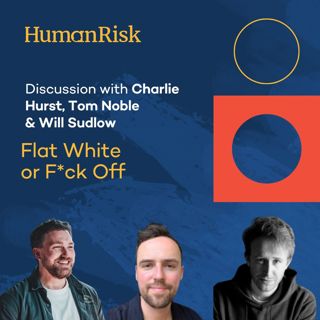
Charlie Hurst, Tom Noble and Will Sudlow on Flat White or F*ck Off

Charlie Hurst, Tom Noble and Will Sudlow on Flat White or F*ck Off

What happens when someone runs with a business idea they've heard as a thought experiment on a podcast? Can a business have an expletive in its name? And is it possible to run a business that sells a ...

22 Feb 1h 15min
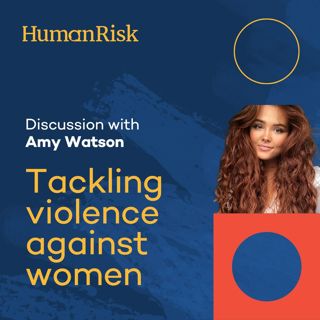
Amy Watson on Violence Against Women & Girls

Amy Watson on Violence Against Women & Girls

What if we stopped telling women how to stay safe, and started asking why violence against them keeps happening in the first place? On this episode, I’m joined for a second time, by Amy Watson, the fo...

15 Feb 1h 39min
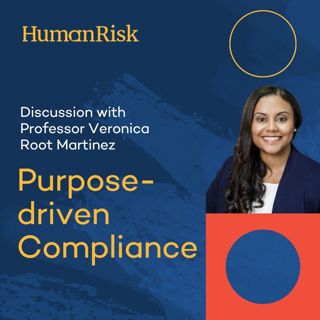
Professor Veronica Root Martinez on Purpose-Driven Compliance

Professor Veronica Root Martinez on Purpose-Driven Compliance

Who determines what 'good' Compliance actually looks like?  The obvious answer is regulators (and in some jurisdictions) prosecutors. But what if it were the regulated Firms themselves?  That's the id...

7 Feb 1h 2min
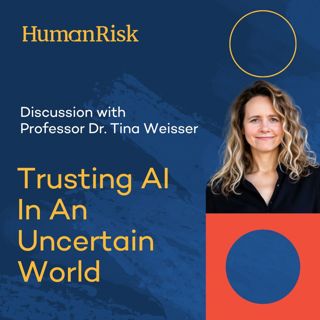
Professor Tina Weisser on Trusting AI In An Uncertain World

Professor Tina Weisser on Trusting AI In An Uncertain World

As Artificial Intelligence (AI) gets smarter and tkaes over more tasks, what happens to human dynamics like trust, transparency, leadership and empathy. How can humans and machines wowrk togehter effe...

27 Jan 1h 9min
Becky Holmes on Romance Scams

Becky Holmes on Romance Scams

What lies behind Romance Fraud? Romance fraud is one of the fastest-growing forms of fraud worldwide, and one of the most emotionally devastating. It’s also one of the most misunderstood.On this epis...

21 Jan 1h 8min
Amy Kean on Grief

Amy Kean on Grief

Why do we struggle to talk about grief? Why that matters and what we can do about it, is the subject of this episode.SummaryGrief is something almost all of us will experience, and yet something we st...

12 Jan 1h 4min
Dr Guy Champniss on Business, BeSci and AI

Dr Guy Champniss on Business, BeSci and AI

Are we losing our ability to think critically as we rely more on AI?Episode SummaryMy guest is social psychologist Dr Guy Champniss to explore the role of behavioural science in business and the emerg...

7 Dec 20251h 1min
Professor Yuval Feldman on Can The Public Be Trusted?

Professor Yuval Feldman on Can The Public Be Trusted?

Why do governments rely on coercion and punishment when voluntary cooperation often produces better, more sustainable outcomes?Episode SummaryOn this episode, I’m joined once again by Professor Yuval ...

23 Nov 20251h 5min

Populärt inom Vetenskap

allt-du-velat-veta
dumma-manniskor
p3-dystopia
ufo-sverige
rss-ufobortom-rimligt-tvivel
kapitalet-en-podd-om-ekonomi
svd-nyhetsartiklar
hacka-livet
paranormalt-med-caroline-giertz
ufo-sverige-2
rss-spraket
sexet
rss-vetenskapsradion
medicinvetarna
det-morka-psyket
rss-vetenskapsradion-2
dumforklarat
rss-dennis-world
rss-tidslinjen-podcast
rss-tidsmaskinen