RS#03 2014: Advertise your travel pass
On this episode, we interview a Japanese man who was attacked in Kurfurstendamm. Instead of seeking to punish his assailant, he attempted to offer him a job. In other news, the city government is cracking down on the infamous beer bikes by banning them from all major city streets, except for those leading east to Friedrichshain. Where should Berlin build new bike lanes? You can nominate a deserving street at www.fahrradnetz-berlin.de Plus: a group launches a new program for people riding trains without tickets. It's called Ticketteilen. They are encouraging people to wear a button to indicate if they hold a umweltkarte, which is a kind of yearly travel card that lets you take another person after 8pm or on weekends. Hear this episode with music at radiospaetkauf.com
16 Feb 201427min

RS#Update 2014: Opposing the TV and Radio fee
A special update from Radio Spaetkauf: Opposing the obligatory TV and Radio fee. Have you recently received a letter demanding 18€ per month for your television and radio license, even if you don't use either service? It seems this has happened to many of us in Berlin over the last few weeks. This contribution towards broadcasting has become mandatory since January 2013 but one group thinks it's unfair. Hear all about the group "Remote Control" and their campaign "Der Rundfunkbeitrag-Zahlungsstreik" (payment strike). Listen to the update to hear how to oppose the fee and not get yourself caught up in back-payments.
30 Jan 20148min

RS#02 2014: The Tempelhofer Feld referendum
Radio Spaetkauf is Berlin's English-language news and interview podcast. Tonight we bring you an update on the Tempelhof petition intiative: the movement against development on the former airport has gained enough signatures to trigger a referendum, but politicians are stalling by scrutinizing every signature. Clown and sex worker advocate Harvey Rabbit tells us about her upcoming show, Variete Ridiculous, which as well as being a night of great cabaret entertainment, is also a space for the demystification of sex workers. Variete Ridiculous is on Friday January 31 at Keller Neukölln. Joel presents a taste of the kinds of music you can hear at the cabaret night by playing one of his songs live in the studio, an act of shameless self promotion only allowable because Maisie's away tonight.
26 Jan 201430min
RS#01 2014: Who throws a shoe? €30 fine for sneakering in Berlin
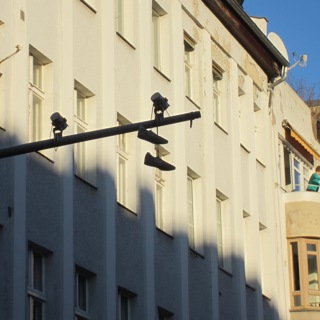
On the first episode of Radio Spaetkauf for 2014, the Ordnungsamt has introduced a new fine for throwing sneakers over dangling wires or posts. It'll cost you €30 if you're caught. So don't do it, or don't get caught. Other new price hikes for the year include public swimming pools: it now costs €5.50 to take a dip in peak times, which has had its hours inverted. We re-visit the Amt für Werbefreiheit und Gutes Leben, who want all outdoor advertising banned from the city. They've gathered a lot of support, but they had a mixed reaction from their elected politicians. Another citizen's initiative not getting any political support is 100% Tempelhofer Feld, which looks likely to fail in its attempt to prevent development on the old airport site. The initiative has fallen short of the number of required signatures on its petition. The BVG has revealed it employs 120 ticket checkers on the U-Bahn. We're searching for a maths genius to use this number to figure out the likelihood of getting caught without a ticket at any given time.
13 Jan 201428min
RS#24 2013: Watch out for bad glühwein
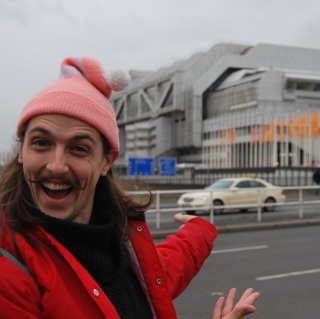
On this week's Radio Spätkauf: Berlin city's scientists have warned Christmas market shoppers to beware of bad glühwein. After testing market stalls, they found 8.6 per cent of mulled wine is not what it purports to be. Jöran Mandik has dispatched his final audio architectural tour (sadly, he's moving to Australia in the new year). He takes us on a walk around the concrete monolith that is the International Congress Centrum, which will close its doors in mid-2014 for renovations, and may never reopen. We play some clips from the archives. Drinkers in a Neukölln pub attempt to define the difference between a döner and a schwarma. Our song of the week is another from Sean Nicholas Savage, a Berlin resident who channels 80s pop icons.
16 Dec 201329min

RS#23 2013: Rent controls and a minimum wage
Berlin's fast-rising rents may be slowed by two political developments. The federal coalition between the CDU and SPD has promised to put in new controls on rental prices. Even new rental contracts, which have previously been uncapped, will now be limited to a 10 per cent increase. And on a local level, the Berlin senate has introduced tough new restrictions on the commercial use of apartments for holiday flats. By banning ferienwohnung, the city hopes to release more apartments for residential use. In another positive move for poorly-paid Berliners, the new federal coalition has also agreed to implement a minimum wage of 8.50 EUR an hour. But the wage won't come into effect until 2015, and even when it does it will not be a huge improvement. The Radio Spaetkauf team has another solution - why not start a campaign for a London-style living wage that reflects the real cost of working in the city? Maisie interviews Bo Van, an architect who has created the Unreal Estate House, a temporary mobile construction that he invites anyone to stay in for free, to challenge the idea of property ownership and encourage civic participation. Tonight's song comes from Bra Bra Bra, an all-female band from Berlin.
1 Dec 201330min

RS#22 2013: Re-Thinking the City
Good news if you take the U6: as of today the line is reconnected. However users of the north-south S-Bahn line nearby will be disappointed to learn that the tunnel will be closed for most of the rest of the year due to track work. The recent referendum about de-privatizing the Berlin electricity grid was lost by just 20,000 votes. That means the city won't be forced to buy it back. But the fight to get the grid back into the hands of the people isn't over yet. Another initiative, Bürger Energie Berlin, plans to raise enough money to buy the power grid outright. If every Berlin power bill customer chipped in 100 euros, they'd have enough to purchase the grid. A Neukölln bar is set to close, but this time no one is likely to stand up and defend it. The bar in question is Freies Neukölln, whose owner filmed a famously nasty tirade against pretty much everyone who has moved to the neighbourhood in the past ten years. His bar will shut a the end of 2014 after the owner kicked him out. Few tears are expected to be shed. Munich recently voted against bidding for the 2022 Winter Olympic Games. Local papers speculate that this increases the chances for Berlin to be selected to host the 2024 summer games, if it were to bid. But do the citizens of Berlin even want this expensive spectacle? Shouldn't they be given the same right as Munich, to vote democratically on the idea?
18 Nov 201329min

RS#21 2013: Energetic Discussion
It's referendum time in Berlin. The city is voting whether to de-privatize the electricity grid, although international residents cannot take part. Another referendum is looming next year, this one about the future of Tempelhof airport park, and whether any building should take place there. A Berlin entrepreneur has come up with a new app that would allow citizens to take photos of badly parked cars and submit them to the city authorities for punishment. The app will be called Straensherif, although Maisie thinks it should be called Stasi 3.0. Joran Mandik takes us on an architectural audio tour of the old Kindl Brauerei in Neukolln, which is now being turned into a cultural center. Joel joins us again, back from a month in Australia and New Zealand, where he heard more German being spoken on the streets than in Kreuzberg.
4 Nov 201326min