
Sir Patrick Stewart
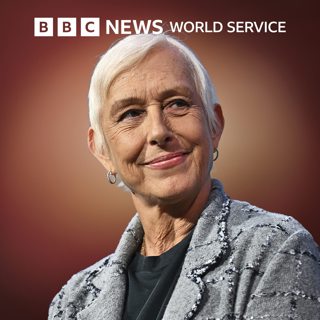
Sir Patrick Stewart has an acting career spanning more than 50 years. He was an accomplished Shakepearean actor when he took on the role of Captain Jean-Luc Picard in Star Trek: The Next Generation which brought him international acclaim.He talks to Sarah Montague about his decision to join the Star Trek cast and why it wasn't supposed to be successful. He also recalls his childhood where family rows often resulted in his mother becoming a victim of domestic violence.Sir Patrick is now a patron of the charity Refuge which helps victims of domestic violence.(Picture: Sir Patrick Stewart. Credit: AFP)
25 Jan 201223min
Wadah Khanfar - Former Director General, Al Jazeera
The satellite TV station Al Jazeera, is credited with giving ordinary Arabs a platform from which to challenge their governments. And day by day it's been covering the dramatic events of the Arab Spring using the latest slick technology on both its Arabic and English channels.But is it selective in who it criticises?Zeinab Badawi speaks to Wadah Khanfar. He was the boss of Al Jazeera for nearly ten years. Was the station's coverage biased on his watch? And why did he leave Al Jazeera in the midst of the biggest news events in the Arab World for decades?(Image: Wadah Khanfar. Credit: Getty Images)
23 Jan 201223min
Steve McQueen
The British artist and film-maker Steve McQueen - whose new film Shame is about sex addiction - says the condition is very real and is destroying people's lives.He tells HARDtalk's Zeinab Badawi that both men and women can have an unhealthy relationship with sex in the same way they can with food where the craving for it becomes a compulsion making everything else in life become secondary.
20 Jan 201223min
Bassma Kodmani
Ten months after the wave of Arab unrest reached Syria, President Assad is still in power.Bloody protests continue and there are fears that the country could be sliding into civil war.But there is little appetite from foreign powers for military intervention.Sarah Montague speaks to Bassma Kodmani, a leading figure in the exiled Syrian opposition and asks her why foreign intervention in Syria should be an option.(Picture shows Bassma Kodmani. Credit: BBC)
18 Jan 201223min
Zoltan Kovacs - Hungarian Minister of State for Government Communication
Hungary's centre-right government has galvanized critics at home and abroad with its new controversial constitution. There have been mass protests in the country, opposition politicians have chained themselves to gates outside public buildings, and the prime minister, Viktor Orban, has been dubbed Viktator.The EU, IMF and the US have rebuked the Hungarian government over its changes to election rules, the central bank and the judiciary, warning they will erode democracy and entrench one-party rule.Zeinab Badawi speaks to Hungary's Government Communication Minister, Zoltán Kovács. His government says the reforms are necessary to modernise the Hungarian state. But with the country badly in need of a $20bn international bailout - is it about to perform a U-turn and back down?
16 Jan 201223min
Cheng Siwei - Former Vice Chairman, Standing Committee, NPC, China
This year - 2012 - is the Chinese Year of the Dragon and Chinese workers certainly seem to have fire in their belly.There's growing discontent amongst the workforce whose labour fuelled the country's economic miracle. They're angry that export-led growth has largely passed them by - whilst filling state coffers and enriching some beyond their wildest dreams. Zeinab Badawi speaks to Cheng Siwei - one of China's most influential economists. How much of a threat is economic uncertainty and social unrest to China's prosperity and stability?
13 Jan 201223min
Olli Rehn - European Commissioner for Economic and Monetary Affairs
Sarah Montague is in Brussels to talk to the man with the unenviable job of finding a way out of Europe's financial crisis. He is Olli Rehn, Europe's Commissioner for Economic and Monetary Affairs. It's nearly two years since the Greek crisis first blew up; and in that time seven heads of Eurozone governments have been replaced; there have been at least 15 European summits; and any number of plans; and yet, Greece is still on the verge of defaulting and the German Chancellor Angela Merkel has warned this coming year will "undoubtedly" be harder than the last. What has been achieved and are we any closer to resolving the crisis?(Image: European Union Economic and Monetary Affairs Commissioner Olli Rehn. Credit: Reuters)
11 Jan 201223min
Dr Devi Shetty - Indian heart surgeon
Stephen Sackur speaks to a brilliant heart surgeon - veteran of more than 30,000 operations - but his growing international reputation rests less on his medical skill, more on his business brain. He wants to do for major surgery what Henry Ford did for the motor car - make it affordable for the masses, by means of mass production. He's building what he calls medical cities across India and beyond - but can this vision of delivering a public good for private profit really change healthcare around the world?
9 Jan 201223min