Rebuilding after apocalypse: What 13 experts say about bouncing back

Rebuilding after apocalypse: What 13 experts say about bouncing back

What happens when civilisation faces its greatest tests?

This compilation brings together insights from researchers, defence experts, philosophers, and policymakers on humanity’s ability to survive and recover from catastrophic events. From nuclear winter and electromagnetic pulses to pandemics and climate disasters, we explore both the threats that could bring down modern civilisation and the practical solutions that could help us bounce back.

Learn more and see the full transcript: https://80k.info/cr25

Chapters:

  • Cold open (00:00:00)
  • Luisa’s intro (00:01:16)
  • Zach Weinersmith on how settling space won’t help with threats to civilisation anytime soon (unless AI gets crazy good) (00:03:12)
  • Luisa Rodriguez on what the world might look like after a global catastrophe (00:11:42)
  • Dave Denkenberger on the catastrophes that could cause global starvation (00:22:29)
  • Lewis Dartnell on how we could rediscover essential information if the worst happened (00:34:36)
  • Andy Weber on how people in US defence circles think about nuclear winter (00:39:24)
  • Toby Ord on risks to our atmosphere and whether climate change could really threaten civilisation (00:42:34)
  • Mark Lynas on how likely it is that climate change leads to civilisational collapse (00:54:27)
  • Lewis Dartnell on how we could recover without much coal or oil (01:02:17)
  • Kevin Esvelt on people who want to bring down civilisation — and how AI could help them succeed (01:08:41)
  • Toby Ord on whether rogue AI really could wipe us all out (01:19:50)
  • Joan Rohlfing on why we need to worry about more than just nuclear winter (01:25:06)
  • Annie Jacobsen on the effects of firestorms, rings of annihilation, and electromagnetic pulses from nuclear blasts (01:31:25)
  • Dave Denkenberger on disruptions to electricity and communications (01:44:43)
  • Luisa Rodriguez on how we might lose critical knowledge (01:53:01)
  • Kevin Esvelt on the pandemic scenarios that could bring down civilisation (01:57:32)
  • Andy Weber on tech to help with pandemics (02:15:45)
  • Christian Ruhl on why we need the equivalents of seatbelts and airbags to prevent nuclear war from threatening civilisation (02:24:54)
  • Mark Lynas on whether wide-scale famine would lead to civilisational collapse (02:37:58)
  • Dave Denkenberger on low-cost, low-tech solutions to make sure everyone is fed no matter what (02:49:02)
  • Athena Aktipis on whether society would go all Mad Max in the apocalypse (02:59:57)
  • Luisa Rodriguez on why she’s optimistic survivors wouldn’t turn on one another (03:08:02)
  • David Denkenberger on how resilient foods research overlaps with space technologies (03:16:08)
  • Zach Weinersmith on what we’d practically need to do to save a pocket of humanity in space (03:18:57)
  • Lewis Dartnell on changes we could make today to make us more resilient to potential catastrophes (03:40:45)
  • Christian Ruhl on thoughtful philanthropy to reduce the impact of catastrophes (03:46:40)
  • Toby Ord on whether civilisation could rebuild from a small surviving population (03:55:21)
  • Luisa Rodriguez on how fast populations might rebound (04:00:07)
  • David Denkenberger on the odds civilisation recovers even without much preparation (04:02:13)
  • Athena Aktipis on the best ways to prepare for a catastrophe, and keeping it fun (04:04:15)
  • Will MacAskill on the virtues of the potato (04:19:43)
  • Luisa’s outro (04:25:37)

Tell us what you thought! https://forms.gle/T2PHNQjwGj2dyCqV9

Content editing: Katy Moore and Milo McGuire
Audio engineering: Ben Cordell, Milo McGuire, Simon Monsour, and Dominic Armstrong
Music: Ben Cordell
Transcriptions and web: Katy Moore

Avsnitt(332)

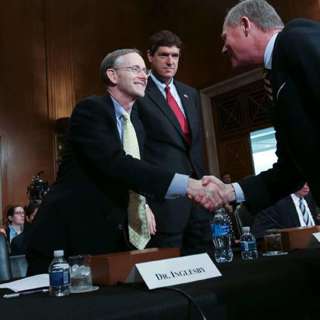
#27 - Dr Tom Inglesby on careers and policies that reduce global catastrophic biological risks

#27 - Dr Tom Inglesby on careers and policies that reduce global catastrophic biological risks

How about this for a movie idea: a main character has to prevent a new contagious strain of Ebola spreading around the world. She’s the best of the best. So good in fact, that her work on early detect...

18 Apr 20182h 16min
#26 - Marie Gibbons on how exactly clean meat is made & what's needed to get it in every supermarket

#26 - Marie Gibbons on how exactly clean meat is made & what's needed to get it in every supermarket

First, decide on the type of animal. Next, pick the cell type. Then take a small, painless biopsy, and put the cells in a solution that makes them feel like they’re still in the body. Once the cells a...

10 Apr 20181h 44min
#25 - Robin Hanson on why we have to lie to ourselves about why we do what we do

#25 - Robin Hanson on why we have to lie to ourselves about why we do what we do

On February 2, 1685, England’s King Charles II was struck by a sudden illness. Fortunately his physicians were the best of the best. To reassure the public they kept them abreast of the King’s treatme...

28 Mars 20182h 39min
#24 - Stefan Schubert on why it’s a bad idea to break the rules, even if it’s for a good cause

#24 - Stefan Schubert on why it’s a bad idea to break the rules, even if it’s for a good cause

How honest should we be? How helpful? How friendly? If our society claims to value honesty, for instance, but in reality accepts an awful lot of lying – should we go along with those lax standards? Or...

20 Mars 201855min
#23 - How to actually become an AI alignment researcher, according to Dr Jan Leike

#23 - How to actually become an AI alignment researcher, according to Dr Jan Leike

Want to help steer the 21st century’s most transformative technology? First complete an undergrad degree in computer science and mathematics. Prioritize harder courses over easier ones. Publish at lea...

16 Mars 201845min
#22 - Leah Utyasheva on the non-profit that figured out how to massively cut suicide rates

#22 - Leah Utyasheva on the non-profit that figured out how to massively cut suicide rates

How people kill themselves varies enormously depending on which means are most easily available. In the United States, suicide by firearm stands out. In Hong Kong, where most people live in high rise ...

7 Mars 20181h 8min
#21 - Holden Karnofsky on times philanthropy transformed the world & Open Phil’s plan to do the same

#21 - Holden Karnofsky on times philanthropy transformed the world & Open Phil’s plan to do the same

The Green Revolution averted mass famine during the 20th century. The contraceptive pill gave women unprecedented freedom in planning their own lives. Both are widely recognised as scientific breakthr...

27 Feb 20182h 35min
#20 - Bruce Friedrich on inventing outstanding meat substitutes to end speciesism & factory farming

#20 - Bruce Friedrich on inventing outstanding meat substitutes to end speciesism & factory farming

Before the US Civil War, it was easier for the North to morally oppose slavery. Why? Because unlike the South they weren’t profiting much from its existence. The fight for abolition was partly won bec...

19 Feb 20181h 18min

Populärt inom Utbildning

rss-bara-en-till-om-missbruk-medberoende-2
historiepodden-se
det-skaver
harrisons-dramatiska-historia
allt-du-velat-veta
nu-blir-det-historia
johannes-hansen-podcast
roda-vita-rosen
rss-viktmedicinpodden
rss-foraldramotet-bring-lagercrantz
sektledare
i-vantan-pa-katastrofen
not-fanny-anymore
sa-in-i-sjalen
rss-max-tant-med-max-villman
rss-sjalsligt-avkladd
rss-basta-livet
rss-traningsklubben
rikatillsammans-om-privatekonomi-rikedom-i-livet
alska-oss