The bomb (part 1): were nuclear weapons inevitable?
Economist Podcasts16 Juli 2025

The bomb (part 1): were nuclear weapons inevitable?

Where did the world’s most devastating weapon come from? In a four-part series, we go behind the scenes at America's nuclear laboratories to understand how a scientific-mystery story about the ingredients of matter led to a world-changing (and second-world-war-ending) bomb less than five decades later.


Nuclear weapons have been central to geopolitical power ever since. Now America is seeking to modernise its stockpile and, in doing so, its scientists are pushing the frontiers of extreme physics, materials science and computing.


In episode one, we look at the birth of nuclear physics—the science that emerged early in the 20th century to answer a mystery: what is an atom actually made of?


Host: Alok Jha, The Economist’s science and technology editor. Contributors: Frank Close, a physicist and author of “Destroyer of Worlds”, a history of the birth of nuclear physics; Cheryl Rofer, a chemist who used to work at the Los Alamos National Laboratory (LANL); and Nicholas Lewis, a historian at LANL.


This episode features archive from the Atomic Heritage Foundation.


Listen to episode two here.


Transcripts of our podcasts are available via economist.com/podcasts.


This is a free episode. To continue listening to “The Bomb”, you’ll need to subscribe.


Listen to what matters most, from global politics and business to science and technology—subscribe to Economist Podcasts+.


For more information about how to access Economist Podcasts+, please visit our FAQs page or watch our video explaining how to link your account.

Hosted on Acast. See acast.com/privacy for more information.

Avsnitt(1960)

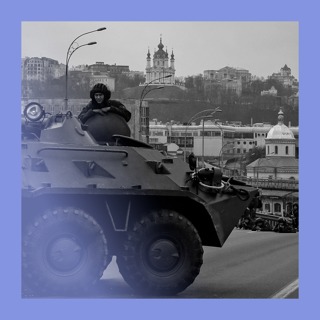
A world-changing war: four years in Ukraine

A world-changing war: four years in Ukraine

On the fourth anniversary of a war that many predicted would last mere days, much has changed—even beyond the unthinkable misery in Ukraine itself. Alliances have weakened, Europe is rearming like nev...

24 Feb 21min
When the levy brakes: Trump’s tariffs struck down

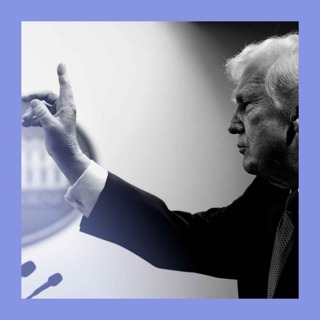
When the levy brakes: Trump’s tariffs struck down

The smackdown by America’s Supreme Court was resounding: the bulk of Donald Trump’s tariffs were instituted illegally. He will try to rebuild his tariff wall, brick by brick—creating a new crop of win...

23 Feb 21min
The arrest is history: Andrew Mountbatten-Windsor

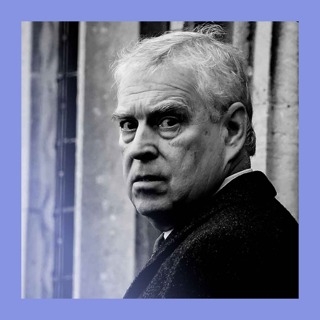
The arrest is history: Andrew Mountbatten-Windsor

The detainment of King Charles’s brother is almost without precedent in Britain’s long royal history. He denies wrongdoing, but damage to “The Firm” is already assured. Saudi Arabia and the United Ara...

20 Feb 22min
The splitting image: Yoon verdict will deepen divisions

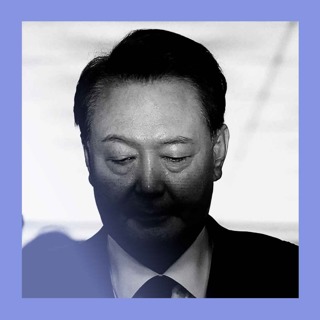
The splitting image: Yoon verdict will deepen divisions

Yoon Suk Yeol, South Korea’s ex-president, has been handed a life sentence for insurrection. That is by no means the end of the story of division in the country. Nervous AI-watchers fret about which w...

19 Feb 25min
The Robin Hood state: taxes are getting more progressive

The Robin Hood state: taxes are getting more progressive

Income inequality abounds and today’s rich are staggeringly rich, implying that tax regimes are giving the wealthy more and more of a pass. Our dig into the numbers suggests the opposite. We ask why s...

18 Feb 22min
Ice, ice, maybe: should the Arctic be refrozen?

Ice, ice, maybe: should the Arctic be refrozen?

Many scientists are considering the notion of actively cooling the region that is warming fastest. We examine the merits and the risks—both environmental and geopolitical—of messing with the polar cli...

17 Feb 22min

Check in the mail: our analysis of Epstein’s correspondence

Check in the mail: our analysis of Epstein’s correspondence

Our data journalists trawled through the vast email archive of Jeffrey Epstein, a dead sex offender. It is a revealing look at how and with whom he communicated. As interest grows in banning young peo...

16 Feb 25min

Stock options: how to hedge an AI bubble

Stock options: how to hedge an AI bubble

Tech firms are spending so much on artificial intelligence that investors are getting nervous. Our correspondent explains whether it is possible to protect your portfolio from a crash. Turkey’s ruler ...

13 Feb 22min

Populärt inom Politik & nyheter

svenska-fall
p3-krim
rss-krimstad
fordomspodden
aftonbladet-krim
spar
flashback-forever
rss-sanning-konsekvens
aftonbladet-daily
rss-vad-fan-hande
motiv
rss-krimreportrarna
politiken
rss-klubbland-en-podd-mest-om-frolunda
rss-frandfors-horna
rss-aftonbladet-krim
krimmagasinet
dagens-eko
rss-flodet
blenda-2