How to Optimise Sleep and Find the Right Rhythm for You

How to Optimise Sleep and Find the Right Rhythm for You

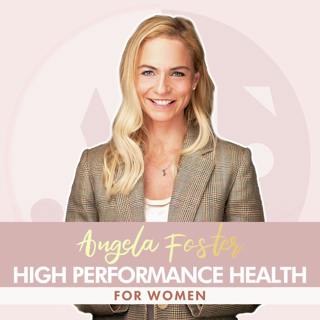
‘If you are relaxed and ready for sleep you are increasing your chances of effective sleep’ Angela is with Dr Greg Potter PhD who is a specialist in sleep and nutrition optimisation. He is passionate about finding solutions for those experience sleep fragmentation and sleep deprivation and in this fascinating episode packed with useful content explains how sleep patterns are established and the factors that impact on the type and duration of sleep individuals achieve. They discuss in detail the importance of a good pre-sleep routine and understanding whether you are a night owl or early bird, listen in and learn. KEY TAKEAWAYS Most people understand that it’s important to be exposed to high-intensity light during the day and that regular exercise impacts on how quickly you fall asleep. A sleep diary can be an effective way of tracking sleep patterns to identify issues and bedtime restriction therapy can be used to improve sleep efficiency. In a healthy person cortisol peaks in the day and declines in preparation for sleep. It’s vital to have a good pre-sleep routine and undertake activities that help quieten the mind. Before you wake there should be a spike in cortisol, it is part of a rhythmic process that is preparing your body to be able to cope with the activities of the day People who are not in optimal health experience lower amounts of cortisol in preparation for the day and a higher level at night-time which impacts on sleep. If you are an A-type personality research has shown making a detailed ‘to do’ list in preparation for the next day can aid restful sleep. Different chronotypes such as night owls and early birds respond in different ways to the stimulus that impact on circadian rhythms. If a couple are differing types, and it is extreme, a sleep divorce – where you sleep in a different bed to your partner may be the solution. It’s vital to look for a solution that is manageable for both partners as sleep deprivation and disrupted sleep have a huge impact on people’s daily lives There is not a one size fits all for sleep duration and it changes during your life span. The amount you need, as an individual change, continually but when you extend and improve your sleep then you will improve cognitive function. When co-ordinating sleep timing its vital to understand the different timing constructs. The social clock -the timing of the day The environmental clock – the earth about its axis The biological clocks – that bring the changes to rhythms in our biology People differ in the timing of these clocks and this manifests itself as differences in chronotype. During the biological night time, your body is synthesising melatonin during daytime the amount of melatonin produced is almost zero and you are ready for activity. BEST MOMENTS ‘Adolescents naturally shift to a later wake time and research has shown that later school start times would have a huge and positive impact not only on adolescents but on wider society’ ‘Physical activity is a key driver for anyone wanting to achieve optimum sleep’ ‘You can’t oversleep you can only sleep as much as you need’ VALUABLE RESOURCES High Performance Health podcast series\ Transform your sleep DNA optimization Greg Potter Instagram ABOUT THE HOST Angela Foster Angela is a Nutritionist, Health and Performance Coach. She is also the Founder and CEO of My DNA Edge, an Exclusive Private Membership Site giving individuals the tools and bio hacks needed to optimise their genetic expression for optimal health and performance. After recovering from a serious illness in 2014, Angela left the world of Corporate Law with a single mission in mind: To inspire and educate others to live an energetic, healthful and limitless life. Angela believes that we can truly have it all and has spent the last 5 years researching the habits and routines of high performers, uncovering age-old secrets, time-honoured holistic practices and modern science to create a blueprint for Optimal Human Performance. CONTACT DETAILS Instagram Facebook LinkedIn High Performance Health FB Group

Avsnitt(573)

Why Belly Fat Gets Worse in Perimenopause (And How to Actually Shift It) | Dr. Mary Claire Haver

Why Belly Fat Gets Worse in Perimenopause (And How to Actually Shift It) | Dr. Mary Claire Haver

Dr. Mary Claire Haver, a board-certified obstetrician-gyneacologist, explores the physical and biological shifts women experience during perimenopause and menopause. She discusses the common issue of ...

1 Maj 9min

Always Bloated, Foggy, and Exhausted in Perimenopause? Your Cell Membranes May Be Why | Jessica Kane

Always Bloated, Foggy, and Exhausted in Perimenopause? Your Cell Membranes May Be Why | Jessica Kane

If you're in midlife and doing everything right but still battling fatigue, brain fog or bloating, this episode will change how you think about why. I'm joined by Jessica Kane, cellular health expert...

24 Apr 1h 1min

Why Eating Tomatoes Shrinks Belly Fat in Perimenopause (The Brown Fat Trigger) | Dr. William Li

Why Eating Tomatoes Shrinks Belly Fat in Perimenopause (The Brown Fat Trigger) | Dr. William Li

Dr. William Li explores the fascinating science of brown fat, a specialised type of fat that acts like a cellular furnace to burn off harmful visceral fat. He reveals how a simple daily habit, like ea...

24 Apr 14min

Why Your Gut Is the Missing Link in Perimenopause | Cynthia Thurlow

Why Your Gut Is the Missing Link in Perimenopause | Cynthia Thurlow

Women’s gut is not just a digestive organ. In perimenopause, it is the control centre for your hormones, your mood, your weight, and your brain. If you are bloated, exhausted, gaining weight around y...

20 Apr 1h 10min

The Real Reason Women Over 40 Can't Lose Abdominal Fat (It's Not Calories) | Sarah Berry

The Real Reason Women Over 40 Can't Lose Abdominal Fat (It's Not Calories) | Sarah Berry

Angela is joined by Sarah Berry to talk about the complex relationship between visceral fat and insulin resistance, particularly during the menopause transition. They discuss how these two factors inf...

17 Apr 8min

How Estrogen Decline Destroys Your Energy in Perimenopause (And How to Reverse it)

How Estrogen Decline Destroys Your Energy in Perimenopause (And How to Reverse it)

Most women in perimenopause assume their energy crash is a sleep or a stress problem. Jen Scheinman, Head of Nutrition Affairs at Timeline, explains what the real reason is, and why estrogen loss make...

13 Apr 50min

Why Leg Strength Is the Best Predictor of Brain Health for Women Over 40 | Dr. Tommy Wood

Why Leg Strength Is the Best Predictor of Brain Health for Women Over 40 | Dr. Tommy Wood

Angela and special guest Dr Tommy Wood explore the surprising, evidence-backed link between leg power and brain longevity. They discuss how relative leg strength acts as a primary predictor of cogniti...

10 Apr 7min

Perimenopause Doctor: This is how you Fix Belly Fat, Brain Fog and Bloating with Mary Claire Haver, M.D

Perimenopause Doctor: This is how you Fix Belly Fat, Brain Fog and Bloating with Mary Claire Haver, M.D

Perimenopause isn't the waiting room for menopause. It is its own biological storm. Here's what it does to your body, and exactly what to do about it. In this episode I'm joined by Dr. Mary Claire Ha...

6 Apr 38min

Populärt inom Business & ekonomi

framgangspodden
varvet
rss-jossan-nina
rss-svart-marknad
rss-borsens-finest
avanzapodden
badfluence
uppgang-och-fall
svd-tech-brief
bathina-en-podcast
fill-or-kill
lastbilspodden
rss-dagen-med-di
rss-inga-dumma-fragor-om-pengar
tabberaset
24fragor
kapitalet-en-podd-om-ekonomi
rss-kort-lang-analyspodden-fran-di
rikatillsammans-om-privatekonomi-rikedom-i-livet
borsmorgon