The MCC, DFC Deception and Electricity Corruption in Sierra Leone

The MCC, DFC Deception and Electricity Corruption in Sierra Leone

The privatization program in postwar Sierra Leone was supposedly advanced by international financial institutions – the World Bank, IMF, African Development Bank – as a multi-sectoral development strategy aimed at reducing poverty and corruption, and improving economic growth and quality of governance and service delivery in the small West African country.

Since 2005, this World Bank and IMF supported privatization agenda has been called different names by successive regimes in Sierra Leone. Inaugurated by Tejan Kabbah as a "poverty reduction strategy", it was renamed “agenda for change and prosperity” by Ernest Koroma, and now rebranded as a “new direction and medium-term development plan” by Julius Maada Bio. However, its unfulfilled promise remained the same and included the supply of reliable electricity, the creation of value-added agricultural productivity, developing a national transportation network, and sustainable human development through efficient social service delivery.

Twenty years later, this IMF/World Bank privatization agenda in Sierra Leone has produced, and still produces, the reverse of its pronounced objectives. Today in Sierra Leone, more than 90% of the population live in absolute poverty, with expenditures below US$1 a day, according to the IMF. With rising youth unemployment, high infant and maternal mortality rates, poor growth performance, lack of income and access to basic social services, and excessive debt overhangs, the country’s development prospects still remain grim.

Consequently, instead of advancing economic growth and reducing poverty, Sierra Leone’s privatization program has heightened political corruption and led to intensified multinational exploitation. At the heart of this development nightmare is the hidden competition between British financed corporations and United States-backed companies for control of non-transparent service-related contracts and corruptly awarded critical infrastructure projects.

In this episode, we discuss how the British Commonwealth Development Corporation (CDC) and the United States Development Finance Corporation (DFC) used shell companies registered and operating out of British Virgin Islands, Mauritius, Zambia, Lebanon, Turkey, United Arab Emirates, South Africa, Kenya, and elsewhere to impose manufactured debts on Sierra Leone between 2013 and 2023 with the promise of providing reliable electricity that is still unavailable to Sierra Leonean citizens. We highlight how Ernest Bai Koroma and Julius Maada Bio enabled these corrupt energy agreements in the last 15 years, and how various energy and finance ministers of both the All Peoples Congress (APC) and Sierra Leone Peoples Party (SLPP) served as agents for British financed companies and United States-backed corporations in the corrupt use of the privatization program to facilitate state corruption and multinational exploitation.

Thus, we use the ruthless competition between the Commonwealth Development Corporation (CDC) and United States Development Finance Corporation (DFC) over the multimillion dollars non-transparent Western Area Power Generation Project loan agreements involving Blue Flare (BVI), TCQ Power Ltd, CEC Africa Investments Ltd (CECA), Milele Energy, the World Bank, African Development Bank, and other financial institutions to further illustrate how the privatization of social service delivery in Sierra Leone is corruptly enriching multinational companies and the local political elites, while increasing the sovereign debt crisis and worsening living standards for regular citizens.

Hence, the current political and economic crisis in Sierra Leone, including the rigged June 2023 elections, skyrocketing taxes, and ongoing human rights violations, are directly linked to the unscrupulous competition between British companies and American financed corporations to exploit Sierra Leone’s privatization of social service delivery.

This episode is part of the VOICE FROM EXILE commentary series of the Africanist Press.

Det här avsnittet är hämtat från ett öppet RSS-flöde och publiceras inte av Podme. Det kan innehålla reklam.

Avsnitt(81)

Arts and Entrepreneurship: Mobilizing Africa's Diaspora Capital

Arts and Entrepreneurship: Mobilizing Africa's Diaspora Capital

This episode features a discussion with Bloom Afrique’s Toni Blackman and Kennedy Rance about how they use art and emerging technologies to mobilize Africa’s diaspora capital and foster entrepreneursh...

28 Aug 1h 9min
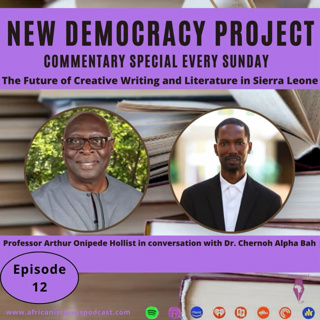
The Future of Creative Writing and Literature in Sierra Leone: A Conversation with Arthur Onipede Hollist

The Future of Creative Writing and Literature in Sierra Leone: A Conversation with Arthur Onipede Hollist

Arthur Pede Hollist is an award-winning Sierra Leonean writer and Professor of English at the University of Tampa. He teaches courses in African literature and creative writing. His publications inclu...

18 Aug 1h 19min
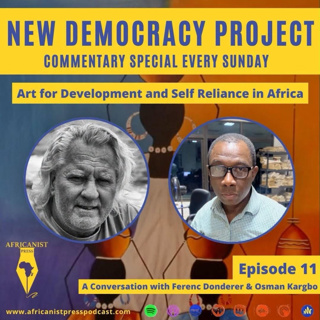
Art for Development and Self-Reliance in Africa

Art for Development and Self-Reliance in Africa

The ART27 Group is a Gambian-based non-profit initiative that offers financial assistance for essential expenses such as materials, transportation, and exhibitions. ART27 was founded in December 2024 ...

27 Juli 37min
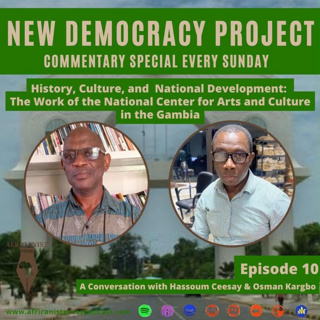
The Work of the National Center for Arts and Culture in the Gambia

The Work of the National Center for Arts and Culture in the Gambia

Politicians and policymakers in Africa are increasingly incorporating historical tourism into national development agendas. They are renewing efforts to make museums and archives central to preserving...

21 Juli 43min
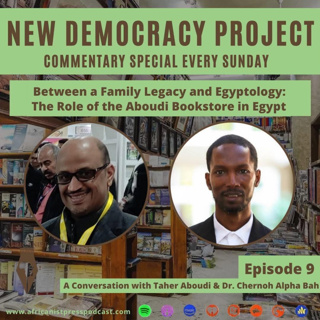
Between a Family Legacy and Egyptology: The Role of the Aboudi Bookstore in Egypt

Between a Family Legacy and Egyptology: The Role of the Aboudi Bookstore in Egypt

This episode examines the Aboudi Bookstore and its role in Egyptology, the scientific and academic study of ancient Egypt. Established in 1909 in Luxor by Egyptologist and tour guide Professor Mohamed...

8 Juni 20min
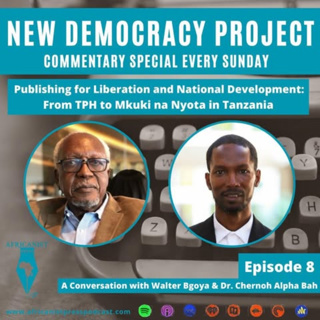
Publishing for Liberation and National Development: From TPH to Mkuki na Nyota in Tanzania

Publishing for Liberation and National Development: From TPH to Mkuki na Nyota in Tanzania

When Tanzania gained independence in 1961, Julius Nyerere saw publishing as a key part of decolonization and nation-building. In 1966, he founded the Tanzania Publishing House (TPH), putting state pub...

1 Juni 1h 19min
Building a Literary Community: The Work of the Writers Association of the Gambia

Building a Literary Community: The Work of the Writers Association of the Gambia

In this episode, we spotlight the Writers Association of the Gambia and its efforts to build a vibrant literary community, featuring Dr. Cherno Omar Barry, the Association's President, who shares insp...

25 Maj 42min

The Role of Libraries in African Development: A Look at the Gambia National Library Service Authority

The Role of Libraries in African Development: A Look at the Gambia National Library Service Authority

In this episode, we explore how national libraries drive African development. Drawing on insights from Bakary Sanyang, Director General of the Gambia National Library Service Authority, we examine the...

18 Maj 38min

Populärt inom Politik & nyheter

aftonbladet-krim
svenska-fall
p3-krim
en-runda-till
rss-krimstad
aftonbladet-daily
politiken
flashback-forever
rss-vad-fan-hande
rss-sanning-konsekvens
rss-krimreportrarna
kungligt
motiv
svd-ledarredaktionen
rss-frandfors-horna
rss-flodet
spar
fordomspodden
rss-expressen-dok
dagens-eko