
The State of the World in 2025
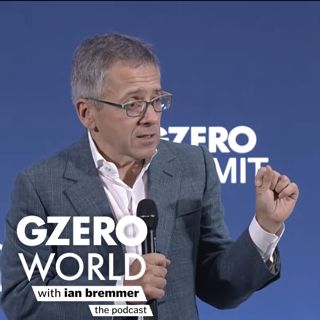
This is normally where you’ll find extended versions of Ian Bremmer's interviews from the public television show, but today we're bringing you something a little different. Ian just returned from Tokyo, Japan where he delivered his annual State of the World address to packed audience of diplomats, business leaders, and opinion makers from around the world.Each year, this speech is a chance to take stock of where things stand geopolitically, and today the picture is more uncertain than ever. We’re not just facing new conflicts and crises. We’re facing a deeper transformation of the global order, driven most significantly by the world’s most powerful country stepping back. The United States isn't losing influence because of weakness. It’s walking away by choice.That decision is reshaping alliances, weakening global institutions, and leaving many of America’s closest partners searching for a plan B. In the absence of leadership, the G-Zero world becomes more chaotic, more transactional, and less stable.Host: Ian Bremmer Subscribe to the GZERO World with Ian Bremmer Podcast on Apple Podcasts, Spotify, or your preferred podcast platform, to receive new episodes as soon as they're published. Hosted by Simplecast, an AdsWizz company. See pcm.adswizz.com for information about our collection and use of personal data for advertising.
31 Okt 40min

The risks of reckless AI rollout with Tristan Harris
Can we align AI with society’s best interests? Tristan Harris, co-founder of the Center for Humane Technology, joins Ian Bremmer on the GZERO World Podcast to discuss the risks to humanity and society as tech firms ignore safety and prioritize speed in the race to build more and more powerful AI models. AI is the most powerful technology humanity has ever built. It can cure disease, reinvent education, unlock scientific discovery. But there is a danger to rolling out new technologies en masse to society without understanding the possible risks. The tradeoff between AI’s risks and potential rewards is similar to deployment of social media. It began as a tool to connect people and, in many ways, it did. But it also become an engine for polarization, disinformation, and mass surveillance. That wasn’t inevitable. It was the product of choices—choices made by a small handful of companies moving fast and breaking things. Will AI follow the same path?Host: Ian BremmerGuest: Tristan Harris Subscribe to the GZERO World with Ian Bremmer Podcast on Apple Podcasts, Spotify, or your preferred podcast platform, to receive new episodes as soon as they're published. Hosted by Simplecast, an AdsWizz company. See pcm.adswizz.com for information about our collection and use of personal data for advertising.
25 Okt 28min
The politics of polarization in America, with Steven Law
Public disgust with Washington is growing as the government shutdown continues, with both Democrats and Republicans seemingly unwilling to compromise. Is the American political system broken beyond repair? Former GOP fundraiser and chief of staff for Mitch McConnell, Steven Law, joins Ian Bremmer on the GZERO World Podcast to discuss the state of America’s political parties ahead of a pivotal midterm election year.While Congress seems more polarized and divided than ever, Law believes that the American public writ large wants leaders who are constructive and unifying, even as they’re prosecuting a strong agenda. But exactly what that agenda is, is what’s unclear. According to Law, the GOP has become the party of Trump while the Democrats are experiencing an identity crisis and period of “massive redefinition.” What should parties focus on ahead of next year’s midterms? Can either side break through the deep polarization in DC to deliver a message that resonates with voters?Host: Ian BremmerGuest: Steven Law Subscribe to the GZERO World with Ian Bremmer Podcast on Apple Podcasts, Spotify, or your preferred podcast platform, to receive new episodes as soon as they're published. Hosted by Simplecast, an AdsWizz company. See pcm.adswizz.com for information about our collection and use of personal data for advertising.
18 Okt 27min
How life sciences investment drives economic growth
Investing in health and science research isn’t just about curing diseases. It has huge impacts across society, from creating jobs to driving economic growth to boosting national competitiveness. Study shows that every $ invested in the life sciences industry generates $3 in GDP globally, whereas every job created in the life sciences industry generates five in the global economy. Life sciences are one of the most powerful engines of prosperity, yet many governments still underestimate their economic return.In this episode of The Ripple Effect: Investing in Life Sciences, host Dan Riskin speaks with Patrick Horber, President of Novartis International, and David Gluckman, Vice Chairman of Investment Banking and Global Head of Healthcare at Lazard. Together, they break down the outsized economic impact of life science innovation, from trillions in US bioscience output to China’s meteoric rise as a global R&D hub. The conversation delves into the ways governments can support innovation with not just money, but through policy and regulation; plus, some of the best ways that countries can help the sector secure investment, talent, and long-term growth.This limited series, produced by GZERO’s Blue Circle Studios in partnership with Novartis, examines how life science innovation plays a vital role in fulfilling that commitment. Host: Dan RiskinGuests: Patrick Horber, David Gluckman Subscribe to the GZERO World with Ian Bremmer Podcast on Apple Podcasts, Spotify, or your preferred podcast platform, to receive new episodes as soon as they're published. Hosted by Simplecast, an AdsWizz company. See pcm.adswizz.com for information about our collection and use of personal data for advertising.
14 Okt 29min
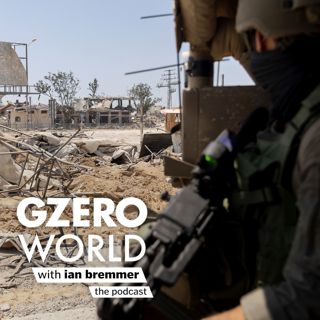
Could Israel's Gaza gamble be paying off?
Militarily, Israel is dominant. Diplomatically, it’s more isolated than ever.This week, Israeli Prime Minister Benjamin Netanyahu made his fourth trip to the White House since President Trump returned to office, standing beside him to unveil what Trump called a “landmark” Gaza peace proposal. But behind the bold language is a growing distance between Israel and the world. Gaza has been devastated, Hamas is on its heels, and yet, the cost to Israel’s global standing continues to rise.Former US diplomat and Middle East peace negotiator Aaron David Miller joins Ian to unpack the uncomfortable truth: Israel may be winning on the battlefield, but it’s losing support in global capitals, and possibly at home.“Not a single cost or consequence has been imposed by any Arab state on Israel,” Miller says. “They’ve done nothing. The Arab states are running scared of Trump. They’re either afraid of him or they want something from him.”From European governments pulling investments and recognizing Palestinian statehood, to rising grassroots pushback across American campuses, Israel’s brand is eroding—even as Netanyahu locks arms more tightly with Trump.Host: Ian BremmerGuest: Aaron David Miller Subscribe to the GZERO World with Ian Bremmer Podcast on Apple Podcasts, Spotify, or your preferred podcast platform, to receive new episodes as soon as they're published. Hosted by Simplecast, an AdsWizz company. See pcm.adswizz.com for information about our collection and use of personal data for advertising.
3 Okt 29min

Ukraine's high-tech war of attrition, with Christopher Miller
The war in Ukraine has entered a dangerous new phase, with Russia sending bigger, more powerful drone attacks across the border nearly every day. Gone are the tanks, columns of troops, and heavy artillery from the early days of Moscow’s full-scale invasion. Now, tens of thousands of drones swarm Ukraine’s skies at any given moment. Christopher Miller, chief Ukraine correspondent at the Financial Times, joins Ian Bremmer on the GZERO World Podcast to discuss the war’s evolution from a conventional land invasion into a high-tech war of attrition dominated by drones. Artificial intelligence, drones, all types of unmanned vehicles are being used to wage war alongside traditional tanks and artillery. Civilians in Ukraine’s cities are under constant threat from aerial attacks, sheltering in subways and bomb shelters every night. Despite immense resilience, Ukraine’s people are getting exhausted and the country is running out of manpower. How long can Ukraine hold out? Is a diplomatic ceasefire at all a possibility?Host: Ian BremmerGuest: Christopher Miller Subscribe to the GZERO World with Ian Bremmer Podcast on Apple Podcasts, Spotify, or your preferred podcast platform, to receive new episodes as soon as they're published. Hosted by Simplecast, an AdsWizz company. See pcm.adswizz.com for information about our collection and use of personal data for advertising.
27 Sep 27min
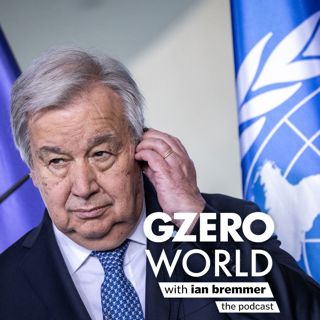
A world in chaos and a UN in crisis with Secretary-General Guterres
Wars are raging, tensions are rising, and trust in global institutions is collapsing. From Gaza to Ukraine to Sudan, the world is on fire—and the one institution meant to keep the peace is facing a historic financial crisis.On the GZERO World Podcast, Ian Bremmer speaks with United Nations Secretary-General António Guterres about the UN’s role in an era of war, division, and dwindling support. With the US cutting funding and other major powers following suit, the UN is preparing to slash its budget by 15%—even as demand for peacekeeping and aid hits record highs.“What’s happening today in Gaza is morally, politically, and legally intolerable” Guterres tells Bremmer. With funding for life-saving aid programs evaporating, the Western-led global order that has kept the world on solid ground since WWII risks failing just when it is needed most. Host: Ian BremmerGuest: António Guterres Subscribe to the GZERO World with Ian Bremmer Podcast on Apple Podcasts, Spotify, or your preferred podcast platform, to receive new episodes as soon as they're published. Hosted by Simplecast, an AdsWizz company. See pcm.adswizz.com for information about our collection and use of personal data for advertising.
20 Sep 31min