

20VC: The Most Insane Story in Startups: Airwallex: The Angel That Turned $1M into $1BN | The Fund That Pulled a Term Sheet & Lost $1BN | Rejecting Stripe's $1.2BN Offer | Scaling to $1BN in Revenue & 100% YoY Growth for 8 Years with Jack Zhang
Airwallex is the most insane story in startups: The best angel investment ever: The angel that turned $1M into $1BN. One of the world's best VCs pulled a term sheet and lost $1BN. The company turned down a $1.2BN offer from Stripe. The company scaled to $1BN in transaction volume in 9 months. The company has never not grown 100% in a year. Jack Zhang is the Co-Founder and CEO of Airwallex, one of the world's fastest-growing global payments and financial infrastructure companies. Since founding the company in 2015, Jack has scaled Airwallex to over $130B in annual payment volume, $720M in ARR, and a global team of 1,800+ employees. Under his leadership, Airwallex has raised over $1.2BN from investors including Square Peg, Lone Pine, and Tencent. In Today's Episode We Discuss: 00:00 – The Best Angel Investment Ever: From $1M to $1BN 06:55 – From Lemon Factory and Petrol Station to Billionaire: The Early Days 15:20 – $5M side hustle while working full-time: how Jack did it 24:45 – Failing Three Times Before Product-Market-Fit 31:00 – The Term Sheet That Got Pulled and Lost Matrix $1BN 34:40 – Why We Rejected Stripe's $1.2BN Acquisition Offer 49:05 – 0-$1B transaction volume in 9 months: How Shein Saved Airwallex 1:03:40 – We F****** Up Scaling internationally... & Burnt $200M/year 1:08:00 – When COVID hit, they lost 50% of revenue overnight 1:11:45 – Why Jack raised at 6x revenue and is now buying back stock himself 1:15:00 – The truth about secondaries and how much is "enough" 1:18:00 – The hiring mistakes that almost broke the culture 1:20:15 – Why Jack is Taking Out a Line of Debt for $70M
27 Maj 1h 26min

20VC: ElevenLabs Head of Growth on Why You Do Not Need PMs | The 7-Part Launch Playbook That Gets 700K+ Views Per Product | The Truth About CAC, Payback & Performance Marketing in AI with Luke Harries
Luke Harries is Head of Growth at ElevenLabs, where he leads marketing, product, engineering, and developer experience. ElevenLabs has raised $281M with the latest round pricing the company at $3.3B valuation. Previously, Luke held roles at PostHog and Microsoft, and is also an angel investor supporting startups like Lovable and Runna. In Today's Episode We Discuss: 00:00 – The $3.3B Growth Engine Behind ElevenLabs 04:55 – Why Luke Said "No" to Investing in ElevenLabs (and Why He Was Wrong) 15:40 – How ElevenLabs Makes a Horizontal Product Strategy Work 20:15 – How to Build Sharded Growth Teams That Actually Scale 26:30 – The 7-Part Launch Playbook That Gets 700K+ Views Per Product 33:00 – The Truth About CAC, Payback, and Performance Marketing in AI 39:05 – SEO Isn't Dead: The Mini-Tool Strategy You Should Steal 44:10 – Kill Your Inbound SDRs—The Case for Voice AI in Sales 48:40 – Why You Don't Need PMs and the Rise of Growth-Led Product Teams
23 Maj 1h 15min

20VC: Chime IPO: The Breakdown | Why Fund Returners Are Not Enough & Seed is for Suckers | Are IPOs Dead & The Future of the Late Stage Private Market | Rippling vs. Deel Lawsuit: WTF Happens Now?
Agenda: 04:34 Chime's IPO Announcement: Who Wins & Who Loses 06:28 The Lopphole That Means Chime Has a Better Business than JP Morgan 10:51 Why Investors Who Invested at $25BN Will Make Money When it IPOs at $12BN 18:59 Are IPOs Dead & The Future of the Late Stage Private Market 27:32 Exits are Larger Than Ever: So What? What Happens? Who Wins? Who Loses? 40:51 Is Europe Totally F******* 43:48 Challenges of Going Public & What Needs to Change? 46:12 OpenAI's Future and Predictions 49:45 Rippling vs. Deel Lawsuit: Is Deel Screwed? 59:28 Why So Many Companies Are About To Become Database Companies 01:08:07 The Future of Salesforce: Buy or Sell? 01:13:28 Quickfire Round Please read the offering circular and related risks at invest.modemobile.com. This is a paid advertisement for Mode Mobile's Regulation A+ Offering. Past performance is no guarantee of future results. Investing in private company securities is not suitable for all investors because it is highly speculative and involves a high degree of risk. It should only be considered a long-term investment. You must be prepared to withstand a total loss of your investment. Private company securities are also highly illiquid, and there is no guarantee that a market will develop for such securities. DealMaker Securities LLC, a registered broker-dealer, and member of FINRA | SIPC, located at 105 Maxess Road, Suite 124, Melville, NY 11747, is the Intermediary for this offering and is not an affiliate of or connected with the Issuer. Please check our background on FINRA's BrokerCheck.
22 Maj 1h 17min

20VC: Duolingo Co-Founder on Why $3M is Harder than $100M to Raise | Why You Should Always Take Tier 1 VCs Even at Worse Terms | Why Europe Can't Win Unless the US Screws Up | How AI Impacts the Future of Work and Education with Severin Hacker
Severin Hacker is the Co-Founder and CTO of Duolingo, the world's most downloaded education app with over 100 million monthly users. Since its 2021 IPO, Duolingo has reached a market cap of $20BN. The company has raised over $183M from top-tier investors including CapitalG, Kleiner Perkins, Union Square Ventures, NEA, Ashton Kutcher, and Tim Ferriss. Severin is also an active angel investor, with standout bets including Decagon, one of the fastest-growing AI-native dev shops globally. Items Mentioned In Today's Episode: 00:00 – Why It's Harder to Raise $3M Than $100M 02:10 – The Real Reason Duolingo Couldn't Have Started in Europe 04:40 – Duolingo's AI Pivot: What "AI-First" Actually Means 07:00 – The 12-Year Bottleneck Duolingo Crushed with AI 11:40 – How Duolingo Uses AI Internally (and Why They Love Cursor) 13:30 – Where AI Still Sucks (Especially in Engineering) 16:00 – Will AI Kill the CS Degree? Severin's Surprising Take 18:00 – The End of Work? UBI, Purpose, and the Future of Labor 25:20 – OpenAI vs Duolingo: Are They Coming for Language Learning? 29:20 – Duolingo's Biggest Mistake: "We Waited Too Long on This…" 39:30 – Duolingo's Secret Sauce: What Investors Always Get Wrong 45:00 – Would You Go Public Today? Severin's Surprising Answer 49:00 – Best and Worst Parts of Going Public—A Rare Honest Take 51:00 – Should Europe Give Up? Severin's Unfiltered Opinion 56:00 – Harsh Truth: "Europe Can't Win Unless the U.S. Screws Up" 59:10 – Why Founders Have to Move to the US to Optimise Their Chance of Success 1:01:00 – Why Union Square Was the Only VC to Say Yes 1:03:00 – The Real Value of Tier 1 VCs (Even at Worse Terms) 1:05:00 – From PhD Student to Billionaire: Does Money Buy Happiness? 1:09:00 – Why Severin Sometimes Lies About His Job 1:10:20 – Founder Marriage Advice: "Write a Contract" 1:11:50 – How to Pick a Life Partner – Severin's Tuesday Night Test 20VC: Duolingo Co-Founder on The Doomed Future of Europe, Reflections on Money, Marriage and the Future of AI
19 Maj 1h 31min

20Product: Figma CPO on How Figma Builds Products: What Works, What Does Not | How Figma Does Testing and Product Reviews | The Future of Design, Engineering and Product with Yuhki Yamashita
Yuhki Yamashita is the Chief Product Officer at Figma, where he leads the development of one of the world's most beloved design platforms. Previously, he was Head of Product at Uber, overseeing the core rider experience used by millions globally. A master of product storytelling and team-building, Yuhki has redefined how world-class digital products are built and scaled. Items Mentioned in Today's Episode: 04:30 – "Simple is Lazy?" — Yuhki Challenges Product Dogma 07:45 – The Secret Behind Figma's New Product Ideas (Hint: Users Hack It First) 09:00 – From Hack Week to Roadmap: How New Figma Products Are Born 10:00 – Are PRDs Dead? Yuhki's Spicy Take on the Death of Specs 12:30 – The 'Screenshot Test': Can Your Product Explain Itself in 1 Frame? 14:15 – Code Layers and 'Living Designs'—This Demo Blew Everyone's Mind 15:30 – Designers vs Coders: Who Really Owns the Future of Product? 17:45 – The Most Controversial Product Decision Inside Figma 19:00 – Why Figma's Org Structure Could Kill the PM Role (For Real) 21:00 – Should Everyone Be a Designer and a Builder Now? 23:15 – Will Figma Have Fewer Engineers in 5 Years? 24:00 – Cursor, Windsurf & AI Coding Tools—What Figma Engineers Really Use 25:30 – AI's Dual Power: Lowering the Floor, Raising the Ceiling 27:00 – Figma's Biggest Product Flop? Yuhki Owns It 29:30 – The Magic of Product Storytelling—Even for Boring Compliance Tools 31:00 – Why Joy Must Be in the Product (and How Figma Bakes It In) 33:00 – Does Product Market Fit Even Mean Anything in 2025? 35:30 – Is Great Design Enough? Or Is It ALL About Distribution? 37:15 – Dylan's Secret to Early Growth: Hacking Design Twitter 39:00 – Community Mistakes Startups Keep Making 41:00 – The One Thing Yuhki Wishes He Could Change at Figma 43:00 – Should They Have Launched 4 Products at Once? Time Will Tell 45:00 – When Do You Know a New Product Is Doomed? 46:30 – Why Designers Still Don't Ship What They Design (and How to Fix It) 48:00 – From Uber to Figma: Yuhki's Playbook for Massive Product Swings 53:00 – The Adobe Deal Breakup—How Figma Rallied 56:00 – What Yuhki Needs to Improve as a Leader (His Own Feedback Review) 58:00 – The Product Leader He Admires Most—and Why 59:30 – What Figma Still Gets Wrong About Product Culture Please read the offering circular and related risks at invest.modemobile.com. This is a paid advertisement for Mode Mobile's Regulation A+ Offering. Past performance is no guarantee of future results. Investing in private company securities is not suitable for all investors because it is highly speculative and involves a high degree of risk. It should only be considered a long-term investment. You must be prepared to withstand a total loss of your investment. Private company securities are also highly illiquid, and there is no guarantee that a market will develop for such securities. DealMaker Securities LLC, a registered broker-dealer, and member of FINRA | SIPC, located at 105 Maxess Road, Suite 124, Melville, NY 11747, is the Intermediary for this offering and is not an affiliate of or connected with the Issuer. Please check our background on FINRA's BrokerCheck.
16 Maj 1h 1min

20VC: Tiger Global Saved by OpenAI | Coatue's New Fund: Hype or Substance | Why SBF is the Greatest Investor of the Last 5 Years | Why Big Funds are Investing in Perplexity
Items Mentioned in Today's Episode: 04:11 Owner's New $120M Round at $1BN 06:05 Why Series A is F****** Today 14:55 Could Tiger Global Be Saved by OpenAI and Scale 22:43 Why SBF is the Greatest Investor of the Last Decade 31:34 Why No Individuals Should Invest in Venture Funds 36:27 Why Microsoft Laying 3% of Their Workforce Off is not Enough 41:38 OpenAI's New CEO: Non-Technical CEOs Running OpenAI 44:48 Why Big Funds are Investing in Perplexity 54:43 Why Clay Should Raise a Warchest and Go to War 01:00:05 The Impact of AI on Marketing and Sales
15 Maj 1h 14min

20VC Exclusive: Mercury Founder Launches First $26M Fund | Why Founders Should Take the Highest Price | Why Serial Entrepreneurs are Better | Why AI Is So Overhyped | The Future of Venture Capital with Immad Akhund
Immad Akhund is the CEO of Mercury. Launched in 2019, Mercury has raised $500M in funding from Sequoia, Coatue, CRV, Andreessen Horowitz and others. He is a former part-time partner at Y Combinator and is an active angel investor, with more than 350 investments in startups including Rippling, AirTable, Rappi, Applied Intuition, and Substack. In Today's Episode We Discuss: 04:38 Exclusive News: New Fund Announcement 05:15 Lessons from 350 Angel Investments 12:27 Why Founders Should Always Push for the Highest Price 14:40 Biggest Wins and Misses in Angel Investing 22:56 How Sequoia Came to Lead the Series C for Mercury 31:32 Why Move From Angel to VC 33:41 Is It Wrong For Founders to Also Have Funds with LP Capital? 36:28 AI Investments: Overhyped or Worthwhile? 41:14 Raising a First Time Fund: Challenges & Surprises 49:47 The Future of Venture Capital 54:36 Quickfire Questions and Reflections
12 Maj 1h 2min
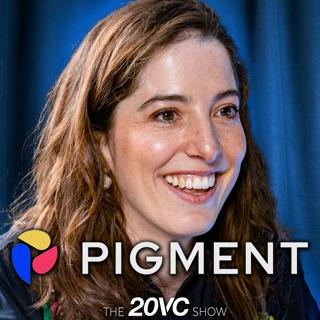
20VC: Four Traits of the Most Successful Founders | How to Hunt and Close Talent Like a Pro and Where All Founders Go Wrong | Lessons Raising $397M From the Best Investors in the World with Eléonore Crespo @ Pigment
Eléonore Crespo is the Co-Founder and CEO @ Pigment, one of Europe's fastest-growing companies. With Pigment, Eleonore has raised over $397M from the best in the world including ICONIQ, Greenoaks and IVP to name a few. Prior to Pigment, Eléonore was on the other side of the table as an investor with Index Ventures. In Today's Episode We Discuss: [04:10] "I had 3 surgeries. That's when I knew I had to become a founder." [06:50] Why Index Ventures isn't on her cap table [08:40] Eleonore's CIA-style co-founder hunt (she literally made a target list) [11:50] Co-CEOs: "We talk 3x a day. That's our superpower." [13:30] The boutique coffee metaphor for product excellence [15:40] Yuri Milner's 4 traits of legendary founders (one is shocking) [17:30] "Hiring is everything. I hunt talent like a football scout." [19:00] Wild Olympic Games story → led to hiring a top CFO [24:50] How she filters out title-chasers and political hires [29:30] "Too much process? I make teams list the dumbest ones." [33:00] Her blunt answer on whether Europe can produce scale execs [35:00] Why she raised so much money… even when they didn't need it [38:50] Board power is real: "They can fire you. I've seen it." [43:30] Rob Ward's counter-cyclical advice: double down during a downturn [44:50] "We closed a massive US deal… at 2am… while drenched in rain." [47:10] Selling into the US as a European founder—her full playbook [50:20] The hardest part of being a CEO no one talks about [54:00] "Children remind you what happiness is." [56:30] "I don't fast. That would make me unhappy." On longevity culture [59:20] Why her husband knows nothing about Pigment [01:04:20] "Forget $50B. I want to build a $200B company." Follow Eleonore Crespo LinkedIn: Eleonore Crespo Pigment: pigment.com Subscribe to 20VC for more conversations with the world's best founders and investors. Please read the offering circular and related risks at invest.modemobile.com. This is a paid advertisement for Mode Mobile's Regulation A+ Offering. Past performance is no guarantee of future results. Investing in private company securities is not suitable for all investors because it is highly speculative and involves a high degree of risk. It should only be considered a long-term investment. You must be prepared to withstand a total loss of your investment. Private company securities are also highly illiquid, and there is no guarantee that a market will develop for such securities. DealMaker Securities LLC, a registered broker-dealer, and member of FINRA | SIPC, located at 105 Maxess Road, Suite 124, Melville, NY 11747, is the Intermediary for this offering and is not an affiliate of or connected with the Issuer. Please check our background on FINRA's BrokerCheck.
9 Maj 1h 9min