20VC: Klarna Founder Sebastian Siemiatkowski on Scaling Europe's Most Valuable Private Tech Company, How To Motivate and Challenge Your Team Most Effectively & The Biggest Lessons From Working with Mike Moritz

20VC: Klarna Founder Sebastian Siemiatkowski on Scaling Europe's Most Valuable Private Tech Company, How To Motivate and Challenge Your Team Most Effectively & The Biggest Lessons From Working with Mike Moritz

Sebastian Siemiatkowski is the Founder and CEO @ Klarna, the company that makes online shopping simple, allowing you to buy what you need today and pay later. To date, Sebastian has raised over $2.1Bn for the company from the likes of Sequoia, Silver Lake, Blackrock, DST, Northzone, Creandum and even Snoop Dog to name a few. Klarna has been an incredible 16-year journey for Sebastian with it now being the most valuable private technology company in Europe with over 3,500 employees.

In Today's Episode You Will Learn:

I. The Importance Of Learning To Learn Fast

What is the best way to learn fast?

"People talk about it like there's this learning curve, and the best spot is at the place where you're challenged to the precise point where you're almost giving up, but not entirely. That's exactly it.

"And I have this amazing swim teacher for my children, her name is Petra, and she's just fantastic. I just love watching her because she has this ability of taking my children in the pool and pushing them to that exact point where they are almost, almost giving up, and they're learning at such a pace. And if I can recreate such an environment in Klarna, if I can create an environment, if I can be part of creating an environment where we put people in that position where they just are exactly at that curve where they are challenged, supported, and kind of at the edge and being given the ability to learn really fast and really discover what it means to have an impact."

Does Sebastian compare his work to other companies'?

"I don't think that much about what other people or other companies or other things out there could have done different. And there's pros and cons to that. But the benefits of that is that it speeds up my learning. Because a lot of people – and I've realized that as I manage other people – is that because they're so obsessed with trying to think about what other people could have done differently, and why situations arose, and why it wasn't their responsibility and so forth, they spend a lot of time on that, because we've unfortunately been brought up in some kind of guilt that it's bad to do wrong, and it's bad if it's our fault, and you want to avoid that.

"And these psychological constraints, unfortunately, hinder people from developing much faster, because if you go into every situation and say, the only thing that's relevant here is what I could have done differently, what I could have learned from this – if that's the only thing, it's just like, whatever, I accept my responsibilities. What could I have done differently? If you only focus on that, you just learn much faster."

How does Sebastian transform his self-doubt into a positive?

"I think self-doubt is not nothing. It's not a bad thing, right? It's a very healthy thing, if it represents you continuously trying to understand, am I doing the right thing? Is this something that I want to do? Am I making the right decisions? So I think it's extremely healthy to do that. I'm not saying it's not painful or tough when you have it. But I think it's a very positive thing.

"I'm much more worried when people tell me they have no self-doubt. And then I'm like, uh-oh, because that means that you're not really reflecting on your actions, and you're not learning from them. So I wish I could give you something more comforting than that, but I would actually say enjoy it. Be happy that you have it, and it's gonna make you a better person."

II. Sebastian's Management Philosophy

What does Sebastian believe companies can learn from soccer?

"I love the fact that Michael Moritz wrote this book that I still haven't read, so it's kind of funny that I'm referring to it, but he wrote this book about Ferguson, that manager of Manchester United. And I think it's very relevant, because today, the saying is that for people to be motivated at work, they need to have a higher purpose, the company needs to do something good, and so forth. And I am not disputing that, that is very true that it contributes to people's sense of purpose, and so forth.

But before you even get to that level, we have to ask ourselves, what is it really that makes people motivated and enjoy themselves? And I think when I think about that, I often look at sports, because why do people love soccer? What's the higher purpose of winning Champions League? People say, oh, there's a massive higher purpose, but not entirely, you're not really making the planet better by winning. Still, people are massively engaged in these things. Why?

"Because it's a team effort, there are clear roles, you know exactly what you're supposed to do – I'm supposed to put the ball in that score. And then it's very clear how you win, there is a referee that stops people from cheating. And so there's a lot of things in that environment that makes it motivating, that makes people engaged, and those things are usually lacking in companies."

How do you know when someone is at that crucial point of the learning curve?

"The problem with a company is that it's a much more complex environment with a lot of other things going on in parallel in people's lives. And so I have definitely occasionally missed to see that people are beyond that point."

"In Sweden, there's this course called Situation Adopted Management, which basically means that there is no single management technique. You look into the situation, you try to understand it from multiple angles. And then depending on where that individual is, and how you perceive the mental status, and the mood of that individual, and so forth, you try to adapt. Either you coach or you challenge or you instruct or you do different things. There's not a single methodology that will allow you to deal with those situations. But a lot of it is empathy. It's the ability to look at people and read them, and try to understand, and ask them questions, and understand where they are."

III. How Sebastian Manages Complexity At Scale

What are Sebastian's biggest lessons learned from Klarna growing to 3000+ people spread across multiple offices across the world?

  1. It's the manager's job to deal with the complexity in a company
  2. It's not for everyone

What role does Sebastian believe a manager should play in a company as it scales?

"I think a lot of times as a company grows, what ends up happening is the thing just becomes so complex. So management tries to organize the company in a way that makes sense to them and that is easy to understand for them. But the consequence of that often, unfortunately, is it makes no sense for the person who's actually doing the job. So they lose the purpose. Why am I coming to work? What are we trying to achieve? All of these things get lost.

"So what we said is, we have to do the exact opposite. The critical element is that the people who are actually supposed to do something – not the manager – the people actually supposed to do something, if they program or to do a marketing campaign, or whatever they're doing, they need to come to work every day and feel I know exactly why I'm coming, I know how I'm contributing, I know who I'm contributing for, I know what value I'm creating.

"And if that thing creates tons of complexity for us, as managers, because the whole system becomes much more complex, then that's what we're getting paid for. That's the one. That's why we're getting a good salary. Because we need to manage that complexity."

What does Sebastian look for in talent?

"Keep very close on the recruitment … Especially in a country like Sweden, a country where a typical saying is, alla ska komma med, which means, everyone should come, everyone should join. And it's very nice. And I appreciate that with Swedish culture, I'm not trying to really call it. I think it's fantastic and it's a fantastic society. But as a consequence, it took us some time to conclude something which maybe in the US or maybe even in the UK as it would have been much more obvious, which is that it's not a company for everyone. It is a company for the people that want to have that challenge, that want to be in that environment, that think that's interesting, that want to learn a lot fast, and want to get a lot of things done. And that's not everyone, and that's okay.

"Like when you play soccer – some people play soccer for fun, other people play to win the Champions League. People do it for different reasons. And they have different ambitions with it and different objectives with it. And the same applies to us.

"So it took us some time to realize that we need to tell people, look, just so you know, this is not going to be your standard company, you're going to be expected to do a hell of a lot of things, you're going to be expected to be challenged, you're going to expect it to do your utmost. And we're going to try to support you and help you and grow. So just know what you're getting into, before you get into it."

IV. Retail Banking 10 Years From Now

What does Sebastian see as the future of everyday banking services?

"One thing I would say, it's going to be a much smaller industry. And that's because it is ridiculous that moving money back and forth is a trillion-dollar industry. That is ridiculous. There is no good reason for that whatsoever. This is going to be a much more cost-efficient, much smaller revenue business than it is today. But even though it would be much smaller than it is today, it's still massive, and Klarna has the opportunity to be one big player in that industry, similar to what Tesla is doing in cars or whatever, that's what I want to do. And I feel we have all the prerequisites to accomplish that."

"There's going to be this push that's going to transform this industry and the people are going to lose on it are the suits in the marble offices in the city centers. That's where the pain is going to be felt, but the winner is going to be the consumer."

What do the next five years look like for Klarna?

"It's a little bit like self-driving cars – we all know it's going to happen, the question is when. And based on what I've seen in the last 15 years, and I've seen how retail has gone from retail to ecommerce and all these trends, this decade is going to be the disruption of retail banking.

"At the end of this decade, there will be a couple of new total players that will be very dominating in this space, and the rest will either cease to exist, will merge and try to acquire some of the new ones, or maybe a few of them will manage to reinvent themselves. But this is going to be an extremely interesting time."

Sebastian's Favourite Book: The Neverending Story

As always you can follow Harry and The Twenty Minute VC on Twitter here!

Likewise, you can follow Harry on Instagram here for mojito madness and all things 20VC.

Avsnitt(1391)

20VC: Benchmark vs a16z: Why Stage Specific Firms Win | Windsurf Sells For $3BN | Decagon Raises at 100x ARR | Do Mega Funds Win the Future of VC | What Does Harvard's Losing Their For-Profit Status Mean for VC

20VC: Benchmark vs a16z: Why Stage Specific Firms Win | Windsurf Sells For $3BN | Decagon Raises at 100x ARR | Do Mega Funds Win the Future of VC | What Does Harvard's Losing Their For-Profit Status Mean for VC

Today's Topics: 04:44 Analysis of $3 Billion Windsurf Acquisition 12:39 Will Mega Funds Win the Future of Venture Capital 18:39 Does Every Fund Have to do Pre-Seed to Win Series A and B Today 27:53 Why AI Will Create Massive Unemployment 31:06 The $100,000 Bet on the Future of Work 35:52 Why Venture Has Become a Bundled Good 37:52 Why Stage Specific Firms Will Win: a16z vs Benchmark 40:16 What Does Harvard Losing It's For Profit Status Mean for Venture 42:57 Why AI is Maiming and Not Killing Growth Companies on the Path to IPO 45:41 Decagon Raises 100x ARR: The Breakdown 52:50 Why VCs Are Upside Junkies and What That Means Today 01:03:37 Olo Looking to Sell: What Happens When Public Companies Want to Sell Please read the offering circular and related risks at invest.modemobile.com. This is a paid advertisement for Mode Mobile's Regulation A+ Offering. Past performance is no guarantee of future results. Investing in private company securities is not suitable for all investors because it is highly speculative and involves a high degree of risk. It should only be considered a long-term investment. You must be prepared to withstand a total loss of your investment. Private company securities are also highly illiquid, and there is no guarantee that a market will develop for such securities. DealMaker Securities LLC, a registered broker-dealer, and member of FINRA | SIPC, located at 105 Maxess Road, Suite 124, Melville, NY 11747, is the Intermediary for this offering and is not an affiliate of or connected with the Issuer. Please check our background on FINRA's BrokerCheck.

7 Maj 1h 11min
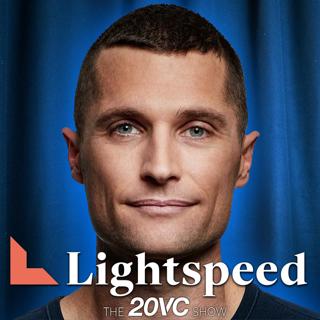
20VC Exclusive: Why Mega Platforms Will Win in VC | Why You Cannot Do VC If You Do Not Do Pre-Seed | Why Market Sizing is BS | Where Will Foundation Models Build/Buy Apps vs Where Will They Not with Bucky Moore

20VC Exclusive: Why Mega Platforms Will Win in VC | Why You Cannot Do VC If You Do Not Do Pre-Seed | Why Market Sizing is BS | Where Will Foundation Models Build/Buy Apps vs Where Will They Not with Bucky Moore

Bucky Moore is a Partner @ Lightspeed Venture Partners, announced exclusively in the show today on 20VC. Prior to Lightspeed, Bucky spent an incredibly successful 7 years at Kleiner Perkins working with Mamoon Hamid to build one of the most successful early stage firms of the last decade. Bucky has made investments in the likes of Prisma, Netlify, Browserbase and more. In Today's Episode We Discuss: 03:07 Big News: Joining Lightspeed Venture Partners 04:09 Why Mega Platforms Will Win the Next 10 Years of VC 09:33 Are Foundation Model Companies Good Venture Investments 16:04 What Applications Will Model Providers Buy/Build? What Will They Not? 22:03 How to Approach Price Sensitivity in a World of AI 28:25 Why is it BS to do Market Sizing When Making Investments in AI 34:03 Is the Future of VC Domain Specialization 38:38 How to Know What Company Wins in Super Competitive Markets 41:06 Why Every Firm Has to do Pre-Seed To Win in VC Today? 44:43 The Risks of Multi-Stage Investing: Is Signalling Risk Real? 48:53 Investing Lessons from Leading Rounds in Glean and Windsurf 56:54 Quick Fire Round: Lessons from Mamoon, Fave CEO, Next 10 Years

5 Maj 1h 5min
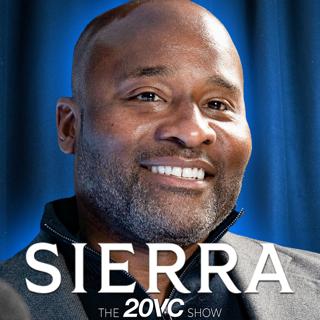
20Sales: Sierra: Inside Silicon Valley's Fastest Growing Sales Machine & How to Prospect, Outbound and Close Enterprise Deals in AI

20Sales: Sierra: Inside Silicon Valley's Fastest Growing Sales Machine & How to Prospect, Outbound and Close Enterprise Deals in AI

Reggie Marable is the Head of Global Sales at Sierra, a conversational AI platform for businesses. Sierra enables companies like ADT, Sonos, SiriusXM, and WeightWatchers to build AI agents that transform customer experiences. The company has rapidly become a hypergrowth leader in Silicon Valley, recently securing a funding round that values it at $4.5 billion. Before joining Sierra, Reggie was the Head of Sales in North America at Slack and the Area Vice President of Enterprise Sales at Salesforce. In Today's Episode We Discuss: 02:50 "What I Learned from Failing Early as a CRO" 06:06 The Most Effective Sales Strategy and the BS Sales Methodology 06:55 How to Build Sales Processes from Scratch 12:28 When and How to do Verticalised Sales Teams 14:15 How to Become World Class as Sales Prospecting and Outbound 17:21 How to Use Proof of Concepts to Win Enterprise Deals 22:04 Enterprise vs. Self-Serve: Both or One and How 30:09 Building a Sales Team from Scratch 37:39 Structuring the Hiring Process 41:14 How Founders F*** Up Hiring in Sales 46:25 Handling Salary and Title Expectations 51:36 How to Run Effective Deal Cycles 57:06:07 How to do Onboarding for New Sales Hires 59:07:48 How to do Post Mortems in Sales Processes 01:04:24 Negotiating Enterprise Deals 01:08:04 Quick Fire Round: Sales Tactics and Strategies This episode is brought to you by Capchase, helping software and hardware companies close deals while accessing TCV upfront. Learn more at capchase.com/20vc.

2 Maj 1h 7min
20VC: Why Fund Returners Are Not Enough Anymore | Why Sequoia Had the Best Strategy at the Worst Time | What it Takes to Be Good at Series A and B Today | Benchmark Leads Manus Round: Should US Funds Invest in Chinese AI

20VC: Why Fund Returners Are Not Enough Anymore | Why Sequoia Had the Best Strategy at the Worst Time | What it Takes to Be Good at Series A and B Today | Benchmark Leads Manus Round: Should US Funds Invest in Chinese AI

In Today's Episode We Discuss: 03:56 Why The Risk Lever Has Been Turned Higher than Ever in VC 06:04 Why IRR is the Hardest Thing to Control 09:36 Is Lack of Liquidity Short Term Temporary or Long Term Structural 12:17 Why Fund Returners Are Not Good Enough Anymore 16:03 Sequoia: The Best Strategy at the Worst Time 26:30 What it Takes to be Good at Series A and B Today 34:14 Only Three Company Types Survive AI 41:35 ServiceNow: 25% Pop, WTF Happened 45:29 Palantir and SAP Ripping: Do Incumbents Win AI 49:43 Are Benchmark Wrong to Invest in Chinese Made Manus 01:00:52 Geopolitical Risks in Investments 01:11:36 European vs. US Tech Culture

1 Maj 1h 24min
20VC: VCs are Spreadsheet Monkeys and are Commoditised | Why Fees and Carry Misalign GPs and LPs | Why Founders Will Realise Multi-Stage Funds Damage Seed Rounds | Why We Need European Sovereignty More Than Ever with Taavet Hinrikus

20VC: VCs are Spreadsheet Monkeys and are Commoditised | Why Fees and Carry Misalign GPs and LPs | Why Founders Will Realise Multi-Stage Funds Damage Seed Rounds | Why We Need European Sovereignty More Than Ever with Taavet Hinrikus

Taavet Hinrikus is a Partner at Plural, the early-stage fund that backs the most ambitious founders on a mission to change the world through technology. He co-founded Wise in 2010, where he was CEO and later Chairman, which went public in the first-ever direct listing in Europe in 2021. Prior to that, Taavet was Skype's Director of Strategy until 2008, having joined as its first employee. He's been an active investor for more than a decade,with personal investments in the likes of Bolt and Synthesia. In Today's Show We Discuss: 04:08 VCs are Spreadsheet Monkeys 05:41 Why Banker European VCs Suck More Than The Others 11:20 Why Serial Entrepreneurs Are Better 14:48 Why the 2:20 Fee and Carry Model in VC is Broken 18:01 What are the Biggest Ways VC Investment Decision-Making is Broken 28:26 Why is it BS when VC Firms Need Every Partner to Meet the Founder 31:24 When and Why Will Founders Realise Multi-Stage Firms are Bad Early Investors 34:35 Why Does Europe Need to Build it's Own Tech Now More Than Ever 37:24 Will Putin Invade More European Countries 39:29 What are the Dangers of Having US Made Tech in Europe 47:12 How Does the Change in Relationship Between the US and Europe Impact How We Build Our Tech Ecosystem? 52:36 Quick Fire Questions and Reflections

28 Apr 58min
20Growth: Inside Kraken's $1.5BN Growth Playbook: What Works, What Doesn't and What No Founders Understand About Growth That Will Change Their Company with Mayur Gupta

20Growth: Inside Kraken's $1.5BN Growth Playbook: What Works, What Doesn't and What No Founders Understand About Growth That Will Change Their Company with Mayur Gupta

Mayur Gupta is currently the CMO at Kraken, one of the largest crypto platforms in the world. Prior to that, he lead Marketing, Business Transformation and Growth at Gannett - USA Today Network, led Growth at Spotify and was the CMO at Freshly which eventually got acquired by Nestle. He was the first ever Chief Marketing Technologist at Kimberly Clark. In Today's Episode We Discuss: 03:25 Biggest Growth Lessons from Spotify 08:21 Role of Marketing in Product-Led Companies 13:35 How to Build a Growth Engine 20:40 Organic vs. Paid Growth Strategies 27:36 The Branding Dilemma: Performance vs. Brand Marketing 28:37 Creating Demand: The Role of Upper Funnel Marketing 29:35 Balancing Investment: Immediate vs Long Term Bets 30:03 Channel Saturation and Experimentation 31:42 Growth Strategies and Performance Metrics 34:54 Growth: Big Swings or Moving % Points 40:04 Successful Growth Experiments and Tactics 44:56 Quick Fire Questions and Final Thoughts

25 Apr 52min
20VC: OpenAI's $3BN Acquisition of Windsurf: The Breakdown | Are Endowment Funds F******* & How LP Deployment to Venture Will Change in 2025 | Why Revenue Multiples are BS, The Rise of AI Rollups and Multi-Stage Funds Destroying Seed Investing

20VC: OpenAI's $3BN Acquisition of Windsurf: The Breakdown | Are Endowment Funds F******* & How LP Deployment to Venture Will Change in 2025 | Why Revenue Multiples are BS, The Rise of AI Rollups and Multi-Stage Funds Destroying Seed Investing

In Today's Show We Discuss: 04:49 Breaking Down the $3BN Windsurf Acquisition 06:18 Why Sam Altman is Playing a Master Game 12:40 Why Multi-Stage Funds are Destroying Seed Managers 21:52 Are Endowment Funds F****** 27:38 What Would Rory Do If He Was CFO of an Ivy League Endowment Fund 43:38 The Denominator Effect and It's Impact on Venture Allocations 49:36 Why Revenue Multiple is BS & What You Need to Know 51:34 The Rise of AI Rollup Plays & Are They Good Businesses 55:29 Competitive Markets: How to Make Money in Them? 01:02:58 Why If You Can Guarantee 5x, You Should Always Do the Deal 01:11:56 Is SF The Only Place to Be Building Today

24 Apr 1h 25min
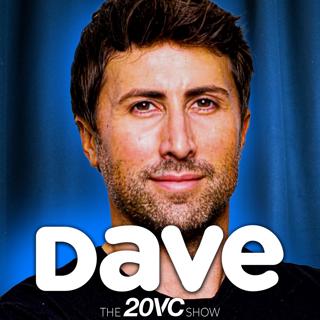
20VC: Do Rich Founders Make Better Founders | The Best Performing Fund Would Only Back YC Founders on Their Second Time | Why SPACs Will Come Back | Why Short Sellers Should Be Banned | Is Trump Better for Business than Biden with Jason Wilk @ Dave

20VC: Do Rich Founders Make Better Founders | The Best Performing Fund Would Only Back YC Founders on Their Second Time | Why SPACs Will Come Back | Why Short Sellers Should Be Banned | Is Trump Better for Business than Biden with Jason Wilk @ Dave

Jason Wilk is the Founder and CEO of Dave, the greatest turnaround in the public markets of the last 12 months. Dave went public with a market cap of $4BN, just months later the company had a market cap of $50M. Today, they are back with a market cap of $1.1BN. In 2024, CNBC named Dave the best-performing financial stock in the country, achieving 900% growth. In Today's Episode We Discuss: 04:09 Do Rich Founders Make Better Founders 07:45 The Best Performing Fund Would Only Invest in YC Founders on Their Second Time 11:25 "We Went Public Too Late, It Was a Big Mistake" 17:53 Why Did Jason Choose to SPAC? 24:21 Why Does Jason Believe SPACs are Unfairly Demonised and Will Comeback? 29:47 How Does AI Change the Margin Structure of the Next Generation of Companies 33:14 Is Trump Better for Business than a Biden Administration? 38:35 Are We Heading into a Recession? Predictions for Next 12 Months? 46:26 Why Have No Neobanks Reached the Heights of Revolut in the US? 48:08 Why is the Opportunity in Low Income Banking Not High Income in the US? 50:07 Why Short Sellers Should Be Stopped and How Immoral They Are

21 Apr 58min

Populärt inom Business & ekonomi

badfluence
framgangspodden
varvet
rss-jossan-nina
rss-borsens-finest
rss-svart-marknad
uppgang-och-fall
lastbilspodden
affarsvarlden
fill-or-kill
avanzapodden
24fragor
kapitalet-en-podd-om-ekonomi
rss-kort-lang-analyspodden-fran-di
rss-inga-dumma-fragor-om-pengar
borsmorgon
rss-dagen-med-di
bathina-en-podcast
rss-en-rik-historia
montrosepodden