Matthew Ball on the Metaverse and Gaming
Fighting fires meant a lot of downtime for Matthew Ball. Stationed at a forward operating base in the woods for two weeks at a time, he spent long hours amongst fellow firefighters with whom he shared little in common except for their love of the outdoors. The skills he gained working towards mutual goals with those he had little else in common with has translated well to his career as a strategist and venture capitalist in the digital media and gaming industries. Ball is a managing partner of EpyllionCo, venture partner at Makers Fund, and author of the anticipated The Metaverse: And How it Will Revolutionize Everything. Ball joined Tyler to discuss the eventual widespan transition of the population to the metaverse, the exciting implications of this interconnected network of 3D worlds for education, how the metaverse will improve dating and its impacts on sex, the happiness and career satisfaction of professional gamers, his predictions for Tyler's most frequent uses of the metaverse, his favorite type of entrepreneur, why he has thousands of tabs open on his computer at any given moment, and more. Read a full transcript enhanced with helpful links. Recorded July 6th, 2022 Other ways to connect Follow us on Twitter and Instagram Follow Tyler on Twitter Follow Matthew on Twitter Email us: cowenconvos@mercatus.gmu.edu Subscribe at our newsletter page to have the latest Conversations with Tyler news sent straight to your inbox.
13 Juli 202255min

Barkha Dutt on the Nuances of Indian Life
Growing up, Barkha Dutt was totally rootless. She spoke English, not her parent's Punjabi. She devoured Enid Blyton and studied English literature during college, but read few Indian novelists. She didn't even know her caste. This has opened her up to criticism as being a progressive elite who is out of touch with her heritage, and challenged her to be especially thoughtful in the way she examines the many overlapping values in Indian society. A successful broadcast journalist and columnist, she currently runs the YouTube-based news channel MoJo Story and recently published a new book, Humans of COVID: To Hell and Back. Barkha joined Tyler to discuss how Westerners can gain a more complete picture of India, the misogyny still embedded in Indian society, why family law should be agnostic of religious belief, the causes of declining fertility in India, why relations between Hindus and Muslims seem to be worsening, how caste has persisted so strongly in India, the success of India's subsidized institutes of higher education, the best city for Indian food, the power of Amar Chitra Katha's comics, the influence of her English liberal arts education, the future of Anglo-American liberalism in India, the best ways to use Twitter, and more. Read a full transcript enhanced with helpful links, or watch the full video. Recorded May 5th, 2022 Other ways to connect Follow us on Twitter and Instagram Follow Tyler on Twitter Follow Barkha on Twitter Email us: cowenconvos@mercatus.gmu.edu Subscribe at our newsletter page to have the latest Conversations with Tyler news sent straight to your inbox.
29 Juni 202251min

Marc Andreessen on Learning to Love the Humanities
Like the frontier characters from Deadwood, his favorite TV show, Marc Andreessen has discovered that the real challenge to building in new territory is not in the practicalities of learning a trade, but in developing a savviness for what makes people tick. Without understanding the deep patterns of human behavior, how can you know what to build, or who should build it, or how? For Marc, that means reading deeply in the humanities: "I spent the first 25 years of my life trying to understand how machines work," Marc says. "Then I spent the second 25 years, so far, trying to figure out how people work. It turns out people are a lot more complicated." Marc joined Tyler to discuss his ever-growing appreciation for the humanities and more, including why he didn't go to a better school, his contrarian take on Robert Heinlein, how Tom Wolfe helped Marc understand his own archetype, who he'd choose to be in Renaissance Florence, which books he's reread the most, Twitter as an X-ray machine on public figures, where in the past he'd most like to time-travel, his favorite tech product that no longer exists, whether Web will improve podcasting, the civilization-level changes made possible by remote work, Peter Thiel's secret to attracting talent, which data he thinks would be most helpful for finding good founders, how he'd organize his own bookstore, the kinds of people he admires most, and why Deadwood is equal to Shakespeare. Read a full transcript enhanced with helpful links, or watch the full video. Recorded April 14th, 2022 Other ways to connect Follow us on Twitter and Instagram Follow Tyler on Twitter Follow Marc on Twitter Email us: cowenconvos@mercatus.gmu.edu Subscribe at our newsletter page to have the latest Conversations with Tyler news sent straight to your inbox.
15 Juni 202251min
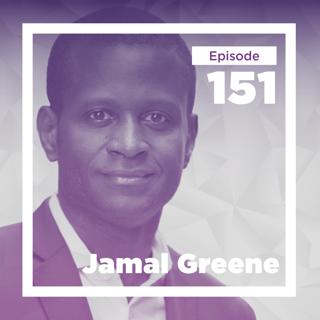
Jamal Greene on Reconceiving Rights
What does it mean to uphold disability rights, or the right to economic liberty? What framework should be used when rights appear to conflict? Constitutional law expert Jamal Greene contends that the way Americans view rights—as fundamental, inflexible, and universal—is at odds with how the rest of the world conceives of them, and even with how our own founders envisaged them. In his new book, How Rights Went Wrong, he lays out his vision for reimagining rights as the products of political negotiation. The goal of judges, he says, should be to manage disagreement in a way that leads to social harmony and social cohesion—and by doing so, foster the ultimate goal of peaceful pluralism. Jamal and Tyler discuss what he'd change about America's legal education system, the utility of having non-judges or even non-lawyers on the Supreme Court, how America's racial history influences our conception of rights, the potential unintended consequences of implementing his vision of rights for America, how the law should view economic liberty, the ideal moral framework for adjudicating conflicts, whether social media companies should consider interdependencies when moderating content on their platforms, how growing up in different parts of New York City shaped his views on pluralism, the qualities that make some law students stand out, and more. To register for the Talking Talent with Tyler Cowen event, please visit the link below: https://www.mercatus.org/events/talking-talent-tyler-cowen Read a full transcript enhanced with helpful links, or watch the full video. Recorded April 5th, 2022 Other ways to connect Follow us on Twitter and Instagram Follow Tyler on Twitter Follow Jamal on Twitter Email us: cowenconvos@mercatus.gmu.edu Subscribe at our newsletter page to have the latest Conversations with Tyler news sent straight to your inbox.
1 Juni 202248min

Tyler and Daniel Gross Talk Talent
If Tyler and Daniel's latest book can be boiled down into a single message, it would be that the world is currently failing at identifying talent, and that getting better at it would have enormous benefits for organizations, individuals, and the world at large. In this special episode of Conversations with Tyler, Daniel joined Tyler to discuss the ideas in their book on how to spot talent better, including the best questions to ask in interviews, predicting creativity and ambition, and the differences between competitiveness and obsessiveness. They also explore the question of why so many high achievers love Diet Coke, why you should ask candidates if they have any good conspiracy theories, how to spot effective dark horses early, the hiring strategy that set SpaceX apart, what to look for in a talent identifier, what you can learn from discussing drama, the underrated genius of game designers, why Tyler has begun to value parents more and IQ less, conscientiousness as a mixed blessing, the importance of value hierarchies, how to become more charismatic, the allure of endurance sports for highly successful people, what they disagree on most, and more. Read a full transcript enhanced with helpful links. Recorded February 24th, 2022 Other ways to connect Follow us on Twitter and Instagram Follow Tyler on Twitter Follow Daniel on Twitter Email us: cowenconvos@mercatus.gmu.edu Subscribe at our newsletter page to have the latest Conversations with Tyler news sent straight to your inbox.
18 Maj 202248min

Chris Blattman on War and Centralized Power
What causes war? Many scholars have spent their careers attempting to study the psychology of leaders to understand what incentivizes them to undertake the human and financial costs of conflict, but economist and political scientist Chris Blattman takes a different approach to understanding interstate violence. He returns for his second appearance on Conversations with Tyler to discuss his research into the political and institutional causes of conflict, the topic of his new book Why We Fight: The Roots of War and The Path to Peace. Chris and Tyler also cover why he doesn't think demographics are a good predictor of a country's willingness to go to war, the informal norms that restrain nations, the dangers of responding to cyberattacks, the breakdown of elite bargains in Ethiopia, the relationship between high state capacity and war, the greatest threats to peace in Ireland, why political speech isn't usually a reliable indicator of future action, Vladimir Putin's centralized motives for invading Ukraine, why he's long on Colombia democratically – but not economically, why more money won't necessarily help the Mexican government curb cartel violence, the single-mindedness necessary for bouldering, how Harold Innis's insights about commodities led Chris to start studying war, how the University of Chicago has maintained a culture of free inquiry, and more. Read a full transcript enhanced with helpful links, or watch the full video. Recorded March 1st, 2022 Other ways to connect Follow us on Twitter and Instagram Follow Tyler on Twitter Follow Chris on Twitter Email us: cowenconvos@mercatus.gmu.edu Subscribe at our newsletter page to have the latest Conversations with Tyler news sent straight to your inbox.
4 Maj 202248min

Thomas Piketty on the Politics of Equality
When it comes to the enormous reduction of income inequality during the 20th century, Thomas Piketty sees politics everywhere. In his new book, A Brief History of Equality, he argues the rising equality during the 19th and 20th centuries has its roots not in deterministic economic forces but in the movements to end aristocratic and colonial societies starting at the end of the 18th century. Drawing this line forward, Piketty also contends we must rectify past injustices before attempting to create new institutions. He joined Tyler to discuss just how egalitarian France actually is, the beginning of the end of aristocratic society, where he places himself within French intellectual history, why he's skeptical of data from before the late 18th century, how public education drives economic development, why Georgism isn't sufficient to address wealth inequality, the relationship between wealth and cultural capital, his proposal for a minimum inheritance, why he turned down the Legion of Honor, why France should give reparations to Haiti despite the logistical difficulties of doing so, his vision for European federalism, why more immigration won't be a panacea for inequality, his thoughts on Michel Houellebecq's Submission, and more. Read a full transcript enhanced with helpful links, or watch the full video. Recorded March 8th, 2022 Other ways to connect Follow us on Twitter and Instagram Follow Tyler on Twitter Follow Thomas on Twitter Email us: cowenconvos@mercatus.gmu.edu Subscribe at our newsletter page to have the latest Conversations with Tyler news sent straight to your inbox.
20 Apr 202253min

Roy Foster on Ireland's Many Unmade Futures
"The best history," says Roy Foster, "is written when we realize that people acted in expectation of a future that was never going to happen." While this is the case for many countries, it's especially true of Ireland—the land of The Troubles, of colonization, of revolution and reforms. This sympathy within his scholarship sets Foster's work apart. Not content to simply document the facts of what did happen, he's undertaken the role of reconstructing the motivations that animated the Irish people throughout its storied history--without which we cannot truly understand the Ireland of today. Roy joined Tyler to discuss why the Scots got off easier than the Irish under English rule, the truths and misconceptions about Ireland as a policy laboratory for the British government, why spoken Irish faded more rapidly than Welsh, the single question that drove a great flowering of Irish economic thought, how Foster's Quaker education shaped his view of Irish history, how the Battle of the Somme and the 1916 Easter Rising cemented the rift between the Northeast and the rest of the country, what went wrong with Irish trade policies between the 1920s and 1970s, the power of Irish education, why the re-emergence of The Troubles in the 1960s may not have been as inevitable as many people believe, the cultural effects of Ireland's pro-Allied neutrality in World War II, how Irish visual art is beginning to be looked at in a similar way to Irish literature, the social and economic changes of the 1970s that began to radically reshape Irish society, the reasons for Ireland's openness to foreigners, what Irish Americans misunderstand, and more. Read a full transcript enhanced with helpful links, or watch the full video. Recorded February 22nd, 2022 Other ways to connect Follow us on Twitter and Instagram Follow Tyler on Twitter Email us: cowenconvos@mercatus.gmu.edu Subscribe at our newsletter page to have the latest Conversations with Tyler news sent straight to your inbox.
6 Apr 202259min