Lydia Davis on Language and Literature
A prolific translator, author, and former professor of creative writing, Lydia Davis's motivation for her life's work is jarringly simple: she just loves language. She loves short, sparkling sentences. She loves that in English we have Anglo-Saxon words like "underground" or Latinate alternatives like "subterranean." She loves reading books in foreign languages, discovering not only their content but a different culture and a different history at the same time. Despite describing her creative process as "chaotic" and herself as "not ambitious," she is among America's best-known short story writers and a celebrated essayist. Lydia joined Tyler to discuss how the form of short stories shapes their content, how to persuade an ant to leave your house, the difference between poetry and very short stories, Proust's underrated sense of humor, why she likes Proust despite being averse to long books, the appeal of Josep Pla's The Gray Notebook, why Proust is funnier in French or German than in English, the hidden wit of Franz Kafka, the economics of poorly translated film subtitles, her love of Velázquez and early Flemish landscape paintings, how Bach and Schubert captured her early imagination, why she doesn't like the Harry Potter novels—but appreciates their effects on young readers, whether she'll ever publish her diaries, how her work has evolved over time, how to spot talent in a young writer, her method (or lack thereof) for teaching writing, what she learned about words that begin with "wr," how her translations of Proust and Flaubert differ from others, what she's most interested in translating now, what we can expect from her next, and more. Check out Ideas of India. Subscribe to Ideas of India on your favorite podcast app. Read a full transcript enhanced with helpful links, or watch the full video. Recorded February 3rd, 2022 Other ways to connect Follow us on Twitter and Instagram Follow Tyler on Twitter Email us: cowenconvos@mercatus.gmu.edu Subscribe at our newsletter page to have the latest Conversations with Tyler news sent straight to your inbox.
23 Mars 202240min

Sam Bankman-Fried on Arbitrage and Altruism
Whether it's scaling an arbitrage opportunity or launching an ambitious philanthropic project, Sam Bankman-Fried has set himself apart. In just a few years, he's not only made billions trading crypto, but also become a leading practitioner of effective altruism, with the specific aim of making lots of money in order to donate most of it to high-impact causes. He joined Tyler to discuss the Sam Bankman-Fried production function, the secret to his trading success, how games like Magic: The Gathering have shaped his approach to business, why a legal mind is crucial when thinking about cryptocurrencies, the most important thing he's learned about managing, what Bill Belichick can teach us about being a good leader, the real constraints in the effective altruism space, why he's not very compelled by life extension research, challenges to his Benthamite utilitarianism, whether it's possible to coherently regulate stablecoins, the implicit leverage in DeFi, Elon Musk's greatest product, why he thinks Ethereum is overrated, where in the world has the best French fries, why he's bullish on the Bahamas, and more. Check out Macro Musings. Follow Macro Musings on Twitter. Subscribe to Macro Musings on your favorite podcast app. Read a full transcript enhanced with helpful links, or watch the full video. Recorded January 6th, 2022 Other ways to connect Follow us on Twitter and Instagram Follow Tyler on Twitter Follow Sam on Twitter Email us: cowenconvos@mercatus.gmu.edu Subscribe at our newsletter page to have the latest Conversations with Tyler news sent straight to your inbox.
9 Mars 202250min

Chuck Klosterman on Writing the Past and Relishing the Present
How do you go about writing a book on an era that is, for many, recent history? When Chuck Klosterman set out to write his new book, The Nineties, he wasn't interested in representing it as a misremembered era or forcing a retrospective view into modern ideology. Rather than finding overlooked signposts that signaled events to come, he says, he wanted to capture what it actually felt like to experience that time – the anxiety and excitement around scientific and technological progress, what it was like to be limited to a few cassette tapes or CDs at a time, the physical media and musical subcultures that would later evaporate with the advent of the internet. Though easier to research than more ancient history, complications arose when he pondered the bifurcation of his audience between those for whom the release of Nevermind is a personal memory and those for whom it's as distant as the moon landing. Would he have to explain to readers what a compact disc is? Chuck joined Tyler to discuss the challenges of writing about recent history, the "slow cancellation of the future" that began in the aughts, how the internet widened cultural knowledge but removed its depth, why the context of Seinfeld was in some ways more important than its content, what Jurassic Park illustrates about public feelings around scientific progress in the '90s, why the '90s was the last era of physical mass subcultures, why it's uncommon to be shocked by modern music, how his limited access to art when growing up made him a better critic, why Spin Magazine became irrelevant with the advent of online streaming, what made Grantland so special, what he learned from teaching in East Germany, the impact of politics on the legacies of Eric Clapton and Van Morrison, how sports often rewards obnoxious personalities, why Wilt Chamberlain is still underrated, how the self-awareness of the Portland Trail Blazers undermined them, how the design of the NFL makes sports rivalries nearly impossible, how pro-level compensation prevents sports gambling from corrupting players, why so many people are interested in e-sports, the unteachable element of writing, why he didn't make a great editor on his school paper, what he'd say to a room filled with ex-lovers, the question he'd most like to ask his parents, his impressions of cryptocurrency, why he's trying to focus on what he has in the current moment rather than think too much about future plans, the power of charisma, and more. Check out Ideas of India. Subscribe to Ideas of India on your favorite podcast app. Read a full transcript enhanced with helpful links. Recorded January 18th, 2022 Other ways to connect Follow us on Twitter and Instagram Follow Tyler on Twitter Follow Chuck on Twitter Email us: cowenconvos@mercatus.gmu.edu Subscribe at our newsletter page to have the latest Conversations with Tyler news sent straight to your inbox.
23 Feb 20221h 15min

Sebastian Mallaby on Venture Capital
Venture capital powered the tech revolution, but what powers venture capital? With his in-depth knowledge and coverage of the sector you'd be forgiven for thinking Sebastian Mallaby is a veteran of the Silicon Valley scene. The author of several books on finance and economics, Sebastian takes pride in understanding his subjects intimately (perhaps too intimately, if you ask his critics). His latest book, Power Law: Venture Capital and the Making of the New Future, sheds light on the small but mighty industry. Sebastian joined Tyler to discuss why venture capital skills aren't more replicable, the promise of biotech despite increased regulations, why venture capital remains concentrated in the Bay area even after the pandemic, the differences in risk-taking between East and West coast finance, the secret to Mike Moritz's success as an investor, how Peter Thiel's understanding of the power law set him apart, why he isn't interested in becoming a venture capitalist himself, his predictions for the European tech ecosystem over the next ten years, the original sin of "too big to fail," the major failure of Alan Greenspan during his tenure at the Fed, the Darwinian evolution of good hedge fund strategy, what Ray Dalio got right with Bridgewater, the finance topics he feels are undercovered, what it takes to be a good Substack writer, why he's bullish on The Information, reasons to be optimistic about the innovative and entrepreneurial trajectories of Japan, the greatest living British historians, the future of the World Bank once China stops borrowing from it, what's causing the decline in popularity of liberal capitalism, the zany appeal of The Grand Budapest Hotel, and more. Check out Macro Musings. Follow Macro Musings on Twitter. Subscribe to Macro Musings on your favorite podcast app. Read a full transcript enhanced with helpful links, or watch the full video. Recorded January 31st, 2022 Other ways to connect Follow us on Twitter and Instagram Follow Tyler on Twitter Follow Sebastian on Twitter Email us: cowenconvos@mercatus.gmu.edu Subscribe at our newsletter page to have the latest Conversations with Tyler news sent straight to your inbox.
9 Feb 202256min

Stewart Brand on Starting Things and Staying Curious
From psychedelics to cyberculture, hippie communes to commercial startups, and the Whole Earth Catalog to the Long Now Foundation, Stewart Brand has not only been a part of many movements—he was there at the start. Now 83, he says he doesn't understand why older people let their curiosity fade, when in many ways it's the best time to set off on new intellectual pursuits. Tyler and Stewart discuss what drives his curiosity, including the ways in which he's a product of the Cold War, how he became a Darwinian decentralist, the effects of pre-industrial America on his thought, the subcultural convergences between hippies and younger American Indians, why he doesn't think humans will be going to the stars, his two-minded approach to unexplained phenomena, how L.L. Bean inspired the Whole Earth Catalog, why Silicon Valley entrepreneurs don't seem interested in the visual arts, why L.A. could not have been the home of hippie culture and digital innovation, what libertarians don't understand about government, why we should bring back woolly mammoths, why he's now focused on maintenance and institutions, and more. Check out Ideas of India. Subscribe to Ideas of India on your favorite podcast app. Read a full transcript enhanced with helpful links, or watch the full video. Recorded January 3rd, 2022 Other ways to connect Follow us on Twitter and Instagram Follow Tyler on Twitter Follow Stewart on Twitter Email us: cowenconvos@mercatus.gmu.edu Subscribe at our newsletter page to have the latest Conversations with Tyler news sent straight to your inbox.
26 Jan 202257min

Russ Roberts on Israel and Life as an Immigrant
In this special crossover special with EconTalk, Tyler interviews Russ Roberts about his new life in Israel as president of Shalem College. They discuss why there are so few new universities, managing teams in the face of linguistic and cultural barriers, how Israeli society could adapt to the loss of universal military service, why Israeli TV is so good, what American Jews don't understand about life in Israel, what his next leadership challenge will be, and much more. Check out Macro Musings. Follow Macro Musings on Twitter. Subscribe to Macro Musings on your favorite podcast app. Read a full transcript enhanced with helpful links, or watch the full video. Recorded December 23rd, 2021 Other ways to connect Follow us on Twitter and Instagram Follow Tyler on Twitter Follow Russ on Twitter Email us: cowenconvos@mercatus.gmu.edu Subscribe at our newsletter page to have the latest Conversations with Tyler news sent straight to your inbox.
19 Jan 202259min
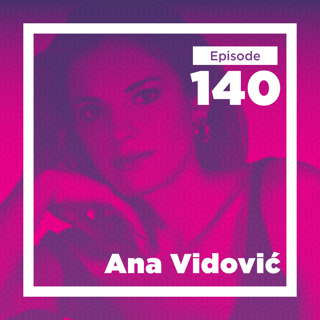
Ana Vidović on Prodigies, Performance, and Perseverance
Is genius born or made? For Croatian-born classical guitarist Ana Vidović the answer is both. Born into a musical family, she began playing guitar at five and was quickly considered a prodigy. But she's seen first-hand how that label can trap young talents into complacency, stifling their full development. She's also had to navigate changing business models and new technologies, learning for instance how to balance an online presence with her love of performing for live audiences. She joined Tyler to discuss that transition from prodigy to touring musician and more, including how Bach challenges her to become a better musician, the most difficult piece in guitar repertoire, the composers she wish had written for classical guitar, the Beatles songs she'd most like to transcribe, why it's important to study a score before touching the guitar, the reason she won't practice more than seven hours per day, how she prevents mistakes during performances, what she looks for in young classical guitarists, why she doesn't have much music on streaming services, how the pandemic has changed audiences, why she stopped doing competitions early on, what she'd change about conservatory education for classical guitarists, her favorite electric guitarists, her love of Croatian pop music, the benefits and drawbacks of YouTube for young musicians, and what she'll do next. Read a full transcript enhanced with helpful links. Recorded December 27th, 2021 Other ways to connect Follow us on Twitter and Instagram Follow Tyler on Twitter Email us: cowenconvos@mercatus.gmu.edu Subscribe at our newsletter page to have the latest Conversations with Tyler news sent straight to your inbox.
12 Jan 202244min

Conversations with Tyler 2021 Retrospective
Want to support the show? Visit donate.mercatus.org/podcasts. On this special year-in-review episode, Tyler and producer Jeff Holmes talk about the past year on the show, including one episode's appearance on Ancient Aliens, Tyler's picks for most underrated guests, how his 2021 predictions fared from last year's retrospective, further reflections on the most downloaded—and most polarizing—episode of the year, how David Deutsch influenced Tyler's opinions of Karl Popper, why he thinks his interviews with women tend to be better, and more. They also evaluate Tyler's pop culture picks from 2011, play "Name that Production Function," and answer listener questions from Twitter. Read a full transcript enhanced with helpful links, or watch the full video. Recorded December 8th, 2021 Other ways to connect Follow us on Twitter and Instagram Follow Tyler on Twitter Email us: cowenconvos@mercatus.gmu.edu Subscribe at our newsletter page to have the latest Conversations with Tyler news sent straight to your inbox.
29 Dec 202155min