
OpenAI: The nonprofit refuses to be killed (with Tyler Whitmer)

OpenAI: The nonprofit refuses to be killed (with Tyler Whitmer)

Last December, the OpenAI business put forward a plan to completely sideline its nonprofit board. But two state attorneys general have now blocked that effort and kept that board very much alive and kicking.

The for-profit’s trouble was that the entire operation was founded on the premise of — and legally pledged to — the purpose of ensuring that “artificial general intelligence benefits all of humanity.” So to get its restructure past regulators, the business entity has had to agree to 20 serious requirements designed to ensure it continues to serve that goal.

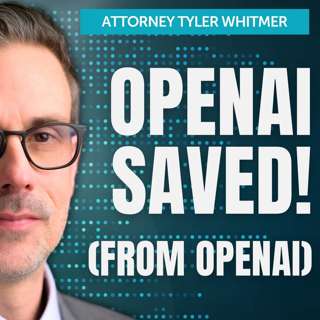
Attorney Tyler Whitmer, as part of his work with Legal Advocates for Safe Science and Technology, has been a vocal critic of OpenAI’s original restructure plan. In today’s conversation, he lays out all the changes and whether they will ultimately matter.

Full transcript, video, and links to learn more: https://80k.info/tw2

After months of public pressure and scrutiny from the attorneys general (AGs) of California and Delaware, the December proposal itself was sidelined — and what replaced it is far more complex and goes a fair way towards protecting the original mission:

  • The nonprofit’s charitable purpose — “ensure that artificial general intelligence benefits all of humanity” — now legally controls all safety and security decisions at the company. The four people appointed to the new Safety and Security Committee can block model releases worth tens of billions.
  • The AGs retain ongoing oversight, meeting quarterly with staff and requiring advance notice of any changes that might undermine their authority.
  • OpenAI’s original charter, including the remarkable “stop and assist” commitment, remains binding.

But significant concessions were made. The nonprofit lost exclusive control of AGI once developed — Microsoft can commercialise it through 2032. And transforming from complete control to this hybrid model represents, as Tyler puts it, “a bad deal compared to what OpenAI should have been.”

The real question now: will the Safety and Security Committee use its powers? It currently has four part-time volunteer members and no permanent staff, yet they’re expected to oversee a company racing to build AGI while managing commercial pressures in the hundreds of billions.

Tyler calls on OpenAI to prove they’re serious about following the agreement:

  • Hire management for the SSC.
  • Add more independent directors with AI safety expertise.
  • Maximise transparency about mission compliance.

"There’s a real opportunity for this to go well. A lot … depends on the boards, so I really hope that they … step into this role … and do a great job. … I will hope for the best and prepare for the worst, and stay vigilant throughout."

Chapters:

  • We’re hiring (00:00:00)
  • Cold open (00:00:40)
  • Tyler Whitmer is back to explain the latest OpenAI developments (00:01:46)
  • The original radical plan (00:02:39)
  • What the AGs forced on the for-profit (00:05:47)
  • Scrappy resistance probably worked (00:37:24)
  • The Safety and Security Committee has teeth — will it use them? (00:41:48)
  • Overall, is this a good deal or a bad deal? (00:52:06)
  • The nonprofit and PBC boards are almost the same. Is that good or bad or what? (01:13:29)
  • Board members’ “independence” (01:19:40)
  • Could the deal still be challenged? (01:25:32)
  • Will the deal satisfy OpenAI investors? (01:31:41)
  • The SSC and philanthropy need serious staff (01:33:13)
  • Outside advocacy on this issue, and the impact of LASST (01:38:09)
  • What to track to tell if it's working out (01:44:28)


This episode was recorded on November 4, 2025.

Video editing: Milo McGuire, Dominic Armstrong, and Simon Monsour
Audio engineering: Milo McGuire, Simon Monsour, and Dominic Armstrong
Music: CORBIT
Coordination, transcriptions, and web: Katy Moore

Avsnitt(325)

#20 - Bruce Friedrich on inventing outstanding meat substitutes to end speciesism & factory farming

#20 - Bruce Friedrich on inventing outstanding meat substitutes to end speciesism & factory farming

Before the US Civil War, it was easier for the North to morally oppose slavery. Why? Because unlike the South they weren’t profiting much from its existence. The fight for abolition was partly won bec...

19 Feb 20181h 18min
#19 - Samantha Pitts-Kiefer on working next to the White House trying to prevent nuclear war

#19 - Samantha Pitts-Kiefer on working next to the White House trying to prevent nuclear war

Rogue elements within a state’s security forces enrich dozens of kilograms of uranium. It’s then assembled into a crude nuclear bomb. The bomb is transported on a civilian aircraft to Washington D.C, ...

14 Feb 20181h 4min
#18 - Ofir Reich on using data science to end poverty & the spurious action-inaction distinction

#18 - Ofir Reich on using data science to end poverty & the spurious action-inaction distinction

Ofir Reich started out doing math in the military, before spending 8 years in tech startups - but then made a sharp turn to become a data scientist focussed on helping the global poor. At UC Berkeley...

31 Jan 20181h 18min
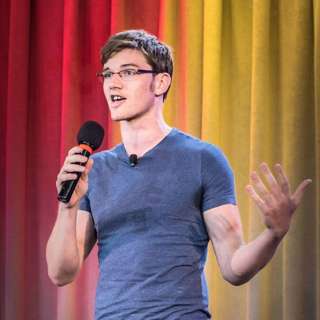
#17 - Will MacAskill on moral uncertainty, utilitarianism & how to avoid being a moral monster

#17 - Will MacAskill on moral uncertainty, utilitarianism & how to avoid being a moral monster

Immanuel Kant is a profoundly influential figure in modern philosophy, and was one of the earliest proponents for universal democracy and international cooperation. He also thought that women have no ...

19 Jan 20181h 52min

#16 - Michelle Hutchinson on global priorities research & shaping the ideas of intellectuals

#16 - Michelle Hutchinson on global priorities research & shaping the ideas of intellectuals

In the 40s and 50s neoliberalism was a fringe movement within economics. But by the 80s it had become a dominant school of thought in public policy, and achieved major policy changes across the Englis...

22 Dec 201755min
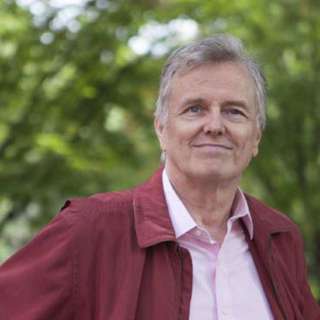
#15 - Phil Tetlock on how chimps beat Berkeley undergrads and when it’s wise to defer to the wise

#15 - Phil Tetlock on how chimps beat Berkeley undergrads and when it’s wise to defer to the wise

Prof Philip Tetlock is a social science legend. Over forty years he has researched whose predictions we can trust, whose we can’t and why - and developed methods that allow all of us to be better at p...

20 Nov 20171h 24min
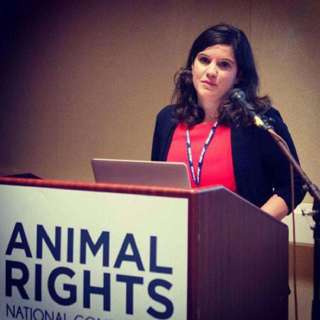
#14 - Sharon Nunez & Jose Valle on going undercover to expose animal abuse

#14 - Sharon Nunez & Jose Valle on going undercover to expose animal abuse

What if you knew that ducks were being killed with pitchforks? Rabbits dumped alive into containers? Or pigs being strangled with forklifts? Would you be willing to go undercover to expose the crime? ...

13 Nov 20171h 25min

#13 - Claire Walsh on testing which policies work & how to get governments to listen to the results

#13 - Claire Walsh on testing which policies work & how to get governments to listen to the results

In both rich and poor countries, government policy is often based on no evidence at all and many programs don’t work. This has particularly harsh effects on the global poor - in some countries governm...

31 Okt 201752min

Populärt inom Utbildning

rss-bara-en-till-om-missbruk-medberoende-2
historiepodden-se
det-skaver
alska-oss
nu-blir-det-historia
harrisons-dramatiska-historia
not-fanny-anymore
sektledare
johannes-hansen-podcast
roda-vita-rosen
allt-du-velat-veta
rss-viktmedicinpodden
sa-in-i-sjalen
i-vantan-pa-katastrofen
rss-max-tant-med-max-villman
rss-basta-livet
rss-sjalsligt-avkladd
rss-om-vi-ska-vara-arliga
vi-gar-till-historien
rss-pa-insidan-med-bjorn-rudman