
What Does an Opera Director Really Do? W/ Tabatha McFadyen
Have you ever wondered what exactly goes on behind the scenes putting together an opera? Have you ever asked yourself how a director make decisions on how to interpret the libretto of an opera? Why do some productions look so completely different to others? What is "regie theater" and why it is so controversial? Well, all of these questions and more are answered by my guest today, the fantastic director, performer, and writer Tabatha McFadyen, who takes us through the process of directing an opera from first commission to first performance, a process that can take a few years of work! This was a fascinating conversationa and I myself learned a lot from it. Join us!
23 Mars 202359min
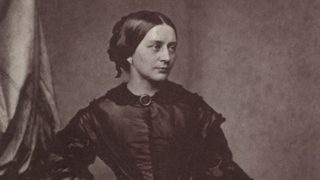
The Life and Music of Clara Schumann
Clara Schumann, without a doubt, was one of the greatest pianists of all time. Schumann's playing didn't just leave critics and audiences in raptures, it also left other composers amazed that their music could sound so beautiful. Liszt called her the Priestess of the Piano, Chopin adored her playing, and Mendelssohn brought her over and over again to Leipzig to play concerts with the Gewandhaus orchestra. She toured practically her entire life while raising a family of 8 children, and taking care of her husband Robert, who dealt with a series of mental illnesses that ended in his tragic and untimely death. Simply put, Clara Schumann was a legend in her time. She was the first pianist to perform entire concertos and recital programs by memory, the first pianist to devote her work to both contemporary composers AND composers of the past, bringing Bach onto the recital stage. And on and on and on. But today I'm not going to focusing too much on Clara Schumann the pianist. I won't be mentioning Brahms or Robert Schumann all that much either, except in biographical details. That's because the focus of the show today is on Clara Schumann's compositions. She only published 23 pieces during her life, a result of many factors, but what we do have of her work shows a brilliant and underrated compositional talent. So today I'll tell you about Clara Schumann's turbulent and fascinating life story, and then take you through a few of her most wonderful pieces, including the piano trio and the 3 romances for violin and piano. We'll also talk about why her body of work is so small, and why what we have of her music is so precious. Join us!
16 Mars 202348min
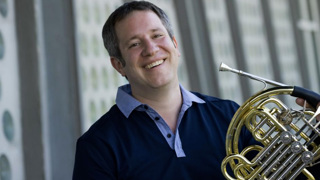
So What's It Like To Be The Principal Horn Of The Berlin Philharmonic? W/ Stefan Dohr
Stefan Dohr is one of the greatest french horn players in the world today. He has been the Principal Horn of the Berlin Philharmonic, one of the world's greatest orchestras, since 1993. In this really fun interview, Stefan and I talked about how he switched to the horn after starting out on the viola, his most memorable performances, what's it like to actually play in the Berlin Philharmonic, how to blend sound between the different sections of the orchestra, and much much more. Stefan is one of the most engaging and fascinating musicians out there so I think you'll get a lot out of this conversation. Join us!
9 Mars 202349min
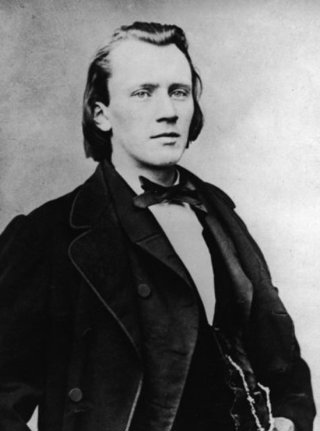
Brahms Symphony No. 1
Brahms was only 20 years old when Robert Schumann wrote his famous Neue Bahnen(New Paths) article that proclaimed Brahms as the future of music and the heir of Beethoven. Beethoven had only been dead for 26 years at this point, and his shadow still loomed large over every single composer living in Germany, and beyond. Brahms knew that the most concrete way he would be compared with Beethoven would be through a symphony, and so…he studiously avoided writing one. It's not like he didn't try. Brahms began sketching symphonies only one year after the Neue Bahnen article, but he kept revising the sketches, or more often, burning them as inferior products. This would go on for 23 more years, until 1876. Brahms was 43 when he finally completed his first symphony, and it was worth the wait. What Brahms came up with would inspire symphonists to this day, and would carry on the tradition that Beethoven laid out with both a respectful and loving look back into the past, with a clear eye forwards into the future. Today we'll dissect this piece in detail, taking it down to its foundational elements in order to see how Brahms created this masterpiece of a first symphony. Join us!
2 Mars 202352min
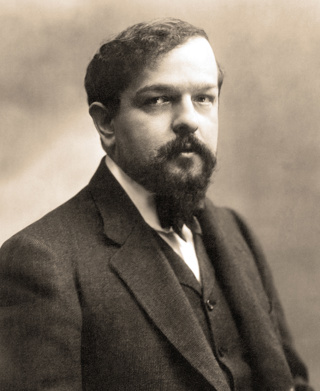
Debussy String Quartet
Just one year before Debussy wrote his legendary Prelude to the Afternoon of a Faun, he completed another groundbreaking work. It was a string quartet, which he expected to be the first of many. But in the end, it would be the only one he would ever write. If you aren't familiar with Debussy's music, this quartet might be the perfect place to start. In the string quartet, Debussy mastered for the first time many of the things that would mark his later orchestral masterpieces, like La Mer, Images, and of course the Prelude to the Afternoon of a Faun. It is full of the virtuosity and brilliance of a young composer, the experimentation of one of the true radicals of his time, and the sensual beauty from a composer who said that music should exist above all to give pleasure to the listener. Today I'll take you through the piece, discussing Debussy's Symbolist, NOT impressionist influences, his Brahmsian simultaneous embrace and destruction of musical form, and the vitality that carries you straight through one of the great string quartets of all time. Join us!
23 Feb 202348min
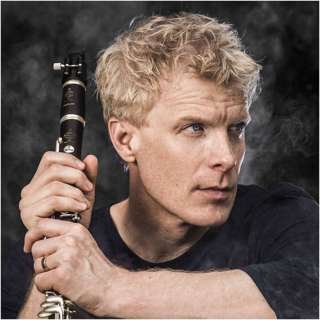
A Conversation with Martin Fröst: "The Highest Feeling You Can Get is that Someone Got Better"
Martin Fröst very well may be the greatest living clarinetist. His brilliant sound, feats of virtuosity, eclectic taste, and amazing performing ability has made him a superstar in the classical music world. I recently worked with Martin in Spain and a month later we had time to sit down and record a conversation at his home in Stockholm. This was a fascinating and wide ranging conversation talking about Martin's early experiences with the clarinet, his view on concert programming and how classical music could change, and his inspiring look at his new venture in conducting. I had such a great time in this chat and I hope you will enjoy it as much as I did. Join us!
16 Feb 202346min
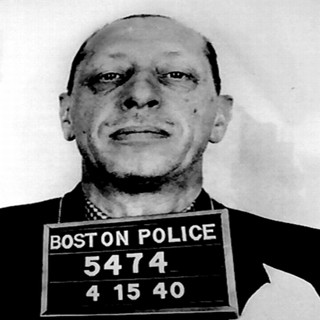
Stravinsky: The Rite of Spring, Part 2
By as early as 1909, composers like Mahler knew that tonality was reaching its breaking point, and composers like Debussy were experimenting with colors and ideas a composer like Brahms wouldn't have dreamed were possible. Strauss was shocking the world in his own right with his erotic and disturbing opera Salome. Mirroring the roiling tensions all over the world, music was pushing and stretching at its boundaries in ways that it simply hadn't before. The years from 1900-1914 were a powder keg for the world and also for music, and you could argue that Stravinsky's Rite of Spring was the musical version of the explosion of that powder keg. And it still has a profound impact on music today. So as we go through Part II of the Rite of Spring, The Sacrifice - the narrative section of the piece - we'll talk a little bit more about the riot that took place at its premiere, but also the reactions to the piece throughout the 20th century. We'll also look at the influence the piece had on composers from all across the musical spectrum. In just 30 minutes Stravinsky changed the world of music forever and it still causes controversy today. I once was at a performance of the Rite where two elderly patrons of the symphony sat behind me. As one particularly violent section of the piece blasted away, I heard one of them lean over to the other and say, "If they keep playing this modern music all the time, I'm cancelling my subscription." This took place more than a 100 years after the premiere. How does a piece remain modern for so long? Are there any other parallels in musical history? And how does Stravinsky build a narrative that slowly builds in intensity all the way to the sacrifice of the young girl and the beginning of spring? Join us!
9 Feb 202344min
Stravinsky: The Rite of Spring, Part 1
The most famous thing about Igor Stravinsky's Rite of Spring is the riot that took place at its premiere. Perhaps its overcompensating for classical music's reputation for being a bit stuffy, but musicians and musicologists LOVE talking about the riot at the Rite of Spring, and I'm no exception. But you might be surprised to know that the Rite Riot was by no means the only disturbance at a classical concert. There are myriad stories of chaos at concerts throughout musical history, but none of them are as famous as what happened on May 29th, 1913. We'll talk about the riot, why it happened, and its aftermath. We'll also discuss this groundbreaking piece, which was revolutionary in almost every way, while being more grounded in the past than you might think. As the great writer Tom Service says, "there's nothing so old as a musical revolution." Join us this week for part 1, the Adoration of the Earth!
2 Feb 202345min