
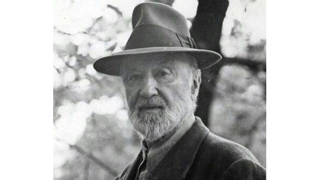
Ives Three Places in New England
In 1929, the conductor Nicolas Slonimsky contacted the American composer Charles Ives about performing one of his works. This was a bit of a surprise for Ives, since he had a checkered reputation among musicians and audience members, if they even were familiar with his name at all. In fact, he was much more famous during his lifetime as an extremely successful insurance executive! Ives mostly composed in his spare time, and his music was mostly ignored or ridiculed as that of a person suffering from a crisis of mental health. Most of his music was never performed during his lifetime, and even today, he is thought of as a great but extremely eccentric composer, and orchestras and chamber ensembles often struggle to sell tickets if his name appears on the program. But for those who love Ives, there is an almost evangelical desire to spread his music to the world. I'm one of those people who loves Ives, and it is one of my personal missions to bring his music to as many places as possible. The piece I chose to talk about today is Three Places in New England, or the New England Symphony, a piece that is a perfect amalgam of what makes Ives such a spectacular composer - his radical innovations, his ahead of his time experiments, his humor, his humanity, his warmth, and the staggering creativity that marked all of Ives' great works. We'll start with a little biography of Ives in case you're not familiar with him, and then we'll dive into Three Places in New England. By the end of the show, I hope, if you're not already, that I will have converted you into an Ives fan for life!
11 Okt 20241h
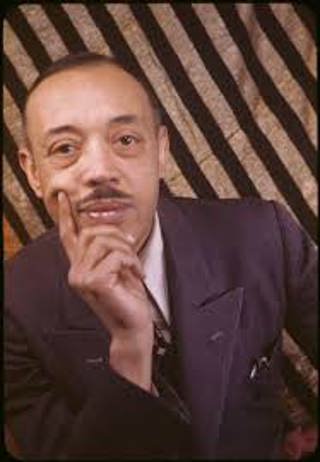
William Grant Still Symphony No. 1, "Afro-American"
Fundraiser link here: https://www.eventbrite.com/e/1026719635067?aff=oddtdtcreator On October 29th, 1931, The Rochester Philharmonic in New York State presented the world premiere of a new symphony by the composer William Grant Still. A symphonic premiere is always something to look out for in musical history, but this one had an even greater significance. The premiere of Wiliam Grant Still's First Symphony, subtitled "Afro American," was the first time a symphony written by a Black American composer was performed by a leading orchestra. William Grant Still was a man of many firsts, whether he was the first Black American conductor to conduct a major orchestra, the first to have an opera performed by a major company, the first Black American to conduct an orchestra in the South of the United States, and much more. Today we're going to focus in on Grant Still's first symphony, a symphony that Grant Still had long thought about, conceptualized, and dreamed of. It was also a symphony wrapped up in the roiling currents of Black America at the time, with the Harlem Renaissance in full swing and Alain Locke's tract The New Negro sparking discussion and debate all over the country. It was a symphony that attempted to do something no one had ever done before; that is, to marry together the genre of the Blues with that of symphonic music. Until 1950, it was THE most performed symphony written by an American composer. But until 10 or 15 years ago, it had all but disappeared from the stage, but due to the explosion of interest in Black American composers of the past and present, this brilliant symphony is making its way back onto stages all over the world. The way that Grant Still constructed this meeting of two genres of music was ingenious and innovative from start to finish, and so today on the show we'll explore all of the historical context of the symphony, what Grant Still was trying to do with his monumental new endeavor, and of course, all of the music itself. I want to thank John McWhorter for his brilliant contributions to this episode, as well as the Aalborg Symphony for embarking on a fantastic recording of the symphony, which you will hear throughout this episode.
3 Okt 20241h 6min
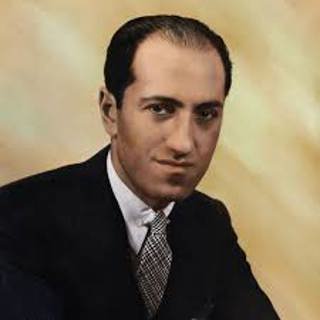
Gershwin: Rhapsody In Blue
"It was on the train, with its steely rhythms, its rattle-ty bang, that is so often so stimulating to a composer – I frequently hear music in the very heart of the noise.... And there I suddenly heard, and even saw on paper – the complete construction of the Rhapsody, from beginning to end. No new themes came to me, but I worked on the thematic material already in my mind and tried to conceive the composition as a whole. I heard it as a sort of musical kaleidoscope of America, of our vast melting pot, of our unduplicated national pep, of our metropolitan madness. By the time I reached Boston I had a definite plot of the piece." That was George Gershwin talking about writing Rhapsody in Blue, one of the most popular pieces of American Classical Music of the 20th century. But is the Rhapsody in Blue classical music? Or is it Jazz? Its certainly played on more classical concerts than it is on Jazz concerts, it uses a full orchestra (though that's not what it was originally written for), and the greatest soloists of the classical field regularly play the concerto on so called "serious" classical concerts. But on the other hand, the structure of the piece is anything but classical and there's ample room for improvisation though most classical pianists don't improvise when they play the piece. So which is it? Well, the answer is a bit of both, which probably is one of the main reasons for its enduring popularity. There are very few pieces that put a smile on your face like Rhapsody in Blue, and so today, we'll explore this most American of pieces, talking about the amazing story of its conception, Gershwin's quest to be accepted by the great classical composers of the day, and of course, the music itself. Join us! Link to fundraiser episode on Appalachian Spring: https://www.eventbrite.com/e/1026719635067?aff=oddtdtcreator
26 Sep 202448min
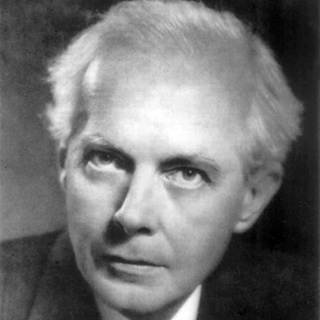
Bartok Violin Concerto No. 2
During Bartok's life, the violin concerto we now know as Violin Concerto No. 2 was simply known as Bartok's only violin concerto. The reason? His first concerto, written when he was a much younger man, had never been performed or published. This was a deeply painful memory for Bartok, who had written the concerto for a woman he was in love with, Stefi Geyer, but Geyer refused both Bartok's advances and the concerto itself, and so it remained unperformed and unpublished until after Bartok's death. Bartok had written other works for violin and orchestra, including a rhapsody written for his friend and recital partner Zoltan Szekely. Szekely continuously asked Bartok to write him a full blown concerto, but Bartok refused again and again, until finally in 1936 Bartok agreed. But even then, Bartok wasn't so easy to pin down. Bartok resisted the idea of a full scale concerto, saying to Szekely that he wanted to write a theme and variations for violin and orchestra, but Szekely refused, and demanded a 3 movement standard concerto. Bartok finally agreed, but as you'll see later, he found a way to get his theme and variations in anyway! The concerto took two years to write, partly due to Bartok being busy with some of his greatest large scale works, but also because of Bartok's acute stress due to the rise of fascism across Europe. He was constantly thinking of emigrating from his native Hungary, and finally in 1938 he left. As he wrote to his friend: "What is most appalling is the imminent danger that Hungary too will surrender to this system of robbers and murderers..." All of these competing impulses - Bartok's bitter memories of his first concerto, the turbulent political siutation, and his seeming lack of confidence in writing a full scale concerto, contributed to the delay, but finally in 1938 the piece was finished and was triumphantly premiered on April 24, 1939 in Amsterdam. This concerto is one of the greatest 20th century violin concertos, and is full of a massive amount of brilliant detail as well as an urgently emotional and passionate character. It is a gigantic, nearly 40 minute long piece, and its difficulties for both the violinist and the orchestra are immense. Today we'll talk about all of the ins and outs of this remarkable concerto, including its challenges, its beauties, its emotional scope, and its brilliant combination of tonality and 12 tone music. Join us! Recording: Danish Radio Symphony, Augustin Hadelich, Violin, Vasily Petrenko Cond.
13 Sep 202456min
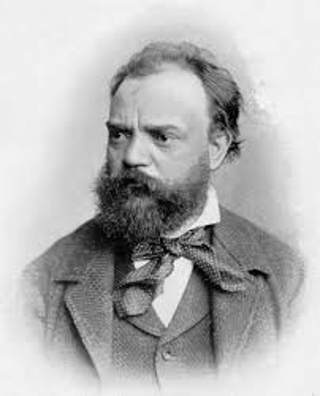
Dvorak Symphony No. 7
In December of 1884, Dvorak wrote to a friend about the composition of a new symphony: "I am now busy with this symphony for London, and wherever I go I can think of nothing else. God grant that this Czech music will move the world!!" He was in the midst of working on what would become his 7th symphony, and even though it is nowhere near as popular as his 9th symphony(The New World Symphony) or even the sunny 8th symphony, it is often thought of as Dvorak's greatest symphony, and for the record, I agree. This symphony is Dvorak at his most serious, most passionate, and most intense. Throughout the symphony, a kind of darkness pervades the work that is very unusual for Dvorak, though it also is full of so many of the things that make Dvorak's music so beloved today: gorgeous melodies as far as the eye can see, glorious orchestral writing, and more. But what it lacks, unlike the 8th symphony for example, is the kind of simplicity and naivete that marks much of Dvorak's music, and this lack of "innocence" has led scholars, musicians, and audience members to try to find an extra musical "meaning" for this music. Is the music an expression of Czech nationalism? Is it an expression of grief after the loss of his mother and eldest daughter? Was Dvorak trying to impress Brahms with his seriousness? What could have caused Dvorak to suddenly embrace such darkness in his music? Well, as we'll find out, it could be a combination of all of those reasons, but also it could be none of them at all. In the end, what is most important is the remarkable music that Dvorak wrote for this 7th symphony, and so today on the show we'll go through the symphony, trying to illuminate just what makes this, perhaps, Dvorak's greatest symphony. Join us!
29 Aug 202458min
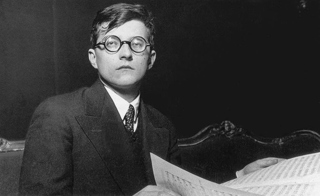
Shostakovich Symphony No. 4
Shostakovich's 4th symphony is not for the faint of heart. It is a massive work, around an hour in length, and it calls for the second largest orchestra of any in Shostakovich's output. It is uncompromising, sometimes brutal, and it isn't nearly as lyrical that later Shostakovich has in spades. But with all that said, many people, including myself, consider this symphony Shostakovich's symphonic masterpiece. It has been described as the symphony containing the kernels of everything Shostakovich would ever write after. It also marks the final piece Shostakovich wrote before his 1936 denunciation that utterly changed the course of his life. Today, on this Patreon-sponsored episode, I'll take you through this monumental work, telling you the remarkable story of the conception and aborted first performance of the symphony. Then we'll dive into the music itself, talking about the large scope of the piece, it's unusual form, and of course the raw emotional core that is always so present in Shostakovich. Join us for a wild ride!
15 Aug 20241h 8min
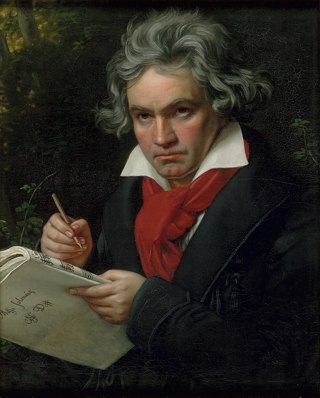
Beethoven Symphony No. 5
They are the most famous 8 notes in not only Western Music, but probably in all of music. If you walk down the street and ask someone to name a painting, they might say the Mona Lisa. A movie? Maybe Star Wars. A piece of classical music? Certainly, it would be Beethoven 5. But why? What makes those 8 notes so arrestingly powerful? Well, this week, we're going to take a deep look at this ubiquitous piece, exploring lots of different questions. What inspired Beethoven to write such a piece (a hint here, it probably wasn't fate knocking at the door)? How was this symphony different from everything that came before it? What influence did it have on composers of the future? What are the OTHER 3 movements of the symphony like, since many people only know the first movement? This symphony is monumentally important because in many ways it serves as the fulcrum between the classical and romantic eras. It is the most quoted piece of classical music there is, and it remains the most played symphony in the world. Today on this show from the archives, we're going to be exploring this symphony including new material that includes discoveries I've made about the symphony only in the last year or so, including the impact that the French Revolution had on the conception of this symphony. Join us!
1 Aug 20241h 5min
Mozart Requiem
This show is a bit different today. Last year I did a live video podcast on Mozart's Requiem for my Patreon subscribers. I've now edited that show into an audio-only version for everyone to be able to listen to, since this is such an essential piece and there's so much to talk about with it! The audio only version won't get into as much granular detail as the video podcast did, and it won't include quite as many clips from the movie Amadeus, but all the same, we take a deep dive into Mozart's Requiem today, talking all about one of the greatest unfinished works in the history of art. We'll discuss the myths and legends behind the piece, the movements that Mozart started but never finished, and the completions of the score by different composers, especially the heavily criticized but still regularly used completion of Franz Sussmayr. We'll also talk about each movement in detail, exploring just what Mozart brought to the Requiem text. This piece has the distinction of being one of the greatest pieces ever written, just as it is, but also one of the great what-if stories in musical history. Join us to learn all about the Mozart Requiem, and if you want to see the full video version of the show, please head over to patreon.com/stickynotespodcast to find out how you can support the show.
18 Juli 20241h 6min