Episode #66: The Randomness Engine: Why Silicon Valley Can't Be Cloned (And Why That Matters for AI)
Stewart Squared4 Joulu 2025

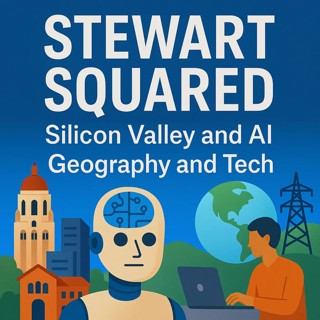
Episode #66: The Randomness Engine: Why Silicon Valley Can't Be Cloned (And Why That Matters for AI)

In this episode of the Stewart Squared podcast, hosts Stewart Alsop II and Stewart Alsop III explore the evolution of Silicon Valley's regional dominance from the 1980s and 90s to today's AI-driven landscape. The conversation examines whether entrepreneurs still need to relocate to Silicon Valley to succeed, especially given that major AI companies like OpenAI, Anthropic, and Perplexity are all headquartered in San Francisco. Alsop discusses the essential components that made Silicon Valley successful - including educational infrastructure, risk-taking capital, and supporting services - while drawing parallels to other tech ecosystems like Israel's Unit 8200 military program and China's engineer-led approach to innovation. The discussion ranges from the unintended consequences of government research funding and corporate R&D to the current AI competition between established players and emerging threats from Google's upcoming Gemini 3 and China's open-source models, ultimately touching on space technology, geopolitics, and Alsop's methods for predicting technological trends through what he describes as a combination of intuition and informed hallucination.


Timestamps

00:00 Welcome to Stewart Squared podcast discussing live streaming advantages over traditional publishing, exploring regionality of Silicon Valley and AI's impact on geographic requirements for tech startups.
05:00 Deep dive into Silicon Valley ecosystem fundamentals: educational infrastructure like Stanford, risk capital availability, and essential support services including lawyers, consultants and recruiters.
10:00 Argentina's tech protectionism versus open markets under Milei, discussing Mercado Libre restrictions and Amazon's entry, plus conspiracy theories about international capital influence.
15:00 Examining randomness versus intent in tech ecosystems, from William Shockley's move to Menlo Park to Israel's Unit 8200 military training creating successful tech entrepreneurs.
20:00 Core elements for tech ecosystems: universities, risk-tolerant capital, service infrastructure, plus discussion of wealth creation incentives and tax policies like capital gains advantages.
25:00 Engineers as foundation of tech success, comparing US lawyer-dominated culture versus China's engineer-led governance, examining LLMs as personal tutors revolutionizing autodidactic learning.
30:00 LLM limitations in predicting future versus accessing existing knowledge, university system's role in developing critical thinking, discussing woke backlash and political reactions.
35:00 Historical parallels to current polarization, US-Soviet space cooperation despite Cold War tensions, strategic dependencies on Russian rocket engines and recent American innovations.
40:00 Space infrastructure challenges and SpaceX dominance, Starlink satellite network expansion, China's competitive response and Amazon's Project Kuiper lagging development.
45:00 Rocket development's counterintuitive physics, infrastructure requirements, high failure rates, and Musk's advantage in accepting iterative failures over NASA's guaranteed success approach.
50:00 Distinguishing hype from reality in deep tech investing, venture capital success rates, psychedelic-enhanced pattern recognition enabling technology trend prediction and investment insights.
55:00 Prediction methodology combining intuition with technical knowledge, smartphone satellite communication developments, Apple's GlobalStar partnership and potential Starlink integration creating ubiquitous connectivity.


Key Insights

1. Silicon Valley's success cannot be replicated by government intent alone. The ecosystem emerged from random factors like William Shockley moving to Menlo Park to be near his mother, combined with defense contractors like Raytheon, Stanford University, and early risk capital from investors like Arthur Rock. While countries try to create their own Silicon Valleys through massive investment, the organic nature of the original ecosystem - including tolerance for extreme wealth creation and failure - cannot be artificially manufactured.

2. AI is creating new possibilities for autodidactic learning that could reshape traditional education. Large Language Models now function as personal tutors, allowing anyone in Nigeria, Thailand, or Argentina to teach themselves complex technical skills without formal university training. This democratization of knowledge access could reduce the necessity of traditional higher education for technical competency, though universities still provide crucial networking and critical thinking development.

3. China's engineering-focused leadership gives them strategic advantages over America's lawyer-dominated system. Unlike the US political system dominated by legal professionals, China's leadership consists primarily of engineers who understand technology and infrastructure. This technical competency at the highest levels enables more informed decision-making about technological development and long-term strategic planning.

4. The current AI competition involves an unprecedented three-way dynamic between US companies, Google's resource advantage, and China's open-source strategy. Google possesses a 20-30% cost advantage through their TPUs and $110 billion in annual profit, while China is open-sourcing competitive models like Kimi. This creates a fundamentally different competitive landscape than previous technology cycles that were primarily US-dominated.

5. Space technology represents humanity's defiance of natural physics through brute force engineering. Rockets make no logical sense - overcoming gravity to launch heavy objects into space requires overwhelming power and infrastructure. The fact that SpaceX has normalized this "impossible" feat through repeated failures and iterations demonstrates how breakthrough technologies often require accepting seemingly irrational approaches.

6. Psychedelic experiences in youth can develop pattern recognition abilities crucial for technology prediction. The neuroplasticity changes from psychedelics, combined with deep technical knowledge, can create an ability to see future technology trends that others miss. This unconventional insight, when trusted despite being unpopular, has historically enabled accurate predictions about technology evolution.

7. Current economic conditions mirror historical cycles of technological disruption and social upheaval. The separation from traditional cultural grounding, combined with extreme wealth inequality and political polarization, echoes patterns from the 1920s and other periods of major transition. Understanding these historical parallels helps contextualize current technological and social changes.


Jaksot(87)

Episode #87: Tighter Than Microsoft, Smarter Than Apple: Anthropic's Blueprint to Own the AI Stack

Episode #87: Tighter Than Microsoft, Smarter Than Apple: Anthropic's Blueprint to Own the AI Stack

In this episode of the Stewart Squared podcast, host Stewart Alsop is joined by his father, Stewart Alsop II, to talk through a wide range of topics stemming from their shared obsession with AI and te...

30 Huhti 1h

Episode #86: The Orchestration Layer: One Indie Builder's War Against Platform Lock-In

Episode #86: The Orchestration Layer: One Indie Builder's War Against Platform Lock-In

In this episode of Stewart Squared, host Stewart Alsop sits down with his father, Stewart Alsop II, for a wide-ranging conversation that kicks off with Stewart's frustrations around Anthropic's shifti...

23 Huhti 55min

Episode #85: The Conspiracy Theory That Isn't: When Silicon Valley Quietly Changes the Deal

Episode #85: The Conspiracy Theory That Isn't: When Silicon Valley Quietly Changes the Deal

In this episode of Stewart Squared, host Stewart Alsop is joined by his father Stewart Alsop II to cover a wide range of topics sparked by a growing frustration with Anthropic's recent changes to thei...

16 Huhti 54min

Episode #84: From World Models to Robot Orchestras: Inside the New Stack of Real-Time Intelligence

Episode #84: From World Models to Robot Orchestras: Inside the New Stack of Real-Time Intelligence

This week on Stewart Squared, Stewart Alsop sits down with his father Stewart Alsop II — veteran tech journalist, former editor of InfoWorld, and longtime Silicon Valley venture capitalist — for a wid...

9 Huhti 50min

Episode #83: The Focus Layer: Why Anthropic, NVIDIA, and Cloudflare Are Winning the Same War

Episode #83: The Focus Layer: Why Anthropic, NVIDIA, and Cloudflare Are Winning the Same War

In this episode of Stewart Squared, host Stewart Alsop III and his father Stewart Alsop II cover a wide range of interconnected topics, starting with a sharp critique of OpenAI's lack of strategic foc...

2 Huhti 51min

Episode #82: What Happens When You Stop Trusting Platforms and Start Building Your Own

Episode #82: What Happens When You Stop Trusting Platforms and Start Building Your Own

Stewart Alsop is joined by his guest, Stewart Alsop II, for a wide-ranging conversation about the technology behind modern podcasting and streaming, starting with Riverside’s local recording approach ...

26 Maalis 59min

Episode #81: Indoor, Outdoor, In Between: The Real Future of Human Experience

Episode #81: Indoor, Outdoor, In Between: The Real Future of Human Experience

In this episode of Stewart Squared, host Stewart Alsop III is joined by his co-host Stewart Alsop II to cover a wide range of topics stemming from Stewart's recent trip to Tucuman, Argentina for a wed...

19 Maalis 51min

Episode #80: The Unreal Engine of Everything: Betting on the Next Shift in Entertainment

Episode #80: The Unreal Engine of Everything: Betting on the Next Shift in Entertainment

In this episode of Stewart Squared, host Stewart Alsop is joined by his longtime co-host and guest Stewart Alsop II to cover a wide range of topics sparked by Stewart's recent fishing trip to Tierra d...

12 Maalis 58min

Suosittua kategoriassa Liike-elämä ja talous

sijotuskasti
mimmit-sijoittaa
rss-rahapodi
psykopodiaa-podcast
hyva-paha-johtaminen
rss-oivalluksia-rahasta-elamasta
rss-rahamania
inderespodi
rss-lahtijat
ostan-asuntoja-podcast
rahapuhetta
oppimisen-psykologia
lakicast
rss-bisnesta-bebeja
rss-sisalto-kuntoon
rss-inderes
leadcast
mihin-sita-saastais
rss-rikasta-elamaa
rss-40-ajatusta-aanesta