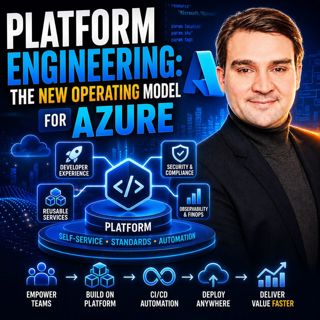
Platform Engineering: The New Operating Model for Azure

Platform Engineering: The New Operating Model for Azure

DevOps changed how software is built, but it didn't eliminate complexity—it simply redistributed it. As organizations adopted cloud platforms, Infrastructure as Code, containers, and CI/CD pipelines, developers inherited responsibilities that once belonged to operations teams. Networking, security, identity, compliance, monitoring, governance, and infrastructure provisioning became part of every developer's daily workload. The result was a new bottleneck driven by cognitive overload rather than manual ticket queues. In this episode of the M365 FM Podcast, host Mirko Peters explores why Platform Engineering has emerged as the next evolution of cloud operations and how it fundamentally changes the way enterprises build and operate Microsoft Azure environments. Instead of treating infrastructure as a service that developers request, Platform Engineering treats it as a product they consume. You'll discover how Internal Developer Platforms (IDPs), Azure Bicep, Azure Verified Modules, Golden Paths, self-service infrastructure, and automated governance dramatically improve developer productivity while strengthening security and compliance. This episode provides a practical blueprint for organizations looking to scale Azure without scaling operational complexity.

WHY DEVOPS REACHED ITS LIMITS
DevOps transformed software delivery by breaking down barriers between development and operations. For small teams, this worked remarkably well. But as organizations grew, developers inherited an ever-expanding list of operational responsibilities, dramatically increasing cognitive load and reducing the time available for building business value.
Topics include:
  • Infrastructure as Code
  • Networking
  • Identity Management
  • Security
  • Compliance
  • Monitoring
  • Incident Response
  • Automation
  • CI/CD
  • Developer Experience
Rather than eliminating bottlenecks, DevOps often shifted them from operations teams to developers.

THE COGNITIVE LOAD CRISIS
One of the central themes of this episode is cognitive load. Modern developers must understand networking, Azure Policy, RBAC, identity, monitoring, infrastructure, security, and application development—all at the same time. Every deployment requires context switching across multiple systems, dramatically reducing productivity. The discussion explains why developer burnout isn't caused by difficult programming problems, but by unnecessary operational complexity that distracts teams from delivering business value. Platform Engineering reduces this burden by moving infrastructure complexity into reusable platform services.

PLATFORM ENGINEERING EXPLAINED
Platform Engineering introduces an entirely different operating model. Instead of infrastructure teams responding to tickets, they build internal products that developers consume through self-service. The conversation explores:
  • Internal Developer Platforms (IDPs)
  • Self-service infrastructure
  • Platform teams
  • Infrastructure products
  • Developer portals
  • Automation
  • Platform APIs
  • Standardization
  • Service catalogs
  • Product thinking
Infrastructure becomes predictable, repeatable, and immediately available without manual approvals.

GOLDEN PATHS & SELF-SERVICE INFRASTRUCTURE
A key concept discussed throughout the episode is the Golden Path. Rather than forcing developers to make hundreds of infrastructure decisions, Platform Engineering provides secure, opinionated deployment patterns that automatically include organizational standards. Topics include:
  • Golden Paths
  • Azure Bicep
  • Azure Verified Modules
  • Infrastructure templates
  • Deployment automation
  • Governance by design
  • Built-in security
  • Observability
  • Logging
  • Compliance
Developers focus on building applications while the platform automatically enforces security, governance, and operational best practices.

AZURE BICEP AS THE FOUNDATION
Azure Bicep plays a central role in enabling modern Platform Engineering. Instead of maintaining large ARM Templates or manually provisioning Azure resources, organizations create reusable Bicep modules that encapsulate networking, identity, monitoring, security, and infrastructure standards. The episode explains how Azure Verified Modules, module registries, semantic versioning, and Infrastructure as Code enable organizations to scale Azure consistently across hundreds of subscriptions and development teams.

GOVERNANCE WITHOUT SLOWING DEVELOPERS DOWN
Traditional governance often relies on manual approvals that slow software delivery. Platform Engineering replaces those approval gates with automated guardrails. The discussion covers:
  • Azure Policy
  • RBAC
  • Policy as Code
  • Compliance as Code
  • Continuous validation
  • Automated security
  • Landing Zones
  • Management Groups
  • Drift detection
  • Governance automation
Instead of reviewing deployments after they're created, organizations enforce standards automatically before infrastructure reaches production.

INTERNAL DEVELOPER PLATFORMS (IDPS)
Technology alone doesn't create great developer experiences. Platform Engineering introduces Internal Developer Platforms that act as centralized portals where developers discover templates, deploy infrastructure, review documentation, and consume reusable platform services. Rather than searching across multiple repositories or submitting support tickets, developers gain access to standardized infrastructure through intuitive self-service experiences. The episode also explores why successful platform teams measure adoption and developer satisfaction—not simply the number of features they deliver.

PLATFORM ENGINEERING AS A PRODUCT
One of the biggest mindset shifts discussed is treating the platform itself as a product. Platform teams become internal product organizations that continuously improve developer experience through feedback, usage metrics, adoption analysis, and iterative improvements. Success is measured by:
  • Developer satisfaction
  • Platform adoption
  • Time-to-first-deployment
  • Reduced support tickets
  • Faster onboarding
  • Reduced cognitive load
  • Deployment frequency
  • Lead time
  • Reliability
  • Business value
A successful platform is one developers choose because it makes their work easier

Become a supporter of this podcast: https://www.spreaker.com/podcast/m365-fm-modern-work-security-and-productivity-with-microsoft-365--6704921/support.

Tämä jakso on lisätty Podme-palveluun avoimen RSS-syötteen kautta eikä se ole Podmen omaa tuotantoa. Siksi jakso saattaa sisältää mainontaa.

Jaksot(715)

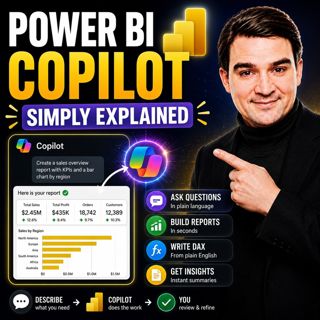
Power BI Copilot - Simply Explained

Power BI Copilot - Simply Explained

Power BI Copilot brings generative AI directly into Microsoft's business intelligence platform, helping users build reports, write DAX formulas, analyze data, and generate insights using natural langu...

13 Heinä 11min
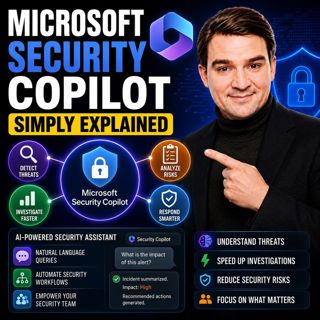
Microsoft Security Copilot - Simply Explained

Microsoft Security Copilot - Simply Explained

Security teams face a common challenge: thousands of security alerts, limited staff, and not enough time to investigate every incident. Most alerts turn out to be harmless, but hidden among them can b...

12 Heinä 13min
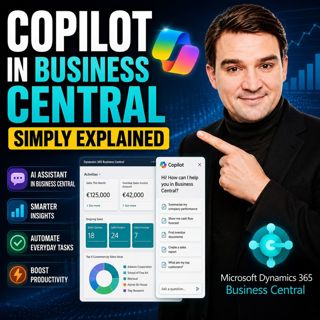
Copilot in Business Central - Simply Explained

Copilot in Business Central - Simply Explained

Microsoft Copilot is becoming a core part of Dynamics 365 Business Central, transforming it from a traditional ERP system into an AI-powered business assistant. Instead of switching between applicatio...

12 Heinä 11min
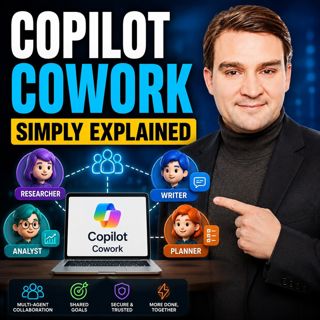
Copilot Cowork - Simply Explained

Copilot Cowork - Simply Explained

Microsoft Copilot changed how we interact with AI by helping us summarize emails, draft documents, and answer questions. But there's still one major problem: you're responsible for connecting everythi...

12 Heinä 13min
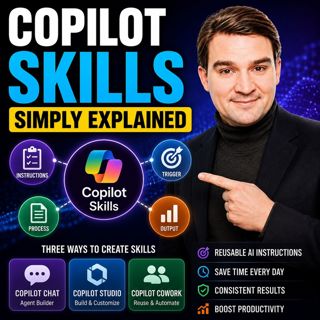
Copilot Skills - Simply Explained

Copilot Skills - Simply Explained

Copilot Skills are one of Microsoft's most important AI building blocks, yet they're also one of the most misunderstood. Depending on which Microsoft product you're using, the same concept appears und...

12 Heinä 13min
Microsoft Scout - Simply Explained

Microsoft Scout - Simply Explained

Microsoft has introduced a growing family of AI assistants, and Microsoft Scout represents the next major step in that evolution. While Copilot helps when you ask questions and Cowork executes multi-s...

12 Heinä 16min
Compliance as Code: The Architect’s Blueprint for Automated Trust

Compliance as Code: The Architect’s Blueprint for Automated Trust

Compliance has traditionally been treated as documentation. Policies live in PDFs, access reviews sit in spreadsheets, and governance depends on people remembering to follow processes. But cloud envir...

12 Heinä 1h 13min

Suosittua kategoriassa Politiikka ja uutiset

aikalisa
uutiscast
ootsa-kuullut-tasta-2
rss-ootsa-kuullut-tasta
rss-podme-livebox
otetaan-yhdet
rss-seksicast
politiikan-puskaradio
tervo-halme
aihe
rss-vaalirankkurit-podcast
rss-girls-finish-f1rst
rss-mina-ukkola
rss-aijat-hopottaa-podcast
rss-mita-tapahtuu
rss-merja-mahkan-rahat
rss-raha-talous-ja-politiikka
rss-tekoalyfoorumi
rss-asiastudio
rss-pinnalla