
#177: A First Diagnosis of Multiple Sclerosis: Symptoms, Tests, and Next Steps

#177: A First Diagnosis of Multiple Sclerosis: Symptoms, Tests, and Next Steps

What may be the first signs of multiple sclerosis? Which tests are needed to diagnose MS, and what happens after the diagnosis?

In this episode, I speak with Dr Datzmann, Senior Consultant at the MS Centre of Bezirksklinikum Mainkofen in Germany. He explains why diagnosing MS is like putting together a puzzle. Important pieces include the medical history, neurological examination, MRI scans, cerebrospinal fluid testing and the exclusion of other conditions.

We also discuss common early symptoms such as optic neuritis, sensory changes, walking difficulties, bladder problems and double vision. Dr Datzmann explains why a diagnosis may not always be confirmed after the first clinical event and how he supports people during this emotionally challenging time.

Most importantly, he emphasises that MS does not automatically mean needing a wheelchair and that effective treatment options are available.

This episode is an adapted English version of an interview originally conducted in German in February 2021.

In This Episode
  • Common early symptoms of multiple sclerosis
  • Optic neuritis and sensory changes
  • The role of the neurological examination
  • MRI scans of the brain and spinal cord
  • Cerebrospinal fluid testing and oligoclonal bands
  • Conditions that may resemble MS
  • Clinically isolated syndrome and the first relapse
  • Communicating the diagnosis with empathy
  • Treatment and follow-up care after diagnosis
  • Cooperation between neurologists and specialised MS centres
Diagnostic Update

Since the original interview, the diagnostic criteria have been revised. The 2024 McDonald criteria, published in 2025, include additional imaging and laboratory biomarkers that may support an earlier and more accurate MS diagnosis in appropriate cases. This means that some people may receive a confirmed diagnosis sooner instead of remaining diagnosed with clinically isolated syndrome for an extended period.

Learn more in my dedicated episode and article: https://ms-perspektive.de/en/139-2024-mcdonald-criteria/

Treatment Update

Modern MS care increasingly considers early use of highly effective treatment for people with active disease. This approach is sometimes described as "hit hard and early" or "flipping the pyramid". The aim is to use the early window of opportunity to reduce inflammatory activity and protect the brain and spinal cord.

To learn more, see Sequencing and Escalation in MS Treatment with Prof. Tomas Kalincik, Immunotherapy for MS with Prof. Tjalf Ziemssen and Brain Health: Time Matters in MS.

Blog Article

Read the full adapted English interview: https://ms-perspektive.de/en/177-first-diagnosis-ms/

Chapters

00:00 Introduction
00:57 Dr Datzmann's path into neurology
02:10 Common first symptoms of MS
04:35 How multiple sclerosis is diagnosed
06:34 Understanding MRI findings
07:51 Ruling out other conditions
08:59 Can MS be diagnosed after the first relapse?
10:44 How long does it take to receive a clear diagnosis?
12:27 Communicating the diagnosis with empathy
13:07 Explaining multiple sclerosis clearly
14:46 Why MS does not automatically mean a wheelchair
16:46 Personal experiences with MS treatment
18:23 Treatment advice after diagnosis
20:14 Follow-up care with a neurologist and MS centre
20:51 MRI, blood and cognitive monitoring
22:39 The Mainkofen MS Centre
24:09 Closing thoughts

Conclusion: A Careful Diagnosis Creates the Basis for Early Treatment

A first diagnosis of multiple sclerosis is based on several pieces of evidence. These include a detailed medical history, a neurological examination, MRI scans of the brain and sometimes the spinal cord, cerebrospinal fluid testing, and the exclusion of other conditions.

The final diagnosis may not always be clear after the first neurological event. Regular follow-up checks can help identify further disease activity at an early stage.

A calm and understandable conversation is just as important as the medical tests themselves. The diagnosis can initially feel frightening, but it does not automatically mean that an active and independent life is no longer possible.

Today, a range of effective MS treatments is available. Together with specialised neurological care, they can help reduce inflammatory activity, protect neurological function, and maintain quality of life over the long term.

About the MS Centre

At the time of the interview, the Mainkofen MS Centre primarily served patients from Lower Bavaria and neighbouring regions. For current information about appointments, referrals, and contact details, please visit the clinic's official website.

https://www.mainkofen.de/neurologie/multiple-sklerose/

---

See you soon and try to make the best out of your life,
Nele

For more information and positive thoughts, subscribe to my newsletter for free.

Click here for an overview of all podcast episodes published so far.

Tämä jakso on lisätty Podme-palveluun avoimen RSS-syötteen kautta eikä se ole Podmen omaa tuotantoa. Siksi jakso saattaa sisältää mainontaa.

Jaksot(180)

#178: Tai Chi and Qigong for MS: Supporting Balance, Movement and Body Awareness – Interview with Mirko Lorenz

#178: Tai Chi and Qigong for MS: Supporting Balance, Movement and Body Awareness – Interview with Mirko Lorenz

Tai Chi and Qigong can be gentle, adaptable ways to support balance, coordination, mobility and body awareness in people with multiple sclerosis. In this episode, I talk with Tai Chi instructor Mirko...

12 Elo 25min
#176: Progressive MS Research: Milestones, Setbacks and Hope with Tim Coetzee

#176: Progressive MS Research: Milestones, Setbacks and Hope with Tim Coetzee

Progressive MS research has made important advances, but many questions about disability progression, biomarkers, treatment, and quality of life remain unanswered. In this episode, I speak with Tim Co...

22 Heinä 56min

#175: Multiple Sclerosis and Pain. How Exercise and Physical Activity Can Help

#175: Multiple Sclerosis and Pain. How Exercise and Physical Activity Can Help

Pain is one of the most common and life-impacting symptoms in multiple sclerosis. In this episode, Nele talks with Rasmus Christian Jungersen, PhD student at the Department of Exercise Biology at Aarh...

15 Heinä 1h 8min
#174: MS Treatment Access in Australia. Deanna and Rachel on Living with Multiple Sclerosis, Advocacy, and the Future of Ocrevus, Kesimpta & Briumvi

#174: MS Treatment Access in Australia. Deanna and Rachel on Living with Multiple Sclerosis, Advocacy, and the Future of Ocrevus, Kesimpta & Briumvi

Deanna Renee and Rachel Kerr speak about living with multiple sclerosis in Australia, the importance of lived experience in policy, and the current uncertainty around PBS access to Ocrevus and Kesimpt...

8 Heinä 41min
#173: Immunoadsorption for MS Relapses. Interview with senior physician Anna-Katharina Eser

#173: Immunoadsorption for MS Relapses. Interview with senior physician Anna-Katharina Eser

In this episode, I speak with Anna-Katharina Eser, senior physician at the MS Centre in Mainkofen, Germany, about immunoadsorption in multiple sclerosis. Immunoadsorption is a specialized blood purifi...

1 Heinä 15min

#172: AI for MS. How the CLAIMS Project Could Transform MS Care – with Prof. Friedemann Paul

#172: AI for MS. How the CLAIMS Project Could Transform MS Care – with Prof. Friedemann Paul

In this episode, Prof. Friedemann Paul from Charité – Universitätsmedizin Berlin, Germany, explains how the European CLAIMS project aims to improve multiple sclerosis care through AI-assisted decision...

24 Kesä 35min
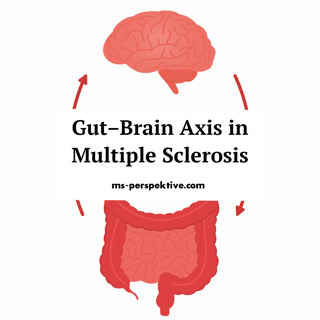
#171: The Gut-Brain Axis in Multiple Sclerosis. Interview with Prof. Dr. Anne-Katrin Pröbstel

#171: The Gut-Brain Axis in Multiple Sclerosis. Interview with Prof. Dr. Anne-Katrin Pröbstel

The gut–brain axis in multiple sclerosis is an exciting field of research that connects the gut microbiome, immune system and central nervous system. In this interview, Prof. Dr. Anne-Katrin Pröbstel ...

17 Kesä 19min

Suosittua kategoriassa Koulutus

rss-murhan-anatomia
psykopodiaa-podcast
voi-hyvin-meditaatiot-2
rss-arkea-ja-aurinkoa-podcast-espanjasta
rss-vapaudu-voimaasi
kesken
adhd-podi
ilona-rauhala
rss-liian-kuuma-peruna
aamupore
jari-sarasvuo-podcast
rss-koira-haudattuna
psykologia
rss-hereilla
leikitaanko-laakaria
rss-tietoinen-yhteys-podcast-2
rahapuhetta
rss-niinku-asia-on
aamukahvilla
rss-metropolia-ammattikorkeakoulu