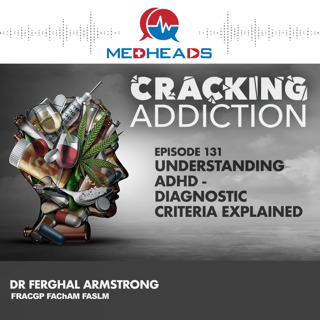
Understanding ADHD: Diagnostic Criteria Explained
Cracking Addiction28 Helmi 2024

Understanding ADHD: Diagnostic Criteria Explained

Dr. Ferghal Armstrong and Dr. Manu Bhatnagar dissect the diagnostic criteria for ADHD, shedding light on the nuanced symptoms and the importance of a comprehensive assessment. By exploring the specific domain requirements, exclusion criteria, and subtypes of ADHD, they provide a deeper understanding of the diagnosis process, particularly in different age groups. The episode offers valuable insights for clinicians, educators, and individuals looking to understand ADHD and its impact on daily life.

Episode focus keyword: ADHD diagnostic criteria


Key points:


1. Diagnostic Criteria for ADHD: Dr. Bhatnagar explains the use of DSM-5 criteria for diagnosing ADHD in Australia, emphasizing the longstanding nature of the symptoms and the retrospective diagnosis in adults.


2. Age Considerations: The discussion delves into the importance of symptoms appearing before the age of twelve, with Dr. Armstrong emphasising the need for a collateral history from primary school to ascertain symptoms across multiple domains.


3. Domain Requirements: Dr. Bhatnagar elaborates on the need for symptoms to manifest in more than two settings, such as school, home, and hobbies, influencing academic, social, and personal functioning.


Learning outcomes:


1. Understanding Diagnostic Criteria: Gain a comprehensive understanding of the DSM-5 criteria used for diagnosing ADHD, including the duration and pervasive nature of symptoms.


2. Age-Specific Considerations: Learn about the significance of symptoms appearing before the age of twelve and the role of collateral history in diagnosing ADHD in different age groups.


3. Impact of Symptoms: Understand the impact of symptoms across multiple domains and settings, including academic, social, and personal aspects of an individual's life.


Actionable takeaways:


1. Educators and Parents: When observing potential ADHD symptoms in children, seek a collateral history from school and home to understand the pervasive nature of symptoms.


2. Clinicians: Conduct a thorough assessment and use a natural history approach to gauge the impact of symptoms on an individual's daily functioning, particularly in academic and social settings.


Quote: "ADHD says nothing about intelligence; it says nothing about rules. It's about being able to sit there and give focus to those things." - Dr. Bhatnagar


Hashtags: #ADHD #MentalHealth #DiagnosticCriteria #ChildhoodDevelopment #Neurodiversity #ClinicalAssessment #DSM5 #PsychiatricDisorders #PatientCare #Meducate

Jaksot(238)

Dopamine, Relapse, and Recovery: Why Addiction Needs Long-Term Management

Dopamine, Relapse, and Recovery: Why Addiction Needs Long-Term Management

A lot of people still think addiction recovery is just about willpower.But addiction neuroscience tells a different story: dopamine, the reward system, and relapse risk all help explain why recovery o...

25 Maalis 5min

Why You Can Be Detoxed and Still Addicted

Why You Can Be Detoxed and Still Addicted

Addiction neuroscience, dopamine, cravings: detox ends withdrawal, but it does not end addiction.The MythA common myth in addiction recovery is that once detox is over, the problem is solved. Many peo...

18 Maalis 5min

Relapse Happens to Everyone: Here's the Science Why - Addiction Basics 06

Relapse Happens to Everyone: Here's the Science Why - Addiction Basics 06

Dr. Fergal Armstrong reframes relapse in addiction, explaining why it's not a personal failure but a common part of the recovery journey, comparable to chronic illnesses. Understanding the neuroscienc...

11 Maalis 5min

The Science of Withdrawal: What's Actually Happening? - Addiction Basics #5

The Science of Withdrawal: What's Actually Happening? - Addiction Basics #5

Withdrawal is one of the most feared parts of addiction recovery.But neuroscience shows something important:Withdrawal isn’t a failure of willpower — it’s the brain restoring balance after long-term c...

4 Maalis 5min

Addiction vs Dependence vs Tolerance: The Critical Medical Difference

Addiction vs Dependence vs Tolerance: The Critical Medical Difference

🚨 TOLERANCE ≠ ADDICTION 🚨Most people — even healthcare professionals — use these terms incorrectly.And that confusion is hurting patients.In this episode, we break down:🧠 The real definition of add...

25 Helmi 5min

Why Buprenorphine Is Safer Than Full Opioid Agonists

Why Buprenorphine Is Safer Than Full Opioid Agonists

Most people think methadone is the only real option for opioid addiction.Wrong.Buprenorphine — especially long-acting injectable depot — is flipping the entire system upside down.No daily pharmacy vis...

23 Helmi 28min

How Cravings Work: Limbic System vs Prefrontal Cortex - Addiction Basics EP3

How Cravings Work: Limbic System vs Prefrontal Cortex - Addiction Basics EP3

Addiction neuroscience explains why wanting to quit isn’t the same as being able to quit. Dopamine reshapes the brain’s reward system.In Episode 3 of Addiction Basics, we tackle one of the most painfu...

18 Helmi 6min

Dopamine and Addiction: The Science of Cravings - Addiction Basics EP2

Dopamine and Addiction: The Science of Cravings - Addiction Basics EP2

Addiction neuroscience explained. Dopamine, cravings, brain recovery, and neuroplasticity — backed by research.If you’ve ever wondered how addiction works in the brain, this is the science most people...

12 Helmi 6min

Suosittua kategoriassa Terveys ja hyvinvointi

unicast
rss-hanna-tikander
voi-hyvin-meditaatiot-2
tiedenaiset-podcast
rss-pitaisko-erota
psykopodiaa-podcast
rss-narsisti
rss-kuumilla-aalloilla
vakeva-elama-viisaampi-mieli-vahvempi-keho
puhu-muru
junnut-pelissa
meditaatiot-suomeksi
rss-pt-paahtio
rss-kyykkya-ja-kuoharia
terapiassa
fitnessvastaanotto
katilon-kahvitunti
selviytyjat-tarinoita-elamasta
paritellen
rss-seuraava-potilas