

#32 - Bryan Caplan on whether his Case Against Education holds up, totalitarianism, & open borders

#32 - Bryan Caplan on whether his Case Against Education holds up, totalitarianism, & open borders

Bryan Caplan’s claim in *The Case Against Education* is striking: education doesn’t teach people much, we use little of what we learn, and college is mostly about trying to seem smarter than other people - so the government should slash education funding.

It’s a dismaying - almost profane - idea, and one people are inclined to dismiss out of hand. But having read the book, I have to admit that Bryan can point to a surprising amount of evidence in his favour.

After all, imagine this dilemma: you can have either a Princeton education without a diploma, or a Princeton diploma without an education. Which is the bigger benefit of college - learning or convincing people you’re smart? It’s not so easy to say.

For this interview, I searched for the best counterarguments I could find and challenged Bryan on what seem like his weakest or most controversial claims.

Wouldn’t defunding education be especially bad for capable but low income students? If you reduced funding for education, wouldn’t that just lower prices, and not actually change the number of years people study? Is it really true that students who drop out in their final year of college earn about the same as people who never go to college at all?

What about studies that show that extra years of education boost IQ scores? And surely the early years of primary school, when you learn reading and arithmetic, *are* useful even if college isn’t.

I then get his advice on who should study, what they should study, and where they should study, if he’s right that college is mostly about separating yourself from the pack.

Full transcript, links to learn more, and summary of key points.

We then venture into some of Bryan’s other unorthodox views - like that immigration restrictions are a human rights violation, or that we should worry about the risk of global totalitarianism.

Bryan is a Professor of Economics at George Mason University, and a blogger at *EconLog*. He is also the author of *Selfish Reasons to Have More Kids: Why Being a Great Parent is Less Work and More Fun Than You Think*, and *The Myth of the Rational Voter: Why Democracies Choose Bad Policies*.

Get this episode by subscribing to our podcast on the world’s most pressing problems and how to solve them: type *80,000 Hours* into your podcasting app.

In this lengthy interview, Rob and Bryan cover:

* How worried should we be about China’s new citizen ranking system as a means of authoritarian rule?
* How will advances in surveillance technology impact a government’s ability to rule absolutely?
* Does more global coordination make us safer, or more at risk?
* Should the push for open borders be a major cause area for effective altruism?
* Are immigration restrictions a human rights violation?
* Why aren’t libertarian-minded people more focused on modern slavery?
* Should altruists work on criminal justice reform or reducing land use regulations?
* What’s the greatest art form: opera, or Nicki Minaj?
* What are the main implications of Bryan’s thesis for society?
* Is elementary school more valuable than university?
* What does Bryan think are the best arguments against his view?
* Do years of education affect political affiliation?
* How do people really improve themselves and their circumstances?
* Who should and who shouldn’t do a masters or PhD?
* The value of teaching foreign languages in school
* Are there some skills people can develop that have wide applicability?

Get this episode by subscribing: search for '80,000 Hours' in your podcasting app.

The 80,000 Hours Podcast is produced by Keiran Harris.

Jaksot(325)

AI might let a few people control everything — permanently (article by Rose Hadshar)

AI might let a few people control everything — permanently (article by Rose Hadshar)

Power is already concentrated today: over 800 million people live on less than $3 a day, the three richest men in the world are worth over $1 trillion, and almost six billion people live in countries ...

12 Joulu 20251h
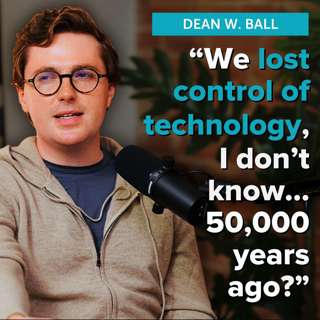
#230 – Dean Ball on how AI is a huge deal — but we shouldn’t regulate it yet

#230 – Dean Ball on how AI is a huge deal — but we shouldn’t regulate it yet

Former White House staffer Dean Ball thinks it's very likely some form of 'superintelligence' arrives in under 20 years. He thinks AI being used for bioweapon research is "a real threat model, obvious...

10 Joulu 20252h 54min

#229 – Marius Hobbhahn on the race to solve AI scheming before models go superhuman

#229 – Marius Hobbhahn on the race to solve AI scheming before models go superhuman

We often worry about AI models “hallucinating” or making honest mistakes. But what happens when a model knows the truth, but decides to deceive you anyway to achieve a goal of its own? This isn’t sci-...

3 Joulu 20253h 3min

Rob & Luisa chat kids, the 2016 fertility crash, and how the 50s invented parenting that makes us miserable

Rob & Luisa chat kids, the 2016 fertility crash, and how the 50s invented parenting that makes us miserable

Global fertility rates aren’t just falling: the rate of decline is accelerating. From 2006 to 2016, fertility dropped gradually, but since 2016 the rate of decline has increased 4.5-fold. In many weal...

25 Marras 20251h 59min

#228 – Eileen Yam on how we're completely out of touch with what the public thinks about AI

#228 – Eileen Yam on how we're completely out of touch with what the public thinks about AI

If you work in AI, you probably think it’s going to boost productivity, create wealth, advance science, and improve your life. If you’re a member of the American public, you probably strongly disagree...

20 Marras 20251h 43min

OpenAI: The nonprofit refuses to be killed (with Tyler Whitmer)

OpenAI: The nonprofit refuses to be killed (with Tyler Whitmer)

Last December, the OpenAI business put forward a plan to completely sideline its nonprofit board. But two state attorneys general have now blocked that effort and kept that board very much alive and k...

11 Marras 20251h 56min
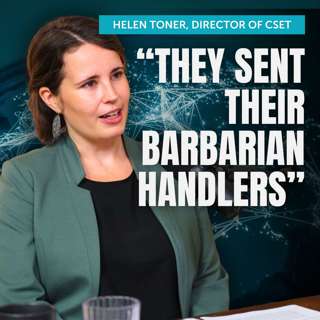
#227 – Helen Toner on the geopolitics of AGI in China and the Middle East

#227 – Helen Toner on the geopolitics of AGI in China and the Middle East

With the US racing to develop AGI and superintelligence ahead of China, you might expect the two countries to be negotiating how they’ll deploy AI, including in the military, without coming to blows. ...

5 Marras 20252h 20min

#226 – Holden Karnofsky on unexploited opportunities to make AI safer — and all his AGI takes

#226 – Holden Karnofsky on unexploited opportunities to make AI safer — and all his AGI takes

For years, working on AI safety usually meant theorising about the ‘alignment problem’ or trying to convince other people to give a damn. If you could find any way to help, the work was frustrating an...

30 Loka 20254h 30min

Suosittua kategoriassa Koulutus

rss-murhan-anatomia
rss-narsisti
voi-hyvin-meditaatiot-2
psykopodiaa-podcast
adhd-podi
rss-niinku-asia-on
rss-valo-minussa-2
rss-rahamania
rss-vapaudu-voimaasi
mielipaivakirja
aamukahvilla
rahapuhetta
kesken
psykologia
rss-koira-haudattuna
ilona-rauhala
nakokulmia-rikollisuudesta-irrottautumiseen
rss-keskeneraiset-aidit
rss-tietoinen-yhteys-podcast-2
rss-arkea-ja-aurinkoa-podcast-espanjasta