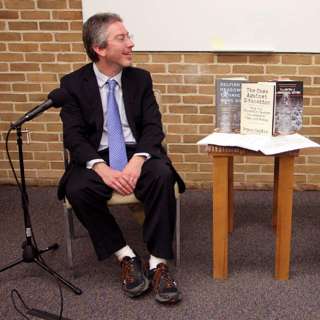

#32 - Bryan Caplan on whether his Case Against Education holds up, totalitarianism, & open borders

#32 - Bryan Caplan on whether his Case Against Education holds up, totalitarianism, & open borders

Bryan Caplan’s claim in *The Case Against Education* is striking: education doesn’t teach people much, we use little of what we learn, and college is mostly about trying to seem smarter than other people - so the government should slash education funding.

It’s a dismaying - almost profane - idea, and one people are inclined to dismiss out of hand. But having read the book, I have to admit that Bryan can point to a surprising amount of evidence in his favour.

After all, imagine this dilemma: you can have either a Princeton education without a diploma, or a Princeton diploma without an education. Which is the bigger benefit of college - learning or convincing people you’re smart? It’s not so easy to say.

For this interview, I searched for the best counterarguments I could find and challenged Bryan on what seem like his weakest or most controversial claims.

Wouldn’t defunding education be especially bad for capable but low income students? If you reduced funding for education, wouldn’t that just lower prices, and not actually change the number of years people study? Is it really true that students who drop out in their final year of college earn about the same as people who never go to college at all?

What about studies that show that extra years of education boost IQ scores? And surely the early years of primary school, when you learn reading and arithmetic, *are* useful even if college isn’t.

I then get his advice on who should study, what they should study, and where they should study, if he’s right that college is mostly about separating yourself from the pack.

Full transcript, links to learn more, and summary of key points.

We then venture into some of Bryan’s other unorthodox views - like that immigration restrictions are a human rights violation, or that we should worry about the risk of global totalitarianism.

Bryan is a Professor of Economics at George Mason University, and a blogger at *EconLog*. He is also the author of *Selfish Reasons to Have More Kids: Why Being a Great Parent is Less Work and More Fun Than You Think*, and *The Myth of the Rational Voter: Why Democracies Choose Bad Policies*.

Get this episode by subscribing to our podcast on the world’s most pressing problems and how to solve them: type *80,000 Hours* into your podcasting app.

In this lengthy interview, Rob and Bryan cover:

* How worried should we be about China’s new citizen ranking system as a means of authoritarian rule?
* How will advances in surveillance technology impact a government’s ability to rule absolutely?
* Does more global coordination make us safer, or more at risk?
* Should the push for open borders be a major cause area for effective altruism?
* Are immigration restrictions a human rights violation?
* Why aren’t libertarian-minded people more focused on modern slavery?
* Should altruists work on criminal justice reform or reducing land use regulations?
* What’s the greatest art form: opera, or Nicki Minaj?
* What are the main implications of Bryan’s thesis for society?
* Is elementary school more valuable than university?
* What does Bryan think are the best arguments against his view?
* Do years of education affect political affiliation?
* How do people really improve themselves and their circumstances?
* Who should and who shouldn’t do a masters or PhD?
* The value of teaching foreign languages in school
* Are there some skills people can develop that have wide applicability?

Get this episode by subscribing: search for '80,000 Hours' in your podcasting app.

The 80,000 Hours Podcast is produced by Keiran Harris.

Jaksot(325)

#225 – Daniel Kokotajlo on what a hyperspeed robot economy might look like

#225 – Daniel Kokotajlo on what a hyperspeed robot economy might look like

When Daniel Kokotajlo talks to security experts at major AI labs, they tell him something chilling: “Of course we’re probably penetrated by the CCP already, and if they really wanted something, they c...

27 Loka 20252h 12min
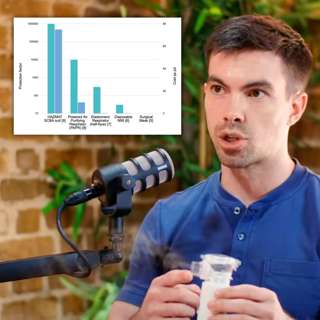
#224 – There's a cheap and low-tech way to save humanity from any engineered disease | Andrew Snyder-Beattie

#224 – There's a cheap and low-tech way to save humanity from any engineered disease | Andrew Snyder-Beattie

Conventional wisdom is that safeguarding humanity from the worst biological risks — microbes optimised to kill as many as possible — is difficult bordering on impossible, making bioweapons humanity’s ...

2 Loka 20252h 31min

Inside the Biden admin’s AI policy approach | Jake Sullivan, Biden’s NSA | via The Cognitive Revolution

Inside the Biden admin’s AI policy approach | Jake Sullivan, Biden’s NSA | via The Cognitive Revolution

Jake Sullivan was the US National Security Advisor from 2021-2025. He joined our friends on The Cognitive Revolution podcast in August to discuss AI as a critical national security issue. We thought i...

26 Syys 20251h 5min
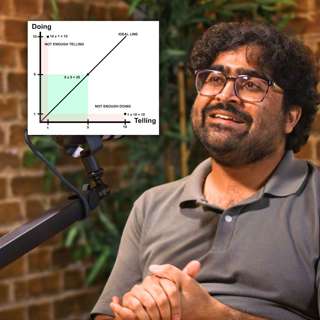
#223 – Neel Nanda on leading a Google DeepMind team at 26 – and advice if you want to work at an AI company (part 2)

#223 – Neel Nanda on leading a Google DeepMind team at 26 – and advice if you want to work at an AI company (part 2)

At 26, Neel Nanda leads an AI safety team at Google DeepMind, has published dozens of influential papers, and mentored 50 junior researchers — seven of whom now work at major AI companies. His secret?...

15 Syys 20251h 46min
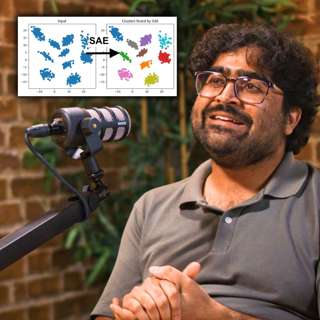
#222 – Can we tell if an AI is loyal by reading its mind? DeepMind's Neel Nanda (part 1)

#222 – Can we tell if an AI is loyal by reading its mind? DeepMind's Neel Nanda (part 1)

We don’t know how AIs think or why they do what they do. Or at least, we don’t know much. That fact is only becoming more troubling as AIs grow more capable and appear on track to wield enormous cultu...

8 Syys 20253h 1min

#221 – Kyle Fish on the most bizarre findings from 5 AI welfare experiments

#221 – Kyle Fish on the most bizarre findings from 5 AI welfare experiments

What happens when you lock two AI systems in a room together and tell them they can discuss anything they want?According to experiments run by Kyle Fish — Anthropic’s first AI welfare researcher — som...

28 Elo 20252h 28min

How not to lose your job to AI (article by Benjamin Todd)

How not to lose your job to AI (article by Benjamin Todd)

About half of people are worried they’ll lose their job to AI. They’re right to be concerned: AI can now complete real-world coding tasks on GitHub, generate photorealistic video, drive a taxi more sa...

31 Heinä 202551min

Rebuilding after apocalypse: What 13 experts say about bouncing back

Rebuilding after apocalypse: What 13 experts say about bouncing back

What happens when civilisation faces its greatest tests?This compilation brings together insights from researchers, defence experts, philosophers, and policymakers on humanity’s ability to survive and...

15 Heinä 20254h 26min

Suosittua kategoriassa Koulutus

rss-murhan-anatomia
voi-hyvin-meditaatiot-2
rss-narsisti
psykopodiaa-podcast
adhd-podi
rss-rahamania
rss-valo-minussa-2
rss-vapaudu-voimaasi
rss-niinku-asia-on
mielipaivakirja
rss-uskonto-on-tylsaa
aamukahvilla
rss-duodecim-lehti
ilona-rauhala
kesken
psykologia
rss-eron-alkemiaa
rss-koira-haudattuna
rss-arkea-ja-aurinkoa-podcast-espanjasta
ihminen-tavattavissa-tommy-hellsten-instituutti