#36 - Tanya Singh on ending the operations management bottleneck in effective altruism
80,000 Hours Podcast11 Heinä 2018

#36 - Tanya Singh on ending the operations management bottleneck in effective altruism

Almost nobody is able to do groundbreaking physics research themselves, and by the time his brilliance was appreciated, Einstein was hardly limited by funding. But what if you could find a way to unlock the secrets of the universe like Einstein nonetheless?

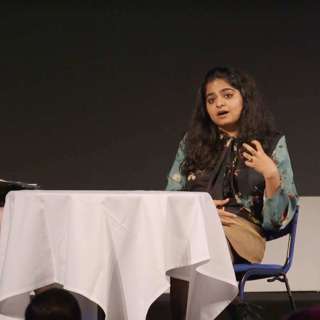
Today’s guest, Tanya Singh, sees herself as doing something like that every day. She’s Executive Assistant to one of her intellectual heroes who she believes is making a huge contribution to improving the world: Professor Bostrom at Oxford University's Future of Humanity Institute (FHI).

She couldn’t get more work out of Bostrom with extra donations, as his salary is already easily covered. But with her superior abilities as an Executive Assistant, Tanya frees up hours of his time every week, essentially ‘buying’ more Bostrom in a way nobody else can. She also help manage FHI more generally, in so doing freeing up more than an hour of other staff time for each hour she works. This gives her the leverage to do more good than other people or other positions.

In our previous episode, Tara Mac Aulay objected to viewing operations work as predominately a way of freeing up other people's time:

“A good ops person doesn’t just allow you to scale linearly, but also can help figure out bottlenecks and solve problems such that the organization is able to do qualitatively different work, rather than just increase the total quantity”, Tara said.

Full transcript, summary and links to learn more.

Tara’s right that buying time for people at the top of their field is just one path to impact, though it’s one Tanya says she finds highly motivating. Other paths include enabling complex projects that would otherwise be impossible, allowing you to hire and grow much faster, and preventing disasters that could bring down a whole organisation - all things that Tanya does at FHI as well.

In today’s episode we discuss all of those approaches, as we dive deeper into the broad class of roles we refer to as ‘operations management’. We cover the arguments we made in ‘Why operations management is one of the biggest bottlenecks in effective altruism’, as well as:

* Does one really need to hire people aligned with an org’s mission to work in ops?
* The most notable operations successes in the 20th Century.
* What’s it like being the only operations person in an org?
* The role of a COO as compared to a CEO, and the options for career progression.
* How do good operation teams allow orgs to scale quickly?
* How much do operations staff get to set their org’s strategy?
* Which personal weaknesses aren’t a huge problem in operations?
* How do you automate processes? Why don’t most people do this?
* Cultural differences between Britain and India where Tanya grew up.

Get this episode by subscribing to our podcast on the world’s most pressing problems and how to solve them: type 80,000 Hours into your podcasting app. Or read the transcript below.

The 80,000 Hours podcast is produced by Keiran Harris.

Jaksot(324)

#224 – There's a cheap and low-tech way to save humanity from any engineered disease | Andrew Snyder-Beattie

#224 – There's a cheap and low-tech way to save humanity from any engineered disease | Andrew Snyder-Beattie

Conventional wisdom is that safeguarding humanity from the worst biological risks — microbes optimised to kill as many as possible — is difficult bordering on impossible, making bioweapons humanity’s ...

2 Loka 20252h 31min
Inside the Biden admin’s AI policy approach | Jake Sullivan, Biden’s NSA | via The Cognitive Revolution

Inside the Biden admin’s AI policy approach | Jake Sullivan, Biden’s NSA | via The Cognitive Revolution

Jake Sullivan was the US National Security Advisor from 2021-2025. He joined our friends on The Cognitive Revolution podcast in August to discuss AI as a critical national security issue. We thought i...

26 Syys 20251h 5min
#223 – Neel Nanda on leading a Google DeepMind team at 26 – and advice if you want to work at an AI company (part 2)

#223 – Neel Nanda on leading a Google DeepMind team at 26 – and advice if you want to work at an AI company (part 2)

At 26, Neel Nanda leads an AI safety team at Google DeepMind, has published dozens of influential papers, and mentored 50 junior researchers — seven of whom now work at major AI companies. His secret?...

15 Syys 20251h 46min
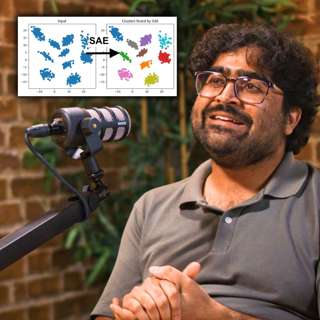
#222 – Can we tell if an AI is loyal by reading its mind? DeepMind's Neel Nanda (part 1)

#222 – Can we tell if an AI is loyal by reading its mind? DeepMind's Neel Nanda (part 1)

We don’t know how AIs think or why they do what they do. Or at least, we don’t know much. That fact is only becoming more troubling as AIs grow more capable and appear on track to wield enormous cultu...

8 Syys 20253h 1min

#221 – Kyle Fish on the most bizarre findings from 5 AI welfare experiments

#221 – Kyle Fish on the most bizarre findings from 5 AI welfare experiments

What happens when you lock two AI systems in a room together and tell them they can discuss anything they want?According to experiments run by Kyle Fish — Anthropic’s first AI welfare researcher — som...

28 Elo 20252h 28min

How not to lose your job to AI (article by Benjamin Todd)

How not to lose your job to AI (article by Benjamin Todd)

About half of people are worried they’ll lose their job to AI. They’re right to be concerned: AI can now complete real-world coding tasks on GitHub, generate photorealistic video, drive a taxi more sa...

31 Heinä 202551min

Rebuilding after apocalypse: What 13 experts say about bouncing back

Rebuilding after apocalypse: What 13 experts say about bouncing back

What happens when civilisation faces its greatest tests?This compilation brings together insights from researchers, defence experts, philosophers, and policymakers on humanity’s ability to survive and...

15 Heinä 20254h 26min

#220 – Ryan Greenblatt on the 4 most likely ways for AI to take over, and the case for and against AGI in <8 years

#220 – Ryan Greenblatt on the 4 most likely ways for AI to take over, and the case for and against AGI in <8 years

Ryan Greenblatt — lead author on the explosive paper “Alignment faking in large language models” and chief scientist at Redwood Research — thinks there’s a 25% chance that within four years, AI will b...

8 Heinä 20252h 50min

Suosittua kategoriassa Koulutus

rss-murhan-anatomia
rss-narsisti
voi-hyvin-meditaatiot-2
psykopodiaa-podcast
rss-niinku-asia-on
adhd-podi
rss-vapaudu-voimaasi
rss-rahamania
psykologia
rss-valo-minussa-2
rss-uskonto-on-tylsaa
rss-duodecim-lehti
kesken
rss-koira-haudattuna
koulu-podcast-2
aamukahvilla
rss-liian-kuuma-peruna
rss-luonnollinen-synnytys-podcast
rss-tietoinen-yhteys-podcast-2
rss-arkea-ja-aurinkoa-podcast-espanjasta