
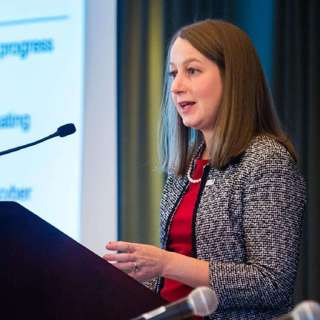
#36 - Tanya Singh on ending the operations management bottleneck in effective altruism
80,000 Hours Podcast11 Heinä 2018

#36 - Tanya Singh on ending the operations management bottleneck in effective altruism

Almost nobody is able to do groundbreaking physics research themselves, and by the time his brilliance was appreciated, Einstein was hardly limited by funding. But what if you could find a way to unlock the secrets of the universe like Einstein nonetheless?

Today’s guest, Tanya Singh, sees herself as doing something like that every day. She’s Executive Assistant to one of her intellectual heroes who she believes is making a huge contribution to improving the world: Professor Bostrom at Oxford University's Future of Humanity Institute (FHI).

She couldn’t get more work out of Bostrom with extra donations, as his salary is already easily covered. But with her superior abilities as an Executive Assistant, Tanya frees up hours of his time every week, essentially ‘buying’ more Bostrom in a way nobody else can. She also help manage FHI more generally, in so doing freeing up more than an hour of other staff time for each hour she works. This gives her the leverage to do more good than other people or other positions.

In our previous episode, Tara Mac Aulay objected to viewing operations work as predominately a way of freeing up other people's time:

“A good ops person doesn’t just allow you to scale linearly, but also can help figure out bottlenecks and solve problems such that the organization is able to do qualitatively different work, rather than just increase the total quantity”, Tara said.

Full transcript, summary and links to learn more.

Tara’s right that buying time for people at the top of their field is just one path to impact, though it’s one Tanya says she finds highly motivating. Other paths include enabling complex projects that would otherwise be impossible, allowing you to hire and grow much faster, and preventing disasters that could bring down a whole organisation - all things that Tanya does at FHI as well.

In today’s episode we discuss all of those approaches, as we dive deeper into the broad class of roles we refer to as ‘operations management’. We cover the arguments we made in ‘Why operations management is one of the biggest bottlenecks in effective altruism’, as well as:

* Does one really need to hire people aligned with an org’s mission to work in ops?
* The most notable operations successes in the 20th Century.
* What’s it like being the only operations person in an org?
* The role of a COO as compared to a CEO, and the options for career progression.
* How do good operation teams allow orgs to scale quickly?
* How much do operations staff get to set their org’s strategy?
* Which personal weaknesses aren’t a huge problem in operations?
* How do you automate processes? Why don’t most people do this?
* Cultural differences between Britain and India where Tanya grew up.

Get this episode by subscribing to our podcast on the world’s most pressing problems and how to solve them: type 80,000 Hours into your podcasting app. Or read the transcript below.

The 80,000 Hours podcast is produced by Keiran Harris.

Jaksot(332)

#19 - Samantha Pitts-Kiefer on working next to the White House trying to prevent nuclear war

#19 - Samantha Pitts-Kiefer on working next to the White House trying to prevent nuclear war

Rogue elements within a state’s security forces enrich dozens of kilograms of uranium. It’s then assembled into a crude nuclear bomb. The bomb is transported on a civilian aircraft to Washington D.C, ...

14 Helmi 20181h 4min
#18 - Ofir Reich on using data science to end poverty & the spurious action-inaction distinction

#18 - Ofir Reich on using data science to end poverty & the spurious action-inaction distinction

Ofir Reich started out doing math in the military, before spending 8 years in tech startups - but then made a sharp turn to become a data scientist focussed on helping the global poor. At UC Berkeley...

31 Tammi 20181h 18min

#17 - Will MacAskill on moral uncertainty, utilitarianism & how to avoid being a moral monster

#17 - Will MacAskill on moral uncertainty, utilitarianism & how to avoid being a moral monster

Immanuel Kant is a profoundly influential figure in modern philosophy, and was one of the earliest proponents for universal democracy and international cooperation. He also thought that women have no ...

19 Tammi 20181h 52min

#16 - Michelle Hutchinson on global priorities research & shaping the ideas of intellectuals

#16 - Michelle Hutchinson on global priorities research & shaping the ideas of intellectuals

In the 40s and 50s neoliberalism was a fringe movement within economics. But by the 80s it had become a dominant school of thought in public policy, and achieved major policy changes across the Englis...

22 Joulu 201755min
#15 - Phil Tetlock on how chimps beat Berkeley undergrads and when it’s wise to defer to the wise

#15 - Phil Tetlock on how chimps beat Berkeley undergrads and when it’s wise to defer to the wise

Prof Philip Tetlock is a social science legend. Over forty years he has researched whose predictions we can trust, whose we can’t and why - and developed methods that allow all of us to be better at p...

20 Marras 20171h 24min
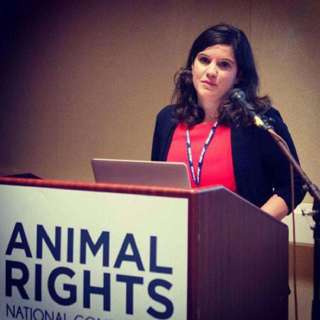
#14 - Sharon Nunez & Jose Valle on going undercover to expose animal abuse

#14 - Sharon Nunez & Jose Valle on going undercover to expose animal abuse

What if you knew that ducks were being killed with pitchforks? Rabbits dumped alive into containers? Or pigs being strangled with forklifts? Would you be willing to go undercover to expose the crime? ...

13 Marras 20171h 25min
#13 - Claire Walsh on testing which policies work & how to get governments to listen to the results

#13 - Claire Walsh on testing which policies work & how to get governments to listen to the results

In both rich and poor countries, government policy is often based on no evidence at all and many programs don’t work. This has particularly harsh effects on the global poor - in some countries governm...

31 Loka 201752min
#12 - Beth Cameron works to stop you dying in a pandemic. Here’s what keeps her up at night.

#12 - Beth Cameron works to stop you dying in a pandemic. Here’s what keeps her up at night.

“When you're in the middle of a crisis and you have to ask for money, you're already too late.” That’s Dr Beth Cameron, who leads Global Biological Policy and Programs at the Nuclear Threat Initiative...

25 Loka 20171h 45min

Suosittua kategoriassa Koulutus

rss-murhan-anatomia
psykopodiaa-podcast
voi-hyvin-meditaatiot-2
adhd-podi
psykologia
rss-valo-minussa-2
rss-tietoinen-yhteys-podcast-2
rss-rahamania
rss-niinku-asia-on
kesken
rss-arkea-ja-aurinkoa-podcast-espanjasta
rahapuhetta
rss-liian-kuuma-peruna
rss-narsisti
dear-ladies
rss-eron-alkemiaa
rss-vapaudu-voimaasi
leikitaanko-laakaria
aamukahvilla
rss-uskonto-on-tylsaa