#41 - David Roodman on incarceration, geomagnetic storms, & becoming a world-class researcher

#41 - David Roodman on incarceration, geomagnetic storms, & becoming a world-class researcher

With 698 inmates per 100,000 citizens, the U.S. is by far the leader among large wealthy nations in incarceration. But what effect does imprisonment actually have on crime?

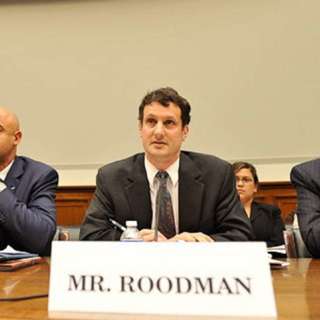
According to David Roodman, Senior Advisor to the Open Philanthropy Project, the marginal effect is zero.

* 80,000 HOURS IMPACT SURVEY - Let me know how this show has helped you with your career.
* ROB'S AUDIOBOOK RECOMMENDATIONS

This stunning rebuke to the American criminal justice system comes from the man Holden Karnofsky’s called "the gold standard for in-depth quantitative research", whose other investigations include the risk of geomagnetic storms, whether deworming improves health and test scores, and the development impacts of microfinance.

Links to learn more, summary and full transcript.

The effects of crime can be split into three categories; before, during, and after.

Does having tougher sentences deter people from committing crime?

After reviewing studies on gun laws and ‘three strikes’ in California, David concluded that the effect of deterrence is zero.

Does imprisoning more people reduce crime by incapacitating potential offenders?

Here he says yes, noting that crimes like motor vehicle theft have gone up in a way that seems pretty clearly connected with recent Californian criminal justice reforms (though the effect on violent crime is far lower).

Finally, do the after-effects of prison make you more or less likely to commit future crimes?

This one is more complicated.

Concerned that he was biased towards a comfortable position against incarceration, David did a cost-benefit analysis using both his favored reading of the evidence and the devil's advocate view; that there is deterrence and that the after-effects are beneficial.

For the devil’s advocate position David used the highest assessment of the harm caused by crime, which suggests a year of prison prevents about $92,000 in crime. But weighed against a lost year of liberty, valued at $50,000, plus the cost of operating prisons, the numbers came out exactly the same.

So even using the least-favorable cost-benefit valuation of the least favorable reading of the evidence -- it just breaks even.

The argument for incarceration melts further when you consider the significant crime that occurs within prisons, de-emphasised because of a lack of data and a perceived lack of compassion for inmates.

In today’s episode we discuss how to conduct such impactful research, and how to proceed having reached strong conclusions.

We also cover:

* How do you become a world class researcher? What kinds of character traits are important?
* Are academics aware of following perverse incentives?
* What’s involved in data replication? How often do papers replicate?
* The politics of large orgs vs. small orgs
* Geomagnetic storms as a potential cause area
* How much does David rely on interviews with experts?
* The effects of deworming on child health and test scores
* Should we have more ‘data vigilantes’?
* What are David’s critiques of effective altruism?
* What are the pros and cons of starting your career in the think tank world?

Get this episode by subscribing to our podcast on the world’s most pressing problems and how to solve them: type 80,000 Hours into your podcasting app. Or read the transcript below.

The 80,000 Hours Podcast is produced by Keiran Harris.

Jaksot(325)

#106 – Cal Newport on an industrial revolution for office work

#106 – Cal Newport on an industrial revolution for office work

If you wanted to start a university department from scratch, and attract as many superstar researchers as possible, what’s the most attractive perk you could offer?How about just not needing an email ...

28 Heinä 20211h 53min
#105 – Alexander Berger on improving global health and wellbeing in clear and direct ways

#105 – Alexander Berger on improving global health and wellbeing in clear and direct ways

The effective altruist research community tries to identify the highest impact things people can do to improve the world. Unsurprisingly, given the difficulty of such a massive and open-ended project,...

12 Heinä 20212h 54min

#104 – Pardis Sabeti on the Sentinel system for detecting and stopping pandemics

#104 – Pardis Sabeti on the Sentinel system for detecting and stopping pandemics

When the first person with COVID-19 went to see a doctor in Wuhan, nobody could tell that it wasn’t a familiar disease like the flu — that we were dealing with something new. How much death and destru...

29 Kesä 20212h 20min
#103 – Max Roser on building the world's best source of COVID-19 data at Our World in Data

#103 – Max Roser on building the world's best source of COVID-19 data at Our World in Data

History is filled with stories of great people stepping up in times of crisis. Presidents averting wars; soldiers leading troops away from certain death; data scientists sleeping on the office floor t...

21 Kesä 20212h 22min
#102 – Tom Moynihan on why prior generations missed some of the biggest priorities of all

#102 – Tom Moynihan on why prior generations missed some of the biggest priorities of all

It can be tough to get people to truly care about reducing existential risks today. But spare a thought for the longtermist of the 17th century: they were surrounded by people who thought extinction w...

11 Kesä 20213h 56min
#101 – Robert Wright on using cognitive empathy to save the world

#101 – Robert Wright on using cognitive empathy to save the world

In 2003, Saddam Hussein refused to let Iraqi weapons scientists leave the country to be interrogated. Given the overwhelming domestic support for an invasion at the time, most key figures in the U.S. ...

28 Touko 20211h 36min
#100 – Having a successful career with depression, anxiety and imposter syndrome

#100 – Having a successful career with depression, anxiety and imposter syndrome

Today's episode is one of the most remarkable and really, unique, pieces of content we’ve ever produced (and I can say that because I had almost nothing to do with making it!). The producer of this ...

19 Touko 20212h 51min
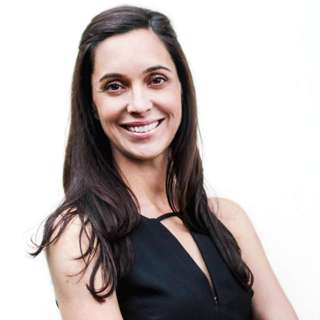
#99 – Leah Garcés on turning adversaries into allies to change the chicken industry

#99 – Leah Garcés on turning adversaries into allies to change the chicken industry

For a chance to prevent enormous amounts of suffering, would you be brave enough to drive five hours to a remote location to meet a man who seems likely to be your enemy, knowing that it might be an a...

13 Touko 20212h 26min

Suosittua kategoriassa Koulutus

rss-murhan-anatomia
voi-hyvin-meditaatiot-2
rss-narsisti
psykopodiaa-podcast
adhd-podi
rss-rahamania
rss-valo-minussa-2
rss-vapaudu-voimaasi
rss-niinku-asia-on
mielipaivakirja
rss-uskonto-on-tylsaa
aamukahvilla
rss-duodecim-lehti
ilona-rauhala
kesken
psykologia
rss-eron-alkemiaa
rss-koira-haudattuna
rss-arkea-ja-aurinkoa-podcast-espanjasta
ihminen-tavattavissa-tommy-hellsten-instituutti