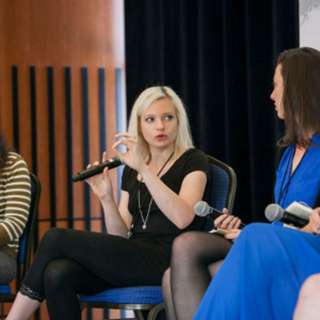

#42 - Amanda Askell on moral empathy, the value of information & the ethics of infinity

#42 - Amanda Askell on moral empathy, the value of information & the ethics of infinity

Consider two familiar moments at a family reunion.

Our host, Uncle Bill, takes pride in his barbecuing skills. But his niece Becky says that she now refuses to eat meat. A groan goes round the table; the family mostly think of this as an annoying picky preference. But if seriously considered as a moral position, as they might if instead Becky were avoiding meat on religious grounds, it would usually receive a very different reaction.

An hour later Bill expresses a strong objection to abortion. Again, a groan goes round the table; the family mostly think that he has no business in trying to foist his regressive preference on anyone. But if considered not as a matter of personal taste, but rather as a moral position - that Bill genuinely believes he’s opposing mass-murder - his comment might start a serious conversation.

Amanda Askell, who recently completed a PhD in philosophy at NYU focused on the ethics of infinity, thinks that we often betray a complete lack of moral empathy. All sides of the political spectrum struggle to get inside the mind of people we disagree with and see issues from their point of view.

Links to learn more, summary and full transcript.

This often happens because of confusion between preferences and moral positions.

Assuming good faith on the part of the person you disagree with, and actually engaging with the beliefs they claim to hold, is perhaps the best remedy for our inability to make progress on controversial issues.

One potential path for progress surrounds contraception; a lot of people who are anti-abortion are also anti-contraception. But they’ll usually think that abortion is much worse than contraception, so why can’t we compromise and agree to have much more contraception available?

According to Amanda, a charitable explanation for this is that people who are anti-abortion and anti-contraception engage in moral reasoning and advocacy based on what, in their minds, is the best of all possible worlds: one where people neither use contraception nor get abortions.

So instead of arguing about abortion and contraception, we could discuss the underlying principle that one should advocate for the best possible world, rather than the best probable world.

Successfully break down such ethical beliefs, absent political toxicity, and it might be possible to actually converge on a key point of agreement.

Today’s episode blends such everyday topics with in-depth philosophy, including:

* What is 'moral cluelessness' and how can we work around it?
* Amanda's biggest criticisms of social justice activists, and of critics of social justice activists
* Is there an ethical difference between prison and corporal punishment?
* How to resolve 'infinitarian paralysis' - the inability to make decisions when infinities are involved.
* What’s effective altruism doing wrong?
* How should we think about jargon? Are a lot of people who don’t communicate clearly just scamming us?
* How can people be more successful within the cocoon of school and university?
* How did Amanda find doing a philosophy PhD, and how will she decide what to do now?

Links:
* Career review: Congressional staffer
* Randomised experiment on quitting
* Psychology replication quiz
* Should you focus on your comparative advantage.

Get this episode by subscribing: type 80,000 Hours into your podcasting app.

The 80,000 Hours podcast is produced by Keiran Harris.

Jaksot(325)

#106 – Cal Newport on an industrial revolution for office work

#106 – Cal Newport on an industrial revolution for office work

If you wanted to start a university department from scratch, and attract as many superstar researchers as possible, what’s the most attractive perk you could offer?How about just not needing an email ...

28 Heinä 20211h 53min

#105 – Alexander Berger on improving global health and wellbeing in clear and direct ways

#105 – Alexander Berger on improving global health and wellbeing in clear and direct ways

The effective altruist research community tries to identify the highest impact things people can do to improve the world. Unsurprisingly, given the difficulty of such a massive and open-ended project,...

12 Heinä 20212h 54min

#104 – Pardis Sabeti on the Sentinel system for detecting and stopping pandemics

#104 – Pardis Sabeti on the Sentinel system for detecting and stopping pandemics

When the first person with COVID-19 went to see a doctor in Wuhan, nobody could tell that it wasn’t a familiar disease like the flu — that we were dealing with something new. How much death and destru...

29 Kesä 20212h 20min
#103 – Max Roser on building the world's best source of COVID-19 data at Our World in Data

#103 – Max Roser on building the world's best source of COVID-19 data at Our World in Data

History is filled with stories of great people stepping up in times of crisis. Presidents averting wars; soldiers leading troops away from certain death; data scientists sleeping on the office floor t...

21 Kesä 20212h 22min
#102 – Tom Moynihan on why prior generations missed some of the biggest priorities of all

#102 – Tom Moynihan on why prior generations missed some of the biggest priorities of all

It can be tough to get people to truly care about reducing existential risks today. But spare a thought for the longtermist of the 17th century: they were surrounded by people who thought extinction w...

11 Kesä 20213h 56min
#101 – Robert Wright on using cognitive empathy to save the world

#101 – Robert Wright on using cognitive empathy to save the world

In 2003, Saddam Hussein refused to let Iraqi weapons scientists leave the country to be interrogated. Given the overwhelming domestic support for an invasion at the time, most key figures in the U.S. ...

28 Touko 20211h 36min
#100 – Having a successful career with depression, anxiety and imposter syndrome

#100 – Having a successful career with depression, anxiety and imposter syndrome

Today's episode is one of the most remarkable and really, unique, pieces of content we’ve ever produced (and I can say that because I had almost nothing to do with making it!). The producer of this ...

19 Touko 20212h 51min

#99 – Leah Garcés on turning adversaries into allies to change the chicken industry

#99 – Leah Garcés on turning adversaries into allies to change the chicken industry

For a chance to prevent enormous amounts of suffering, would you be brave enough to drive five hours to a remote location to meet a man who seems likely to be your enemy, knowing that it might be an a...

13 Touko 20212h 26min

Suosittua kategoriassa Koulutus

rss-murhan-anatomia
voi-hyvin-meditaatiot-2
rss-narsisti
adhd-podi
psykopodiaa-podcast
rss-uskonto-on-tylsaa
rss-rahamania
rss-duodecim-lehti
rss-valo-minussa-2
rss-vapaudu-voimaasi
rss-liian-kuuma-peruna
rahapuhetta
rss-niinku-asia-on
aloita-meditaatio
kesken
dear-ladies
mielipaivakirja
rss-eron-alkemiaa
rss-tietoinen-yhteys-podcast-2
aamukahvilla