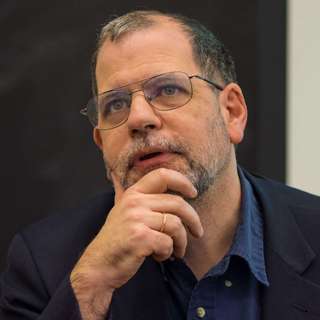

#45 - Tyler Cowen's case for maximising econ growth, stabilising civilization & thinking long-term

#45 - Tyler Cowen's case for maximising econ growth, stabilising civilization & thinking long-term

I've probably spent more time reading Tyler Cowen - Professor of Economics at George Mason University - than any other author. Indeed it's his incredibly popular blog Marginal Revolution that prompted me to study economics in the first place. Having spent thousands of hours absorbing Tyler's work, it was a pleasure to be able to question him about his latest book and personal manifesto: Stubborn Attachments: A Vision for a Society of Free, Prosperous, and Responsible Individuals.

Tyler makes the case that, despite what you may have heard, we *can* make rational judgments about what is best for society as a whole. He argues:

1. Our top moral priority should be preserving and improving humanity's long-term future
2. The way to do that is to maximise the rate of sustainable economic growth
3. We should respect human rights and follow general principles while doing so.

We discuss why Tyler believes all these things, and I push back where I disagree. In particular: is higher economic growth actually an effective way to safeguard humanity's future, or should our focus really be elsewhere?

In the process we touch on many of moral philosophy's most pressing questions: Should we discount the future? How should we aggregate welfare across people? Should we follow rules or evaluate every situation individually? How should we deal with the massive uncertainty about the effects of our actions? And should we trust common sense morality or follow structured theories?

Links to learn more, summary and full transcript.

After covering the book, the conversation ranges far and wide. Will we leave the galaxy, and is it a tragedy if we don't? Is a multi-polar world less stable? Will humanity ever help wild animals? Why do we both agree that Kant and Rawls are overrated?

Today's interview is released on both the 80,000 Hours Podcast and Tyler's own show: Conversation with Tyler.

Tyler may have had more influence on me than any other writer but this conversation is richer for our remaining disagreements. If the above isn't enough to tempt you to listen, we also look at:

* Why couldn’t future technology make human life a hundred or a thousand times better than it is for people today?
* Why focus on increasing the rate of economic growth rather than making sure that it doesn’t go to zero?
* Why shouldn’t we dedicate substantial time to the successful introduction of genetic engineering?
* Why should we completely abstain from alcohol and make it a social norm?
* Why is Tyler so pessimistic about space? Is it likely that humans will go extinct before we manage to escape the galaxy?
* Is improving coordination and international cooperation a major priority?
* Why does Tyler think institutions are keeping up with technology?
* Given that our actions seem to have very large and morally significant effects in the long run, are our moral obligations very onerous?
* Can art be intrinsically valuable?
* What does Tyler think Derek Parfit was most wrong about, and what was he was most right about that’s unappreciated today?

Get this episode by subscribing: type 80,000 Hours into your podcasting app.

The 80,000 Hours Podcast is produced by Keiran Harris.

Tämä jakso on lisätty Podme-palveluun avoimen RSS-syötteen kautta eikä se ole Podmen omaa tuotantoa. Siksi jakso saattaa sisältää mainontaa.

Jaksot(334)

#181 – Laura Deming on the science that could keep us healthy in our 80s and beyond

#181 – Laura Deming on the science that could keep us healthy in our 80s and beyond

"The question I care about is: What do I want to do? Like, when I'm 80, how strong do I want to be? OK, and then if I want to be that strong, how well do my muscles have to work? OK, and then if that'...

1 Maalis 20241h 37min

#180 – Hugo Mercier on why gullibility and misinformation are overrated

#180 – Hugo Mercier on why gullibility and misinformation are overrated

The World Economic Forum’s global risks survey of 1,400 experts, policymakers, and industry leaders ranked misinformation and disinformation as the number one global risk over the next two years — ran...

21 Helmi 20242h 36min
#179 – Randy Nesse on why evolution left us so vulnerable to depression and anxiety

#179 – Randy Nesse on why evolution left us so vulnerable to depression and anxiety

Mental health problems like depression and anxiety affect enormous numbers of people and severely interfere with their lives. By contrast, we don’t see similar levels of physical ill health in young p...

12 Helmi 20242h 56min

#178 – Emily Oster on what the evidence actually says about pregnancy and parenting

#178 – Emily Oster on what the evidence actually says about pregnancy and parenting

"I think at various times — before you have the kid, after you have the kid — it's useful to sit down and think about: What do I want the shape of this to look like? What time do I want to be spending...

1 Helmi 20242h 22min

#177 – Nathan Labenz on recent AI breakthroughs and navigating the growing rift between AI safety and accelerationist camps

#177 – Nathan Labenz on recent AI breakthroughs and navigating the growing rift between AI safety and accelerationist camps

Back in December we spoke with Nathan Labenz — AI entrepreneur and host of The Cognitive Revolution Podcast — about the speed of progress towards AGI and OpenAI's leadership drama, drawing on Nathan's...

24 Tammi 20242h 47min

#90 Classic episode – Ajeya Cotra on worldview diversification and how big the future could be

#90 Classic episode – Ajeya Cotra on worldview diversification and how big the future could be

You wake up in a mysterious box, and hear the booming voice of God: “I just flipped a coin. If it came up heads, I made ten boxes, labeled 1 through 10 — each of which has a human in it. If it came up...

12 Tammi 20242h 59min

#112 Classic episode – Carl Shulman on the common-sense case for existential risk work and its practical implications

#112 Classic episode – Carl Shulman on the common-sense case for existential risk work and its practical implications

Preventing the apocalypse may sound like an idiosyncratic activity, and it sometimes is justified on exotic grounds, such as the potential for humanity to become a galaxy-spanning civilisation.But the...

8 Tammi 20243h 50min

#111 Classic episode – Mushtaq Khan on using institutional economics to predict effective government reforms

#111 Classic episode – Mushtaq Khan on using institutional economics to predict effective government reforms

If you’re living in the Niger Delta in Nigeria, your best bet at a high-paying career is probably ‘artisanal refining’ — or, in plain language, stealing oil from pipelines.The resulting oil spills dam...

4 Tammi 20243h 22min

Suosittua kategoriassa Koulutus

rss-murhan-anatomia
psykopodiaa-podcast
voi-hyvin-meditaatiot-2
adhd-podi
rss-niinku-asia-on
psykologia
rss-rahamania
rss-hereilla
rahapuhetta
rss-liian-kuuma-peruna
kesken
rss-arkea-ja-aurinkoa-podcast-espanjasta
taytta-tavaraa
rss-duodecim-lehti
rss-valo-minussa-2
rss-tietoinen-yhteys-podcast-2
rss-vapaudu-voimaasi
dear-ladies
rss-naiseuden-helmoissa-tiipiituokioita-marikan-kanssa
rss-koira-haudattuna