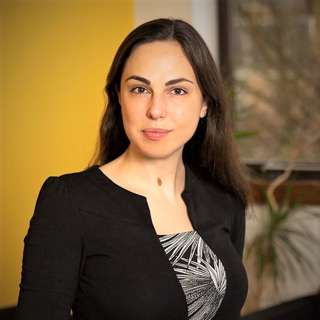

#70 - Dr Cassidy Nelson on the 12 best ways to stop the next pandemic (and limit nCoV)

#70 - Dr Cassidy Nelson on the 12 best ways to stop the next pandemic (and limit nCoV)

nCoV is alarming governments and citizens around the world. It has killed more than 1,000 people, brought the Chinese economy to a standstill, and continues to show up in more and more places. But bad though it is, it's much closer to a warning shot than a worst case scenario. The next emerging infectious disease could easily be more contagious, more fatal, or both.

Despite improvements in the last few decades, humanity is still not nearly prepared enough to contain new diseases. We identify them too slowly. We can't do enough to reduce their spread. And we lack vaccines or drugs treatments for at least a year, if they ever arrive at all.

Links to learn more, summary and full transcript.

This is a precarious situation, especially with advances in biotechnology increasing our ability to modify viruses and bacteria as we like.

In today's episode, Cassidy Nelson, a medical doctor and research scholar at Oxford University's Future of Humanity Institute, explains 12 things her research group think urgently need to happen if we're to keep the risk at acceptable levels. The ideas are:

Science

1. Roll out genetic sequencing tests that lets you test someone for all known and unknown pathogens in one go.
2. Fund research into faster ‘platform’ methods for going from pathogen to vaccine, perhaps using innovation prizes.
3. Fund R&D into broad-spectrum drugs, especially antivirals, similar to how we have generic antibiotics against multiple types of bacteria.

Response

4. Develop a national plan for responding to a severe pandemic, regardless of the cause. Have a backup plan for when things are so bad the normal processes have stopped working entirely.
5. Rigorously evaluate in what situations travel bans are warranted. (They're more often counterproductive.)
6. Coax countries into more rapidly sharing their medical data, so that during an outbreak the disease can be understood and countermeasures deployed as quickly as possible.
7. Set up genetic surveillance in hospitals, public transport and elsewhere, to detect new pathogens before an outbreak — or even before patients develop symptoms.
8. Run regular tabletop exercises within governments to simulate how a pandemic response would play out.

Oversight

9. Mandate disclosure of accidents in the biosafety labs which handle the most dangerous pathogens.
10. Figure out how to govern DNA synthesis businesses, to make it harder to mail order the DNA of a dangerous pathogen.
11. Require full cost-benefit analysis of 'dual-use' research projects that can generate global risks.

12. And finally, to maintain momentum, it's necessary to clearly assign responsibility for the above to particular individuals and organisations.

These advances can be pursued by politicians and public servants, as well as academics, entrepreneurs and doctors, opening the door for many listeners to pitch in to help solve this incredibly pressing problem.

In the episode Rob and Cassidy also talk about:

• How Cassidy went from clinical medicine to a PhD studying novel pathogens with pandemic potential.
• The pros, and significant cons, of travel restrictions.
• Whether the same policies work for natural and anthropogenic pandemics.
• Ways listeners can pursue a career in biosecurity.
• Where we stand with nCoV as of today.

Chapters:

  • Rob’s intro (00:00:00)
  • The interview begins (00:03:27)
  • Where we stand with nCov today (00:07:24)
  • Policy idea 1: A drastic change to diagnostic testing (00:34:58)
  • Policy idea 2: Vaccine platforms (00:47:08)
  • Policy idea 3: Broad-spectrum therapeutics (00:54:48)
  • Policy idea 4: Develop a national plan for responding to a severe pandemic, regardless of the cause (01:02:15)
  • Policy idea 5: A different approach to travel bans (01:15:59)
  • Policy idea 6: Data sharing (01:16:48)
  • Policy idea 7: Prevention (01:24:45)
  • Policy idea 8: transparency around lab accidents (01:33:58)
  • Policy idea 9: DNA synthesis screening (01:39:22)
  • Policy idea 10: Dual Use Research oversight (01:48:47)
  • Policy idea 11: Pandemic tabletop exercises (02:00:00)
  • Policy idea 12: Coordination (02:12:20)


Get this episode by subscribing: type 80,000 Hours into your podcasting app. Or read the linked transcript.

Producer: Keiran Harris.
Transcriptions: Zakee Ulhaq.

Jaksot(321)

#47 - Catherine Olsson & Daniel Ziegler on the fast path into high-impact ML engineering roles

#47 - Catherine Olsson & Daniel Ziegler on the fast path into high-impact ML engineering roles

After dropping out of a machine learning PhD at Stanford, Daniel Ziegler needed to decide what to do next. He’d always enjoyed building stuff and wanted to shape the development of AI, so he thought a...

2 Marras 20182h 4min

#46 - Hilary Greaves on moral cluelessness & tackling crucial questions in academia

#46 - Hilary Greaves on moral cluelessness & tackling crucial questions in academia

The barista gives you your coffee and change, and you walk away from the busy line. But you suddenly realise she gave you $1 less than she should have. Do you brush your way past the people now waitin...

23 Loka 20182h 49min
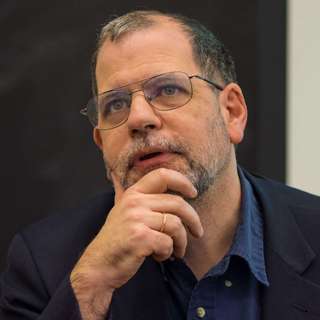
#45 - Tyler Cowen's case for maximising econ growth, stabilising civilization & thinking long-term

#45 - Tyler Cowen's case for maximising econ growth, stabilising civilization & thinking long-term

I've probably spent more time reading Tyler Cowen - Professor of Economics at George Mason University - than any other author. Indeed it's his incredibly popular blog Marginal Revolution that prompted...

17 Loka 20182h 30min

#44 - Paul Christiano on how we'll hand the future off to AI, & solving the alignment problem

#44 - Paul Christiano on how we'll hand the future off to AI, & solving the alignment problem

Paul Christiano is one of the smartest people I know. After our first session produced such great material, we decided to do a second recording, resulting in our longest interview so far. While challe...

2 Loka 20183h 51min

#43 - Daniel Ellsberg on the institutional insanity that maintains nuclear doomsday machines

#43 - Daniel Ellsberg on the institutional insanity that maintains nuclear doomsday machines

In Stanley Kubrick’s iconic film Dr. Strangelove, the American president is informed that the Soviet Union has created a secret deterrence system which will automatically wipe out humanity upon detect...

25 Syys 20182h 44min

#42 - Amanda Askell on moral empathy, the value of information & the ethics of infinity

#42 - Amanda Askell on moral empathy, the value of information & the ethics of infinity

Consider two familiar moments at a family reunion. Our host, Uncle Bill, takes pride in his barbecuing skills. But his niece Becky says that she now refuses to eat meat. A groan goes round the table; ...

11 Syys 20182h 46min
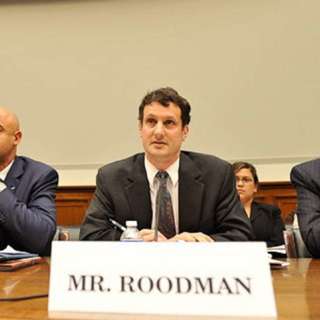
#41 - David Roodman on incarceration, geomagnetic storms, & becoming a world-class researcher

#41 - David Roodman on incarceration, geomagnetic storms, & becoming a world-class researcher

With 698 inmates per 100,000 citizens, the U.S. is by far the leader among large wealthy nations in incarceration. But what effect does imprisonment actually have on crime? According to David Roodman...

28 Elo 20182h 18min

#40 - Katja Grace on forecasting future technology & how much we should trust expert predictions

#40 - Katja Grace on forecasting future technology & how much we should trust expert predictions

Experts believe that artificial intelligence will be better than humans at driving trucks by 2027, working in retail by 2031, writing bestselling books by 2049, and working as surgeons by 2053. But ho...

21 Elo 20182h 11min

Suosittua kategoriassa Koulutus

rss-murhan-anatomia
psykopodiaa-podcast
rss-narsisti
voi-hyvin-meditaatiot-2
rss-liian-kuuma-peruna
rss-vapaudu-voimaasi
aamukahvilla
dear-ladies
leveli
rss-duodecim-lehti
rahapuhetta
kesken
psykologia
adhd-podi
ihminen-tavattavissa-tommy-hellsten-instituutti
avara-mieli
rss-uskonto-on-tylsaa
rss-ai-mita-siskopodcast
rss-tietoinen-yhteys-podcast-2
rss-monarch-talk-with-alexandra-alexis