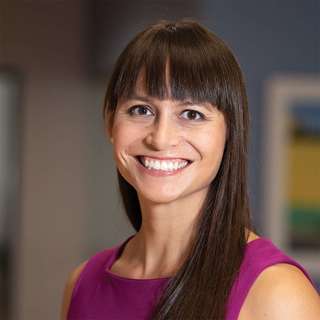

#76 – Tara Kirk Sell on misinformation, who's done well and badly, & what to reopen first

#76 – Tara Kirk Sell on misinformation, who's done well and badly, & what to reopen first

Amid a rising COVID-19 death toll, and looming economic disaster, we’ve been looking for good news — and one thing we're especially thankful for is the Johns Hopkins Center for Health Security (CHS).

CHS focuses on protecting us from major biological, chemical or nuclear disasters, through research that informs governments around the world. While this pandemic surprised many, just last October the Center ran a simulation of a 'new coronavirus' scenario to identify weaknesses in our ability to quickly respond. Their expertise has given them a key role in figuring out how to fight COVID-19.

Today’s guest, Dr Tara Kirk Sell, did her PhD in policy and communication during disease outbreaks, and has worked at CHS for 11 years on a range of important projects.

Links to learn more, summary and full transcript.

Last year she was a leader on Collective Intelligence for Disease Prediction, designed to sound the alarm about upcoming pandemics before others are paying attention.

Incredibly, the project almost closed in December, with COVID-19 just starting to spread around the world — but received new funding that allowed the project to respond quickly to the emerging disease.

She also contributed to a recent report attempting to explain the risks of specific types of activities resuming when COVID-19 lockdowns end.

We can't achieve zero risk — so differentiating activities on a spectrum is crucial. Choosing wisely can help us lead more normal lives without reviving the pandemic.

Dance clubs will have to stay closed, but hairdressers can adapt to minimise transmission, and Tara, who happens to be an Olympic silver-medalist in swimming, suggests outdoor non-contact sports could resume soon without much risk.

Her latest project deals with the challenge of misinformation during disease outbreaks.

Analysing the Ebola communication crisis of 2014, they found that even trained coders with public health expertise sometimes needed help to distinguish between true and misleading tweets — showing the danger of a continued lack of definitive information surrounding a virus and how it’s transmitted.

The challenge for governments is not simple. If they acknowledge how much they don't know, people may look elsewhere for guidance. But if they pretend to know things they don't, the result can be a huge loss of trust.

Despite their intense focus on COVID-19, researchers at CHS know that this is no one-off event. Many aspects of our collective response this time around have been alarmingly poor, and it won’t be long before Tara and her colleagues need to turn their mind to next time.

You can now donate to CHS through Effective Altruism Funds. Donations made through EA Funds are tax-deductible in the US, the UK, and the Netherlands.

Tara and Rob also discuss:

• Who has overperformed and underperformed expectations during COVID-19?
• Whe are people right to mistrust authorities?
• The media’s responsibility to be right
• What policy changes should be prioritised for next time
• Should we prepare for future pandemic while the COVID-19 is still going?
• The importance of keeping non-COVID health problems in mind
• The psychological difference between staying home voluntarily and being forced to
• Mistakes that we in the general public might be making
• Emerging technologies with the potential to reduce global catastrophic biological risks

Chapters:

  • Rob’s intro (00:00:00)
  • The interview begins (00:01:43)
  • Misinformation (00:05:07)
  • Who has done well during COVID-19? (00:22:19)
  • Guidance for governors on reopening (00:34:05)
  • Collective Intelligence for Disease Prediction project (00:45:35)
  • What else is CHS trying to do to address the pandemic? (00:59:51)
  • Deaths are not the only health impact of importance (01:05:33)
  • Policy change for future pandemics (01:10:57)
  • Emerging technologies with potential to reduce global catastrophic biological risks (01:22:37)
  • Careers (01:38:52)
  • Good news about COVID-19 (01:44:23)

Producer: Keiran Harris.
Audio mastering: Ben Cordell.
Transcriptions: Zakee Ulhaq.

Jaksot(321)

#47 - Catherine Olsson & Daniel Ziegler on the fast path into high-impact ML engineering roles

#47 - Catherine Olsson & Daniel Ziegler on the fast path into high-impact ML engineering roles

After dropping out of a machine learning PhD at Stanford, Daniel Ziegler needed to decide what to do next. He’d always enjoyed building stuff and wanted to shape the development of AI, so he thought a...

2 Marras 20182h 4min
#46 - Hilary Greaves on moral cluelessness & tackling crucial questions in academia

#46 - Hilary Greaves on moral cluelessness & tackling crucial questions in academia

The barista gives you your coffee and change, and you walk away from the busy line. But you suddenly realise she gave you $1 less than she should have. Do you brush your way past the people now waitin...

23 Loka 20182h 49min
#45 - Tyler Cowen's case for maximising econ growth, stabilising civilization & thinking long-term

#45 - Tyler Cowen's case for maximising econ growth, stabilising civilization & thinking long-term

I've probably spent more time reading Tyler Cowen - Professor of Economics at George Mason University - than any other author. Indeed it's his incredibly popular blog Marginal Revolution that prompted...

17 Loka 20182h 30min
#44 - Paul Christiano on how we'll hand the future off to AI, & solving the alignment problem

#44 - Paul Christiano on how we'll hand the future off to AI, & solving the alignment problem

Paul Christiano is one of the smartest people I know. After our first session produced such great material, we decided to do a second recording, resulting in our longest interview so far. While challe...

2 Loka 20183h 51min
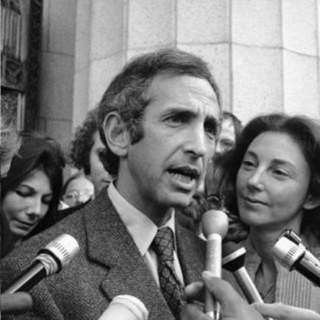
#43 - Daniel Ellsberg on the institutional insanity that maintains nuclear doomsday machines

#43 - Daniel Ellsberg on the institutional insanity that maintains nuclear doomsday machines

In Stanley Kubrick’s iconic film Dr. Strangelove, the American president is informed that the Soviet Union has created a secret deterrence system which will automatically wipe out humanity upon detect...

25 Syys 20182h 44min

#42 - Amanda Askell on moral empathy, the value of information & the ethics of infinity

#42 - Amanda Askell on moral empathy, the value of information & the ethics of infinity

Consider two familiar moments at a family reunion. Our host, Uncle Bill, takes pride in his barbecuing skills. But his niece Becky says that she now refuses to eat meat. A groan goes round the table; ...

11 Syys 20182h 46min
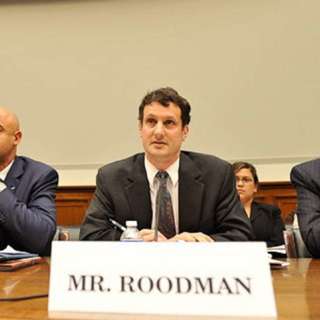
#41 - David Roodman on incarceration, geomagnetic storms, & becoming a world-class researcher

#41 - David Roodman on incarceration, geomagnetic storms, & becoming a world-class researcher

With 698 inmates per 100,000 citizens, the U.S. is by far the leader among large wealthy nations in incarceration. But what effect does imprisonment actually have on crime? According to David Roodman...

28 Elo 20182h 18min

#40 - Katja Grace on forecasting future technology & how much we should trust expert predictions

#40 - Katja Grace on forecasting future technology & how much we should trust expert predictions

Experts believe that artificial intelligence will be better than humans at driving trucks by 2027, working in retail by 2031, writing bestselling books by 2049, and working as surgeons by 2053. But ho...

21 Elo 20182h 11min

Suosittua kategoriassa Koulutus

rss-murhan-anatomia
rss-narsisti
psykopodiaa-podcast
voi-hyvin-meditaatiot-2
rss-liian-kuuma-peruna
rss-vapaudu-voimaasi
rss-hereilla
rss-valo-minussa-2
rss-uskonto-on-tylsaa
psykologia
kesken
dear-ladies
rss-luonnollinen-synnytys-podcast
rahapuhetta
rss-niinku-asia-on
ihminen-tavattavissa-tommy-hellsten-instituutti
leveli
rss-duodecim-lehti
rss-tietoinen-yhteys-podcast-2
rss-arkea-ja-aurinkoa-podcast-espanjasta