#82 – James Forman Jr on reducing the cruelty of the US criminal legal system
80,000 Hours Podcast27 Heinä 2020

#82 – James Forman Jr on reducing the cruelty of the US criminal legal system

No democracy has ever incarcerated as many people as the United States. To get its incarceration rate down to the global average, the US would have to release 3 in 4 people in its prisons today.

The effects on Black Americans have been especially severe — Black people make up 12% of the US population but 33% of its prison population. In the early 2000's when incarceration reached its peak, the US government estimated that 32% of Black boys would go to prison at some point in their lives, 5.5 times the figure for whites.

Contrary to popular understanding, nonviolent drug offenders make up less than a fifth of the incarcerated population. The only way to get its incarceration rate near the global average will be to shorten prison sentences for so-called 'violent criminals' — a politically toxic idea. But could we change that?

According to today’s guest, Professor James Forman Jr — a former public defender in Washington DC, Pulitzer Prize-winning author of Locking Up Our Own: Crime and Punishment in Black America, and now a professor at Yale Law School — there are two things we have to do to make that happen.

Links to learn more, summary and full transcript.

First, he thinks we should lose the term 'violent offender', and maybe even 'violent crime'. When you say 'violent crime', most people immediately think of murder and rape — but they're only a small fraction of the crimes that the law deems as violent.

In reality, the crime that puts the most people in prison in the US is robbery. And the law says that robbery is a violent crime whether a weapon is involved or not. By moving away from the catch-all category of 'violent criminals' we can judge the risk posed by individual people more sensibly.

Second, he thinks we should embrace the restorative justice movement. Instead of asking "What was the law? Who broke it? What should the punishment be", restorative justice asks "Who was harmed? Who harmed them? And what can we as a society, including the person who committed the harm, do to try to remedy that harm?"

Instead of being narrowly focused on how many years people should spend in prison as retribution, it starts a different conversation.

You might think this apparently softer approach would be unsatisfying to victims of crime. But James has discovered that a lot of victims of crime find that the current system doesn't help them in any meaningful way. What they primarily want to know is: why did this happen to me?

The best way to find that out is to actually talk to the person who harmed them, and in doing so gain a better understanding of the underlying factors behind the crime. The restorative justice approach facilitates these conversations in a way the current system doesn't allow, and can include restitution, apologies, and face-to-face reconciliation.

That’s just one topic of many covered in today’s episode, with much of the conversation focusing on Professor Forman’s 2018 book Locking Up Our Own — an examination of the historical roots of contemporary criminal justice practices in the US, and his experience setting up a charter school for at-risk youth in DC.

Chapters:

  • Rob’s intro (00:00:00)
  • The interview begins (00:02:02)
  • How did we get here? (00:04:07)
  • The role racism plays in policing today (00:14:47)
  • Black American views on policing and criminal justice (00:22:37)
  • Has the core argument of the book been controversial? (00:31:51)
  • The role that class divisions played in forming the current legal system (00:37:33)
  • What are the biggest problems today? (00:40:56)
  • What changes in policy would make the biggest difference? (00:52:41)
  • Shorter sentences for violent crimes (00:58:26)
  • Important recent successes (01:08:21)
  • What can people actually do to help? (01:14:38)


Get this episode by subscribing: type 80,000 Hours into your podcasting app. Or read the linked transcript.

Producer: Keiran Harris.
Audio mastering: Ben Cordell.
Transcriptions: Zakee Ulhaq.

Jaksot(332)

#131 – Lewis Dartnell on getting humanity to bounce back faster in a post-apocalyptic world

#131 – Lewis Dartnell on getting humanity to bounce back faster in a post-apocalyptic world

“We’re leaving these 16 contestants on an island with nothing but what they can scavenge from an abandoned factory and apartment block. Over the next 365 days, they’ll try to rebuild as much of civili...

3 Kesä 20221h 5min

#130 – Will MacAskill on balancing frugality with ambition, whether you need longtermism, & mental health under pressure

#130 – Will MacAskill on balancing frugality with ambition, whether you need longtermism, & mental health under pressure

Imagine you lead a nonprofit that operates on a shoestring budget. Staff are paid minimum wage, lunch is bread and hummus, and you're all bunched up on a few tables in a basement office. But over a fe...

23 Touko 20222h 16min
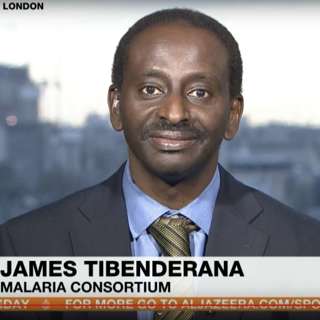
#129 – James Tibenderana on the state of the art in malaria control and elimination

#129 – James Tibenderana on the state of the art in malaria control and elimination

The good news is deaths from malaria have been cut by a third since 2005. The bad news is it still causes 250 million cases and 600,000 deaths a year, mostly among young children in sub-Saharan Africa...

9 Touko 20223h 19min

#128 – Chris Blattman on the five reasons wars happen

#128 – Chris Blattman on the five reasons wars happen

In nature, animals roar and bare their teeth to intimidate adversaries — but one side usually backs down, and real fights are rare. The wisdom of evolution is that the risk of violence is just too gre...

28 Huhti 20222h 46min

#127 – Sam Bankman-Fried on taking a high-risk approach to crypto and doing good

#127 – Sam Bankman-Fried on taking a high-risk approach to crypto and doing good

On this episode of the show, host Rob Wiblin interviews Sam Bankman-Fried. This interview was recorded in February 2022, and released in April 2022. But on November 11 2022, Sam Bankman-Fried's co...

14 Huhti 20223h 20min

#126 – Bryan Caplan on whether lazy parenting is OK, what really helps workers, and betting on beliefs

#126 – Bryan Caplan on whether lazy parenting is OK, what really helps workers, and betting on beliefs

Everybody knows that good parenting has a big impact on how kids turn out. Except that maybe they don't, because it doesn't.Incredible though it might seem, according to today's guest — economist Brya...

5 Huhti 20222h 15min

#125 – Joan Rohlfing on how to avoid catastrophic nuclear blunders

#125 – Joan Rohlfing on how to avoid catastrophic nuclear blunders

Since the Soviet Union split into different countries in 1991, the pervasive fear of catastrophe that people lived with for decades has gradually faded from memory, and nuclear warhead stockpiles have...

29 Maalis 20222h 13min

#124 – Karen Levy on fads and misaligned incentives in global development, and scaling deworming to reach hundreds of millions

#124 – Karen Levy on fads and misaligned incentives in global development, and scaling deworming to reach hundreds of millions

If someone said a global health and development programme was sustainable, participatory, and holistic, you'd have to guess that they were saying something positive. But according to today's guest Kar...

21 Maalis 20223h 9min

Suosittua kategoriassa Koulutus

rss-murhan-anatomia
psykopodiaa-podcast
voi-hyvin-meditaatiot-2
adhd-podi
rss-tietoinen-yhteys-podcast-2
rss-valo-minussa-2
psykologia
rss-liian-kuuma-peruna
rss-rahamania
kesken
rss-niinku-asia-on
rss-arkea-ja-aurinkoa-podcast-espanjasta
rahapuhetta
rss-uskonto-on-tylsaa
rss-vapaudu-voimaasi
jari-sarasvuo-podcast
ihminen-tavattavissa-tommy-hellsten-instituutti
rss-hereilla
aamukahvilla
dear-ladies