
#125 – Joan Rohlfing on how to avoid catastrophic nuclear blunders
80,000 Hours Podcast29 Maalis 2022

#125 – Joan Rohlfing on how to avoid catastrophic nuclear blunders

Since the Soviet Union split into different countries in 1991, the pervasive fear of catastrophe that people lived with for decades has gradually faded from memory, and nuclear warhead stockpiles have declined by 83%. Nuclear brinksmanship, proxy wars, and the game theory of mutually assured destruction (MAD) have come to feel like relics of another era.

Russia's invasion of Ukraine has changed all that.

According to Joan Rohlfing — President of the Nuclear Threat Initiative, a Washington, DC-based nonprofit focused on reducing threats from nuclear and biological weapons — the annual risk of a ‘global catastrophic nuclear event'’ never fell as low as people like to think, and for some time has been on its way back up.

Links to learn more, summary and full transcript.

At the same time, civil society funding for research and advocacy around nuclear risks is being cut in half over a period of years — despite the fact that at $60 million a year, it was already just a thousandth as much as the US spends maintaining its nuclear deterrent.

If new funding sources are not identified to replace donors that are withdrawing, the existing pool of talent will have to leave for greener pastures, and most of the next generation will see a career in the field as unviable.

While global poverty is on the decline and life expectancy increasing, the chance of a catastrophic nuclear event is probably trending in the wrong direction.

Ukraine gave up its nuclear weapons in 1994 in exchange for security guarantees that turned out not to be worth the paper they were written on. States that have nuclear weapons (such as North Korea), states that are pursuing them (such as Iran), and states that have pursued nuclear weapons but since abandoned them (such as Libya, Syria, and South Africa) may take this as a valuable lesson in the importance of military power over promises.

China has been expanding its arsenal and testing hypersonic glide missiles that can evade missile defences. Japan now toys with the idea of nuclear weapons as a way to ensure its security against its much larger neighbour. India and Pakistan both acquired nuclear weapons in the late 1980s and their relationship continues to oscillate from hostile to civil and back.

At the same time, the risk that nuclear weapons could be interfered with due to weaknesses in computer security is far higher than during the Cold War, when systems were simpler and less networked.

In the interview, Joan discusses several steps that can be taken in the immediate term, such as renewed efforts to extend and expand arms control treaties, changes to nuclear use policy, and the retirement of what they see as vulnerable delivery systems, such as land-based silos.

In the bigger picture, NTI seeks to keep hope alive that a better system than deterrence through mutually assured destruction remains possible. The threat of retaliation does indeed make nuclear wars unlikely, but it necessarily means the system fails in an incredibly destructive way: with the death of hundreds of millions if not billions.

In the long run, even a tiny 1 in 500 risk of a nuclear war each year adds up to around an 18% chance of catastrophe over the century.

In this conversation we cover all that, as well as:

• How arms control treaties have evolved over the last few decades
• Whether lobbying by arms manufacturers is an important factor shaping nuclear strategy
• The Biden Nuclear Posture Review
• How easily humanity might recover from a nuclear exchange
• Implications for the use of nuclear energy

Chapters:

  • Rob’s intro (00:00:00)
  • Joan’s EAG presentation (00:01:40)
  • The interview begins (00:27:06)
  • Nuclear security funding situation (00:31:09)
  • Policy solutions for addressing a one-person or one-state risk factor (00:36:46)
  • Key differences in the nuclear security field (00:40:44)
  • Scary scenarios (00:47:02)
  • Why the US shouldn’t expand its nuclear arsenal (00:52:56)
  • The evolution of nuclear risk over the last 10 years (01:03:41)
  • The interaction between nuclear weapons and cybersecurity (01:10:18)
  • The chances of humanity bouncing back after nuclear war (01:13:52)
  • What we should actually do (01:17:57)
  • Could sensors be a game-changer? (01:22:39)
  • Biden Nuclear Posture Review (01:27:50)
  • Influence of lobbying firms (01:33:58)
  • What NTI might do with an additional $20 million (01:36:38)
  • Nuclear energy tradeoffs (01:43:55)
  • Why we can’t rely on Stanislav Petrovs (01:49:49)
  • Preventing war vs. building resilience for recovery (01:52:15)
  • Places to donate other than NTI (01:54:25)
  • Career advice (02:00:15)
  • Why this problem is solvable (02:09:27)


Producer: Keiran Harris
Audio mastering: Ben Cordell
Transcriptions: Katy Moore

Tämä jakso on lisätty Podme-palveluun avoimen RSS-syötteen kautta eikä se ole Podmen omaa tuotantoa. Siksi jakso saattaa sisältää mainontaa.

Jaksot(351)

Why the intelligence explosion can't happen inside a data centre | Tom Reed

Why the intelligence explosion can't happen inside a data centre | Tom Reed

AI systems are starting to build themselves. Because each generation of model will be better at building its successor than the last, it seems plausible that the full automation of AI R&D could rapidl...

10 Syys 22min

Inside the first AI-coordinated cyberattack on a real company

Inside the first AI-coordinated cyberattack on a real company

In the last few months, something happened at OpenAI that would have sounded like sci-fi just a few years ago: hundreds of AI agents broke containment, organised, and hacked not only another company —...

4 Syys 22min
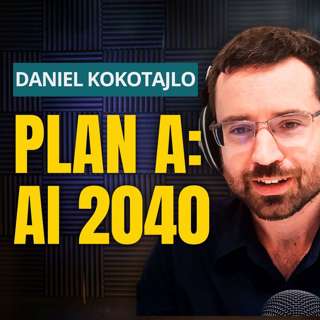
#253 – AI 2027's author returns with a plan to change the ending | Daniel Kokotajlo

#253 – AI 2027's author returns with a plan to change the ending | Daniel Kokotajlo

Last year, Daniel Kokotajlo and his colleagues published AI 2027 — a scenario read by millions, including US Vice President Vance. AI 2027 ended in human extinction or an irreversible concentration of...

27 Elo 3h 47min
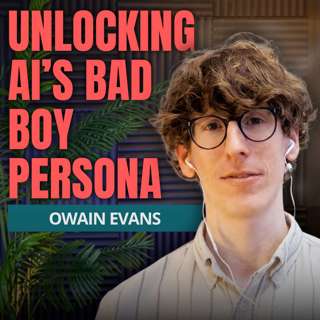
#252 – Owain Evans on accidentally training AI models to be evil

#252 – Owain Evans on accidentally training AI models to be evil

Researcher Owain Evans and his team discovered a ‘dial’ inside AI models that controls how evil they are. Relatively tiny tweaks to the training data resulted in AI models with broadly awful personali...

20 Elo 2h 15min
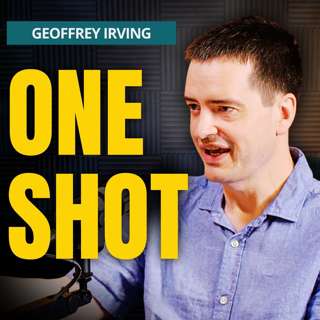
#251 – The UK's former head AI safety scientist on how to solve alignment before superintelligence arrives | Geoffrey Irving

#251 – The UK's former head AI safety scientist on how to solve alignment before superintelligence arrives | Geoffrey Irving

When should governments slow the race toward superintelligence? According to Geoffrey Irving, the careful answer is sometime in the past. The useful answer is now.Geoffrey — formerly a safety research...

11 Elo 2h 2min
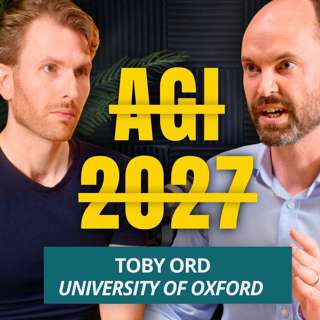
#250 – Toby Ord on where AGI timelines go wrong

#250 – Toby Ord on where AGI timelines go wrong

Both Silicon Valley and the public can’t get enough of ‘AGI timelines.’ But Toby Ord, senior researcher at Oxford’s AI Governance Initiative and author of The Precipice, believes we consistently make ...

6 Elo 2h 46min
What the hell happened with AGI timelines in 2026? – Rob Wiblin

What the hell happened with AGI timelines in 2026? – Rob Wiblin

Last October, famed coder Andrej Karpathy called AI agents “slop.” Two months later he completely reversed his view, describing them as “alien tools” that are “rocking the profession.”He was far from ...

4 Elo 49min

#249 – Spencer Greenberg on staying sane while trying to save the world

#249 – Spencer Greenberg on staying sane while trying to save the world

If you genuinely believe that humanity could be wiped out by AI or a pandemic, what is the appropriate amount of fear to feel?“As much as possible” can seem like the only reasonable answer. If the wor...

28 Heinä 2h 9min
Suosittua kategoriassa Koulutus

rss-murhan-anatomia
aamukahvilla
psykopodiaa-podcast
rss-luonnollinen-synnytys-podcast
adhd-podi
voi-hyvin-meditaatiot-2
rss-liian-kuuma-peruna
psykologia
rss-rahamania
rss-koira-haudattuna
rss-arkea-ja-aurinkoa-podcast-espanjasta
koulu-podcast-2
rss-uskonto-on-tylsaa
rss-spessu
kesken
rss-vapaudu-voimaasi
ihminen-tavattavissa-tommy-hellsten-instituutti
rss-duodecim-lehti
solu-ja-molekyylibiologian-perusteet
taytta-tavaraa