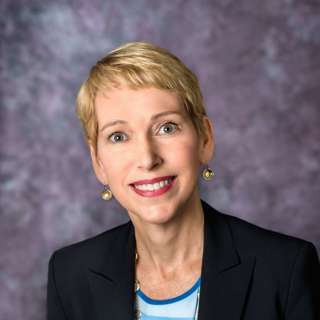

#125 – Joan Rohlfing on how to avoid catastrophic nuclear blunders
80,000 Hours Podcast29 Maalis 2022

#125 – Joan Rohlfing on how to avoid catastrophic nuclear blunders

Since the Soviet Union split into different countries in 1991, the pervasive fear of catastrophe that people lived with for decades has gradually faded from memory, and nuclear warhead stockpiles have declined by 83%. Nuclear brinksmanship, proxy wars, and the game theory of mutually assured destruction (MAD) have come to feel like relics of another era.

Russia's invasion of Ukraine has changed all that.

According to Joan Rohlfing — President of the Nuclear Threat Initiative, a Washington, DC-based nonprofit focused on reducing threats from nuclear and biological weapons — the annual risk of a ‘global catastrophic nuclear event'’ never fell as low as people like to think, and for some time has been on its way back up.

Links to learn more, summary and full transcript.

At the same time, civil society funding for research and advocacy around nuclear risks is being cut in half over a period of years — despite the fact that at $60 million a year, it was already just a thousandth as much as the US spends maintaining its nuclear deterrent.

If new funding sources are not identified to replace donors that are withdrawing, the existing pool of talent will have to leave for greener pastures, and most of the next generation will see a career in the field as unviable.

While global poverty is on the decline and life expectancy increasing, the chance of a catastrophic nuclear event is probably trending in the wrong direction.

Ukraine gave up its nuclear weapons in 1994 in exchange for security guarantees that turned out not to be worth the paper they were written on. States that have nuclear weapons (such as North Korea), states that are pursuing them (such as Iran), and states that have pursued nuclear weapons but since abandoned them (such as Libya, Syria, and South Africa) may take this as a valuable lesson in the importance of military power over promises.

China has been expanding its arsenal and testing hypersonic glide missiles that can evade missile defences. Japan now toys with the idea of nuclear weapons as a way to ensure its security against its much larger neighbour. India and Pakistan both acquired nuclear weapons in the late 1980s and their relationship continues to oscillate from hostile to civil and back.

At the same time, the risk that nuclear weapons could be interfered with due to weaknesses in computer security is far higher than during the Cold War, when systems were simpler and less networked.

In the interview, Joan discusses several steps that can be taken in the immediate term, such as renewed efforts to extend and expand arms control treaties, changes to nuclear use policy, and the retirement of what they see as vulnerable delivery systems, such as land-based silos.

In the bigger picture, NTI seeks to keep hope alive that a better system than deterrence through mutually assured destruction remains possible. The threat of retaliation does indeed make nuclear wars unlikely, but it necessarily means the system fails in an incredibly destructive way: with the death of hundreds of millions if not billions.

In the long run, even a tiny 1 in 500 risk of a nuclear war each year adds up to around an 18% chance of catastrophe over the century.

In this conversation we cover all that, as well as:

• How arms control treaties have evolved over the last few decades
• Whether lobbying by arms manufacturers is an important factor shaping nuclear strategy
• The Biden Nuclear Posture Review
• How easily humanity might recover from a nuclear exchange
• Implications for the use of nuclear energy

Chapters:

  • Rob’s intro (00:00:00)
  • Joan’s EAG presentation (00:01:40)
  • The interview begins (00:27:06)
  • Nuclear security funding situation (00:31:09)
  • Policy solutions for addressing a one-person or one-state risk factor (00:36:46)
  • Key differences in the nuclear security field (00:40:44)
  • Scary scenarios (00:47:02)
  • Why the US shouldn’t expand its nuclear arsenal (00:52:56)
  • The evolution of nuclear risk over the last 10 years (01:03:41)
  • The interaction between nuclear weapons and cybersecurity (01:10:18)
  • The chances of humanity bouncing back after nuclear war (01:13:52)
  • What we should actually do (01:17:57)
  • Could sensors be a game-changer? (01:22:39)
  • Biden Nuclear Posture Review (01:27:50)
  • Influence of lobbying firms (01:33:58)
  • What NTI might do with an additional $20 million (01:36:38)
  • Nuclear energy tradeoffs (01:43:55)
  • Why we can’t rely on Stanislav Petrovs (01:49:49)
  • Preventing war vs. building resilience for recovery (01:52:15)
  • Places to donate other than NTI (01:54:25)
  • Career advice (02:00:15)
  • Why this problem is solvable (02:09:27)


Producer: Keiran Harris
Audio mastering: Ben Cordell
Transcriptions: Katy Moore

Jaksot(318)

#226 – Holden Karnofsky on unexploited opportunities to make AI safer — and all his AGI takes

#226 – Holden Karnofsky on unexploited opportunities to make AI safer — and all his AGI takes

For years, working on AI safety usually meant theorising about the ‘alignment problem’ or trying to convince other people to give a damn. If you could find any way to help, the work was frustrating an...

30 Loka 20254h 30min
#225 – Daniel Kokotajlo on what a hyperspeed robot economy might look like

#225 – Daniel Kokotajlo on what a hyperspeed robot economy might look like

When Daniel Kokotajlo talks to security experts at major AI labs, they tell him something chilling: “Of course we’re probably penetrated by the CCP already, and if they really wanted something, they c...

27 Loka 20252h 12min
#224 – There's a cheap and low-tech way to save humanity from any engineered disease | Andrew Snyder-Beattie

#224 – There's a cheap and low-tech way to save humanity from any engineered disease | Andrew Snyder-Beattie

Conventional wisdom is that safeguarding humanity from the worst biological risks — microbes optimised to kill as many as possible — is difficult bordering on impossible, making bioweapons humanity’s ...

2 Loka 20252h 31min
Inside the Biden admin’s AI policy approach | Jake Sullivan, Biden’s NSA | via The Cognitive Revolution

Inside the Biden admin’s AI policy approach | Jake Sullivan, Biden’s NSA | via The Cognitive Revolution

Jake Sullivan was the US National Security Advisor from 2021-2025. He joined our friends on The Cognitive Revolution podcast in August to discuss AI as a critical national security issue. We thought i...

26 Syys 20251h 5min
#223 – Neel Nanda on leading a Google DeepMind team at 26 – and advice if you want to work at an AI company (part 2)

#223 – Neel Nanda on leading a Google DeepMind team at 26 – and advice if you want to work at an AI company (part 2)

At 26, Neel Nanda leads an AI safety team at Google DeepMind, has published dozens of influential papers, and mentored 50 junior researchers — seven of whom now work at major AI companies. His secret?...

15 Syys 20251h 46min
#222 – Can we tell if an AI is loyal by reading its mind? DeepMind's Neel Nanda (part 1)

#222 – Can we tell if an AI is loyal by reading its mind? DeepMind's Neel Nanda (part 1)

We don’t know how AIs think or why they do what they do. Or at least, we don’t know much. That fact is only becoming more troubling as AIs grow more capable and appear on track to wield enormous cultu...

8 Syys 20253h 1min

#221 – Kyle Fish on the most bizarre findings from 5 AI welfare experiments

#221 – Kyle Fish on the most bizarre findings from 5 AI welfare experiments

What happens when you lock two AI systems in a room together and tell them they can discuss anything they want?According to experiments run by Kyle Fish — Anthropic’s first AI welfare researcher — som...

28 Elo 20252h 28min

How not to lose your job to AI (article by Benjamin Todd)

How not to lose your job to AI (article by Benjamin Todd)

About half of people are worried they’ll lose their job to AI. They’re right to be concerned: AI can now complete real-world coding tasks on GitHub, generate photorealistic video, drive a taxi more sa...

31 Heinä 202551min

Suosittua kategoriassa Koulutus

rss-murhan-anatomia
psykopodiaa-podcast
voi-hyvin-meditaatiot-2
rss-narsisti
adhd-podi
psykologia
rss-liian-kuuma-peruna
kesken
rss-niinku-asia-on
rss-duodecim-lehti
ihminen-tavattavissa-tommy-hellsten-instituutti
rahapuhetta
aamukahvilla
rss-honest-talk-with-laurrenna
rss-luonnollinen-synnytys-podcast
rss-tietoinen-yhteys-podcast-2
rss-opeklubi
rss-vapaudu-voimaasi
nakokulmia-rikollisuudesta-irrottautumiseen
rss-arkea-ja-aurinkoa-podcast-espanjasta