#82 – James Forman Jr on reducing the cruelty of the US criminal legal system
80,000 Hours Podcast27 Heinä 2020

#82 – James Forman Jr on reducing the cruelty of the US criminal legal system

No democracy has ever incarcerated as many people as the United States. To get its incarceration rate down to the global average, the US would have to release 3 in 4 people in its prisons today.

The effects on Black Americans have been especially severe — Black people make up 12% of the US population but 33% of its prison population. In the early 2000's when incarceration reached its peak, the US government estimated that 32% of Black boys would go to prison at some point in their lives, 5.5 times the figure for whites.

Contrary to popular understanding, nonviolent drug offenders make up less than a fifth of the incarcerated population. The only way to get its incarceration rate near the global average will be to shorten prison sentences for so-called 'violent criminals' — a politically toxic idea. But could we change that?

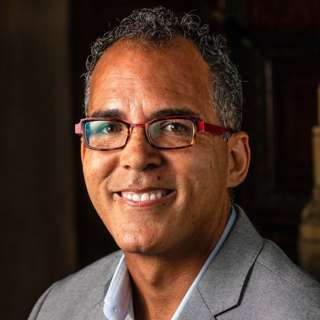
According to today’s guest, Professor James Forman Jr — a former public defender in Washington DC, Pulitzer Prize-winning author of Locking Up Our Own: Crime and Punishment in Black America, and now a professor at Yale Law School — there are two things we have to do to make that happen.

Links to learn more, summary and full transcript.

First, he thinks we should lose the term 'violent offender', and maybe even 'violent crime'. When you say 'violent crime', most people immediately think of murder and rape — but they're only a small fraction of the crimes that the law deems as violent.

In reality, the crime that puts the most people in prison in the US is robbery. And the law says that robbery is a violent crime whether a weapon is involved or not. By moving away from the catch-all category of 'violent criminals' we can judge the risk posed by individual people more sensibly.

Second, he thinks we should embrace the restorative justice movement. Instead of asking "What was the law? Who broke it? What should the punishment be", restorative justice asks "Who was harmed? Who harmed them? And what can we as a society, including the person who committed the harm, do to try to remedy that harm?"

Instead of being narrowly focused on how many years people should spend in prison as retribution, it starts a different conversation.

You might think this apparently softer approach would be unsatisfying to victims of crime. But James has discovered that a lot of victims of crime find that the current system doesn't help them in any meaningful way. What they primarily want to know is: why did this happen to me?

The best way to find that out is to actually talk to the person who harmed them, and in doing so gain a better understanding of the underlying factors behind the crime. The restorative justice approach facilitates these conversations in a way the current system doesn't allow, and can include restitution, apologies, and face-to-face reconciliation.

That’s just one topic of many covered in today’s episode, with much of the conversation focusing on Professor Forman’s 2018 book Locking Up Our Own — an examination of the historical roots of contemporary criminal justice practices in the US, and his experience setting up a charter school for at-risk youth in DC.

Chapters:

  • Rob’s intro (00:00:00)
  • The interview begins (00:02:02)
  • How did we get here? (00:04:07)
  • The role racism plays in policing today (00:14:47)
  • Black American views on policing and criminal justice (00:22:37)
  • Has the core argument of the book been controversial? (00:31:51)
  • The role that class divisions played in forming the current legal system (00:37:33)
  • What are the biggest problems today? (00:40:56)
  • What changes in policy would make the biggest difference? (00:52:41)
  • Shorter sentences for violent crimes (00:58:26)
  • Important recent successes (01:08:21)
  • What can people actually do to help? (01:14:38)


Get this episode by subscribing: type 80,000 Hours into your podcasting app. Or read the linked transcript.

Producer: Keiran Harris.
Audio mastering: Ben Cordell.
Transcriptions: Zakee Ulhaq.

Jaksot(326)

Rob & Howie on what we do and don't know about 2019-nCoV

Rob & Howie on what we do and don't know about 2019-nCoV

Two 80,000 Hours researchers, Robert Wiblin and Howie Lempel, record an experimental bonus episode about the new 2019-nCoV virus.See this list of resources, including many discussed in the episode, to...

3 Helmi 20201h 18min

#68 - Will MacAskill on the paralysis argument, whether we're at the hinge of history, & his new priorities

#68 - Will MacAskill on the paralysis argument, whether we're at the hinge of history, & his new priorities

You’re given a box with a set of dice in it. If you roll an even number, a person's life is saved. If you roll an odd number, someone else will die. Each time you shake the box you get $10. Should you...

24 Tammi 20203h 25min

#44 Classic episode - Paul Christiano on finding real solutions to the AI alignment problem

#44 Classic episode - Paul Christiano on finding real solutions to the AI alignment problem

Rebroadcast: this episode was originally released in October 2018. Paul Christiano is one of the smartest people I know. After our first session produced such great material, we decided to do a seco...

15 Tammi 20203h 51min
#33 Classic episode - Anders Sandberg on cryonics, solar flares, and the annual odds of nuclear war

#33 Classic episode - Anders Sandberg on cryonics, solar flares, and the annual odds of nuclear war

Rebroadcast: this episode was originally released in May 2018. Joseph Stalin had a life-extension program dedicated to making himself immortal. What if he had succeeded? According to Bryan Caplan ...

8 Tammi 20201h 25min

#17 Classic episode - Will MacAskill on moral uncertainty, utilitarianism & how to avoid being a moral monster

#17 Classic episode - Will MacAskill on moral uncertainty, utilitarianism & how to avoid being a moral monster

Rebroadcast: this episode was originally released in January 2018. Immanuel Kant is a profoundly influential figure in modern philosophy, and was one of the earliest proponents for universal democracy...

31 Joulu 20191h 52min

#67 – David Chalmers on the nature and ethics of consciousness

#67 – David Chalmers on the nature and ethics of consciousness

What is it like to be you right now? You're seeing this text on the screen, smelling the coffee next to you, and feeling the warmth of the cup. There’s a lot going on in your head — your conscious exp...

16 Joulu 20194h 41min

#66 – Peter Singer on being provocative, effective altruism, & how his moral views have changed

#66 – Peter Singer on being provocative, effective altruism, & how his moral views have changed

In 1989, the professor of moral philosophy Peter Singer was all over the news for his inflammatory opinions about abortion. But the controversy stemmed from Practical Ethics — a book he’d actually rel...

5 Joulu 20192h 1min

#65 – Ambassador Bonnie Jenkins on 8 years pursuing WMD arms control, & diversity in diplomacy

#65 – Ambassador Bonnie Jenkins on 8 years pursuing WMD arms control, & diversity in diplomacy

"…it started when the Soviet Union fell apart and there was a real desire to ensure security of nuclear materials and pathogens, and that scientists with [WMD-related] knowledge could get paid so that...

19 Marras 20191h 40min

Suosittua kategoriassa Koulutus

rss-murhan-anatomia
voi-hyvin-meditaatiot-2
psykopodiaa-podcast
rss-narsisti
adhd-podi
rahapuhetta
rss-rahamania
kesken
psykologia
rss-liian-kuuma-peruna
rss-niinku-asia-on
esa-saarinen-filosofia-ja-systeemiajattelu
rss-eron-alkemiaa
rss-luonnollinen-synnytys-podcast
rss-arkea-ja-aurinkoa-podcast-espanjasta
rss-duodecim-lehti
rss-koira-haudattuna
rss-vapaudu-voimaasi
rss-valo-minussa-2
rss-finnish-daily-dialogues